|
18 May 2026 | 21.36
|
18 May 2026 | 21.36





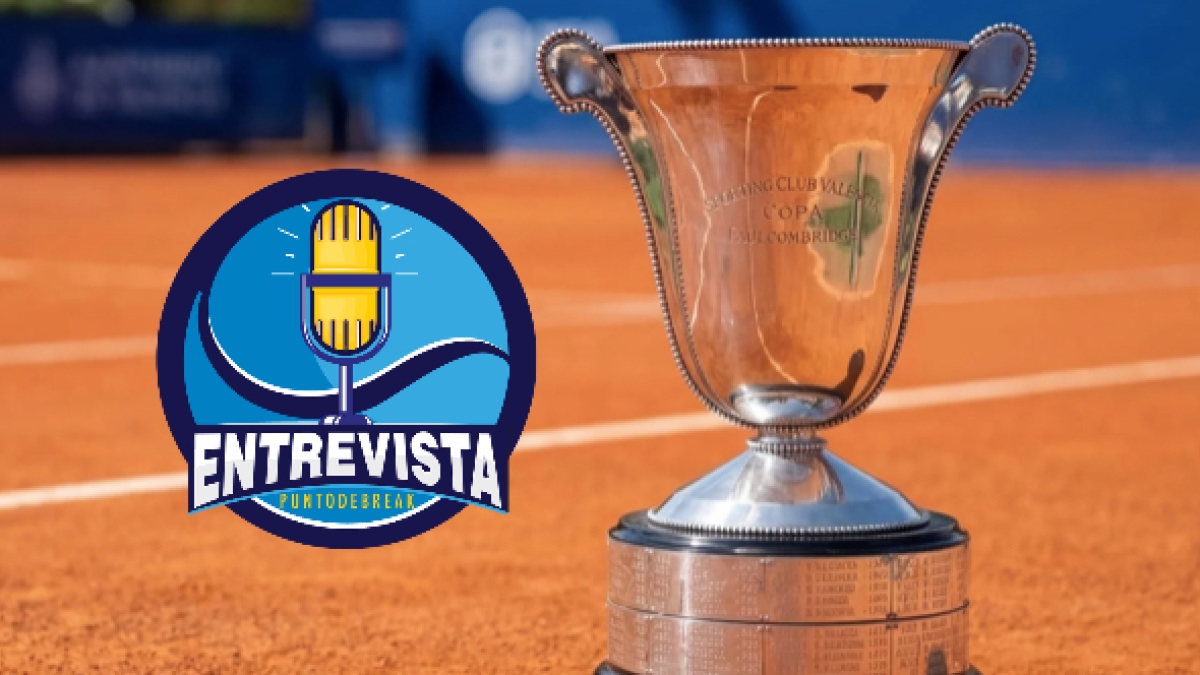


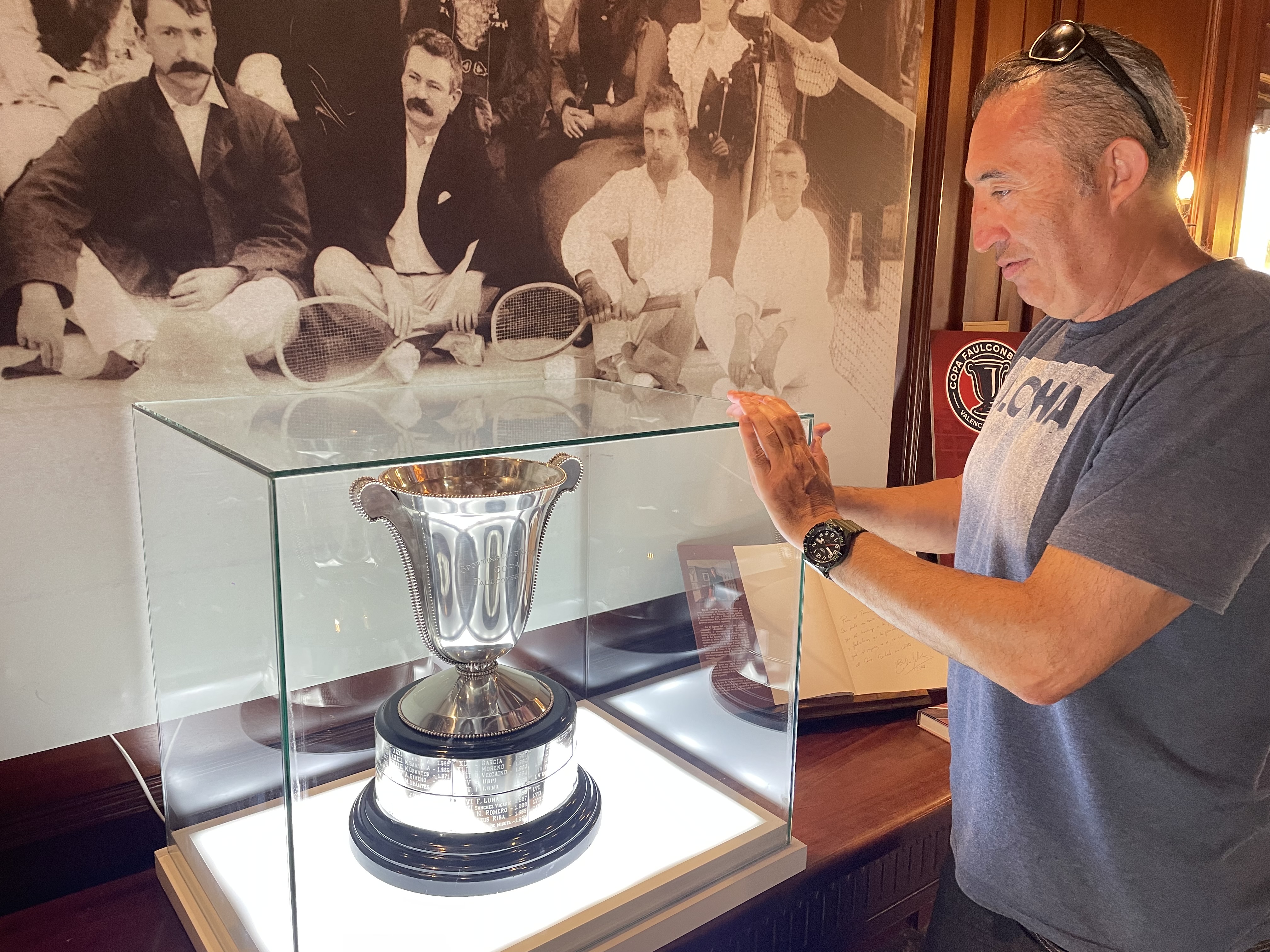
We've been talking all week about the Copa Faulconbridge but very few people know why the current Valencia Challenger is named this way. Today we bring you the answer with a thrilling combination: interview + book.
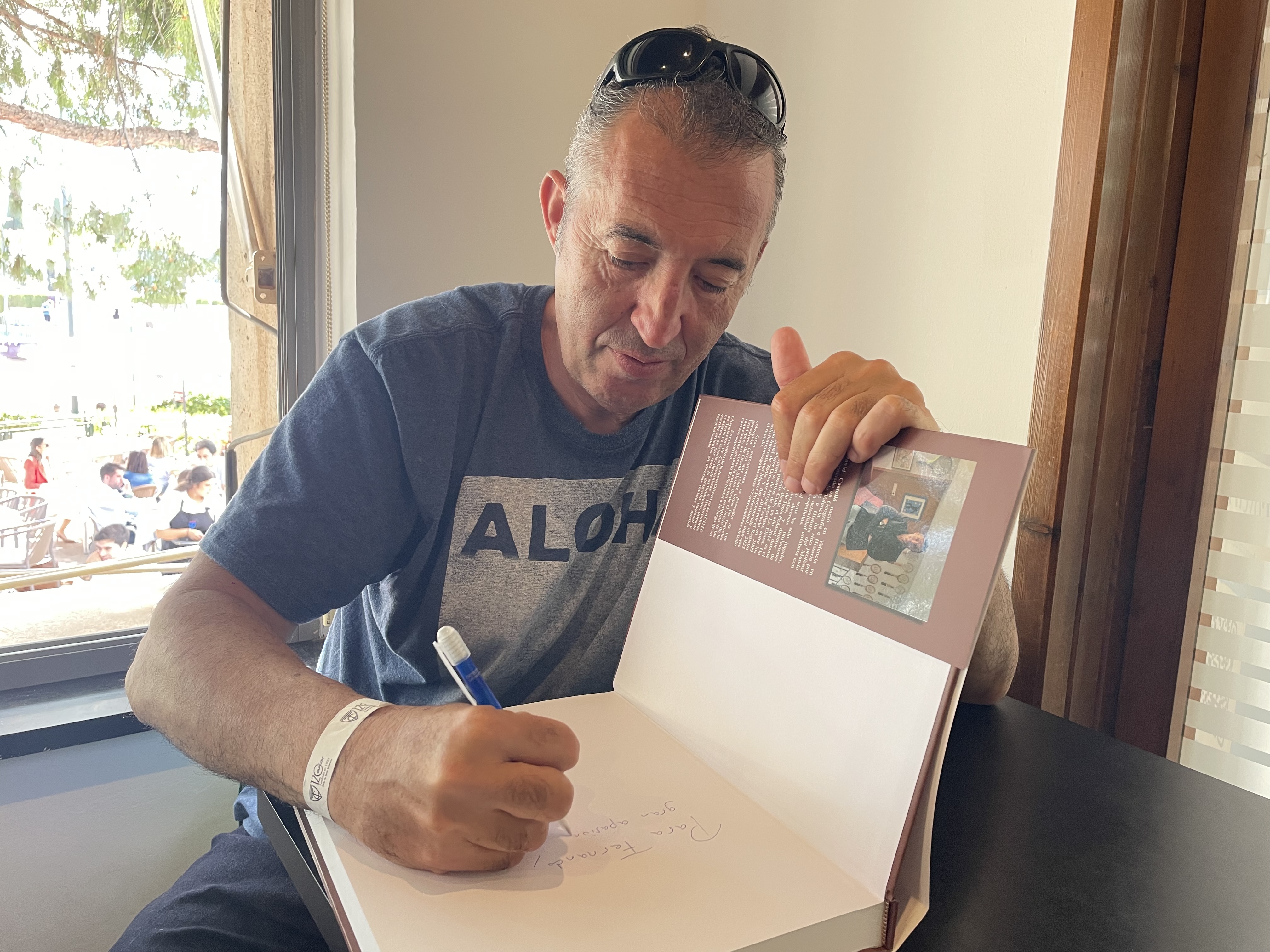
David Castelló (Valencia, 1968) has been a tennis enthusiast all his life, performing many roles within this sport, both on and off the courts. It had to be him, a renowned historian, who carried out the most ambitious project possible: 'History of the Copa Faulconbridge'. That's the title of his latest work, gathering all the information about a legendary tournament within our borders, an event that is approaching its centenary and that in 2022 returned to the circuit officially.
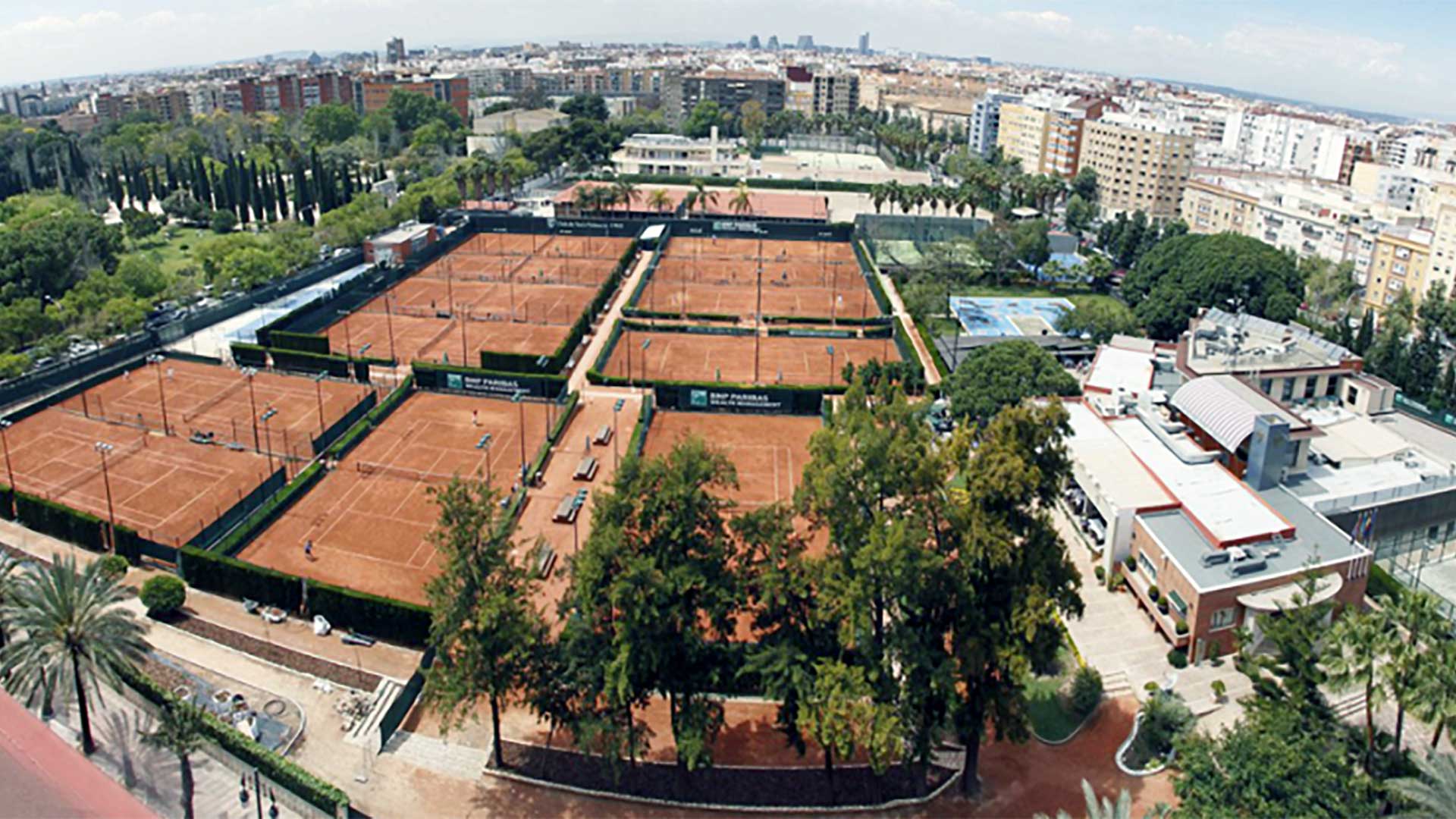
The Club de Tenis Valencia –it couldn't be anywhere else– gives me the opportunity to sit down with David and browse through the pages of a book that weighs the same as a good bag of oranges. Hardcover, large photographs, quality paper, and extreme care in every line of text. The interview feels more like a masterclass where the professor shares all his knowledge and leaves the student mesmerized. If you enjoy tennis, books, and history, here's a piece that should not be missing from your library.
'History of the Copa Faulconbridge,' a straightforward title. What can we find in its pages?
This book is an act of historical justice. Nothing had ever been written about the history of the Faulconbridge Cup... and what little had been written was poorly documented and full of errors. For example, the champion of 1933 is listed as Jerónimo Villota, when it should be Jorge de Villota, a player from Puerta del Hierro. The champion of 1935 is Arturo Suqué, not Francisco Suqué, from the Real Club de Tenis Barcelona. The champion of 1949 is not Armando Casas, but Ricardo Casas. Even the name Faulconbridge was misspelled as 'Faulcombridge'.
This last mistake is unforgivable.
We found the church in Liverpool where Alfred John Faulconbridge was baptized. We know where he is buried, we have photos of the tombstone with the 'N', even his signature. That is why I say this is an act of historical justice, a piece that seeks to rescue the memory of an almost century-old tournament, gathering year by year everything that happened. Here you will find anecdotes, highlights, and brief biographical notes of each male and female champion. That's what this book contains.

What motivated you to write it? Because this project is not something done in a weekend.
It took me over a year of work and systematic documentation, but I approached it as an act of generosity towards tennis. Tennis has given me everything; it is a privilege to dedicate myself to tennis, even though I am a historian. However, tennis is a fundamental part of my life. This was a way to give back something that I owed to the tennis world. It was also a challenge because there was nothing written, but it meant combining my two great passions: history and tennis. Considering that it was about something from my region since I am Valencian, everything came together.
Did you have support when you presented the idea?
Both Ole Andresen, president of Club de Tenis Valencia, and Pablo Andújar, encouraged me from the beginning and supported me in carrying out the project. Both of them saw history as a fundamental tool for them. It's not the same to request a grant from the City Council stating that this is a tennis tournament like many others in Valencia, as it is to present a tournament dating back to 1933, a historical sports heritage of the city.
Did the Faulconbridge Cup become so important?
It is the longest-running international tournament in this country. The Godó Tournament started in the 1950s, but this one dates back to the 1930s, making it twenty years older. Although initially a tournament with a local and national character, from the 1950s, it became international and thus a global reference. For example, Manolo Santana won it four times. Manuel Orantes won it twice. Andrés Gimeno won it in 1972, the same year he won Roland Garros!
What a trio of names!
In 1956, the American Sam Richardson won the Faulconbridge Cup, being the world number 3 and number 1 in his country. That year also saw the participation of the Australian Thelma Long, a two-time individual champion of the Australian Championship, fourteen in doubles, and four in mixed. Or Pierre Darmon, who was the runner-up in Roland Garros in 1962. We are talking about a tournament that was a benchmark worldwide in the sixties and seventies, reaching its peak.
What happened then?
The Open Era begins in 1968, introducing a turbulent period for the tennis world. The ATP and the ITF Grand Prix circuit are established. The WCT is also created, a circuit by Texan entrepreneur Lamar Hunt. The Open Era opens the doors to professionals since before they couldn't compete; players like Ken Rosewall or Rod Laver were unable to play in Grand Slams. As a result, the Faulconbridge Cup loses some significance on the global scale, but the tournament remains crucial at a national level. Arantxa Sánchez Vicario wins it in 1986, followed by her brother Emilio in 1987. Interestingly, this is the only tournament in the world won by four siblings, the Sánchez Vicario family.
So why did it disappear?
There comes a time when the tournament ends up becoming more of a national event, even more Valencian. Manuel Sala wins the tournament in the year 2000, the last year of the 20th century, a moment when the Club de Tenis Valencia rethinks everything. They wanted to have a tournament that would be a reference, so in 2001 the tournament is not held, and in 2002 the Faulconbridge Challenger Cup is created, where the champion is David Ferrer. This was the last year it was contested.
It would be the prelude to something much greater.
Indeed, the year 2002 is the stepping stone for the creation of the ATP Valencia in 2003, which was won by Juan Carlos Ferrero. It is a continuation of the Faulconbridge Cup, although it never bore its name and therefore is not the subject of study in this book. It was truly a historical continuation; in 2002, the Challenger tournament ended, and in 2003, the ATP Valencia was created, which was played at this club until 2008. From 2009 to 2015, it moved to the Ágora, becoming an ATP 500, until there was a change of government, and the financial aid disappeared, leading to the tournament being wiped off the calendar.
But all good things come back.
That's right, in 2022 Pablo Andújar appears and decides to create a Challenger tournament. Wisely, he rescues the history and names it the Faulconbridge Cup.
When the ATP Valencia was created in 2003, was the idea of keeping the name Faulconbridge considered?
No, nothing. At no time did they consider giving it that name, it sounded too English (laughter). They wanted to enhance the city's name, to have Valencia in the forefront: Valencia Open. That's also a good criterion, so they never considered rescuing the name Faulconbridge for the ATP.
By the way, who was Alfred Faulconbridge?
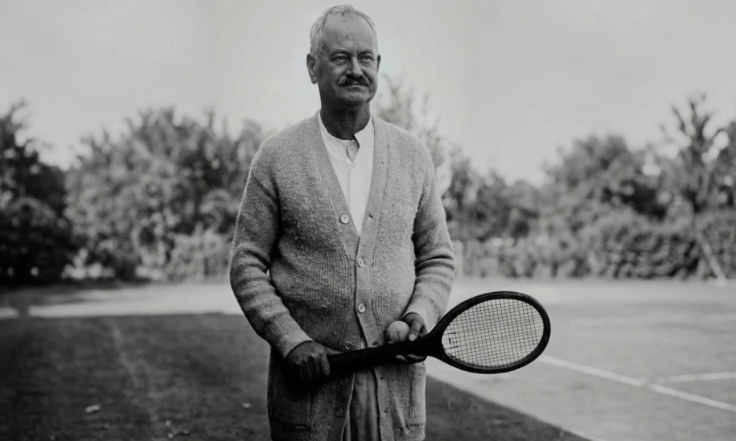
Alfred Faulconbridge is an Englishman born in Liverpool in the late 19th century, but he decided to leave his native Liverpool and move to Valencia. In England, the first regulations of lawn tennis, tennis on grass, had been patented. It was marketed as a set comprised of a trunk containing: a net, two poles, two rackets, white balls, a measuring tape, and a book with the rules. So, Alfred's idea was to exploit citrus fruits for English markets, but his true passion was tennis. One day, walking through the city near the Monforte gardens, he discovers an idyllic place called the Huerto del Santísimo. There was a dirt-covered skating rink, and Alfred thought, 'This will be my own Wimbledon.' He cleared the rink, set up the posts, drew the lines, and started playing with other Englishmen.
And thus tennis was born in Valencia.
There is an idea that Faulconbridge even founded the Club de Tenis Valencia, called Sporting back then, but that's not true. Once again, history needs to be rewritten; what he founded is the Valencia Lawn Tennis Club, located at the Huerto del Santísimo, where all the players were English.
And how did that root develop?
They started playing, they started leveling up, they were going to play with the English in Barcelona, until they decided to found this society. They go on like this for many years until Sporting Club is founded in 1905 by the Valencian aristocracy, but Faulconbridge has no role there. The fact is that both projects run in parallel until the Huerto del Santísimo court disappears, and the English integrate into Sporting, where Faulconbridge becomes president. Hence, the good relationship of this man with this club.
Was he a good president?
He gave an incredible boost to the club; in the 1920s, they changed headquarters to have three courts. In 1926, they changed again to have four courts. In 1932, they changed once more to have eight courts. This means that the number of members increased until the day Faulconbridge passed away. It was then when a millionaire inheritance was discovered in his will for the club to have gigantic facilities. As a tribute, as a great pioneer of tennis in Valencia, the Faulconbridge Cup was created the year after his death, and in May 1933, the first edition took place.
Didn't he have children?
No, he died in 1932 without children. His wife was between Liverpool and Valencia until she passed away in Liverpool without descendants.
The story is tremendous.
Faulconbridge is a very mythical name, for me it is the most beautiful name in the world. Faulconbridge could be translated as the Cup of the Falcons' Bridge, a lovely name. Even a nephew of his went to Australia and founded a city called Faulconbridge.
What do you think!
I always tell Ole that they should twin with that city (laughs). As an anecdote, another niece of his married the son of Tolkien, the famous writer of 'The Lord of the Rings', who was a great tennis player. In fact, an ankle injury while playing forced him to spend time in bed, and that's where he created 'The Hobbit'.
You must be thrilled with the book.
I am very much a perfectionist, I find it very difficult to be satisfied with a job [...] However, with this one, I am. Not a single champion is missing from the book, they are all there, in singles, doubles, and mixed doubles. It is a painstaking research work where I rely on primary and secondary sources. The issue here is that I had no secondary sources because nobody had written about the Faulconbridge Cup, so I had to go directly to the primary ones. I've spent hours and hours in a basement flipping through Las Provincias newspapers and some specialized magazines. The support of other tennis historians was crucial here, who fortunately had all these magazines.
How did you manage to gather so many old and high-quality photos?
There is the most romantic element. For example, there was no photo of the first edition of the Faulconbridge Cup in 1933. Nobody knew what the face of the first champion looked like... until I managed to get that photo. Initially, Jerónimo Villota was listed as the champion, but that name was wrong; the real name was Jorge de Villota. I ended up finding his family tree: Jorge de Villota Muniesa. As I delved deeper, Emilio de Villota, the Formula One driver, appeared. So, I contacted him and asked about the closest descendant of Jorge de Villota Muniesa... and he said, 'He is my first cousin'.
No way!
Jorge de Villota Salgado, correct. I contacted him, explained all the work, and he started to cry. I asked him to tell me about his father, how he played, what he did after the Civil War. Obviously, I asked for a photograph, needed for such a visual book, even if it was a tennis photo, it didn't even need to be from that year. I ended up going to his house, we went down to the garage, and he pulled out a huge trunk that he completely emptied. Maybe because I'm a historian and used to such situations, but I saw it right away. I identified Pepín Albiol, who was the runner-up, and next to him was his father. I asked for a magnifying glass, and my hypothesis was confirmed. At the bottom of the photo, written in pen, it said: '1933, Faulconbridge Cup'.
Unbelievable, David.
I could almost tell you an anecdote for each year, but this one about the first champion is very hard to beat.
By the way, did Faulconbridge play tennis well?
Yes, he did. He played in Barcelona, Switzerland, Wales, and many times here in Spain. He ended up becoming a Spanish citizen and competed in the first three Spanish championships, where he reached the quarterfinals.
I truly congratulate you on this work.
Thank you very much. For me, it's a well-rounded book, very visual and informative. I like the content and also the form; I wanted to do it well, with the highest quality. I'm very proud.
Are you proud of the current tournament?
The draw is that of an ATP 250: Zizou Bergs, Roberto Bautista, Alejandro Tabilo, Matteo Berrettini, Pablo Carreño... it's a great tournament. It's now a Super Challenger 175, of which there are only six in the world, positioned perfectly in the second week of Rome. In terms of potential, could it continue growing? Of course, although in relation to the draw, I don't think it would make much difference, maybe just adding a few more top 20 players. It would have a very similar level; but there, it depends on a license becoming available for purchase, like when the Valencia Open lost theirs and moved to Antwerp.
By the way, how can future editions be added to the book?
It would be good to have an update, but it would in no way be an annual thing, that would cost a lot of money [...] Look, in 2032 it will be the centenary, in six years, that would be a good opportunity.
This news is an automatic translation. You can read the original news, ¿Quién fue Alfred Faulconbridge?
-
 05 Jul 2026 | 20:00Bombshell: Osaka knocks out Sabalenka at Wimbledon!
 -
 05 Jul 2026 | 20:00Djokovic, critical after defeating Safiullin: "I have not enjoyed my tennis"
 -
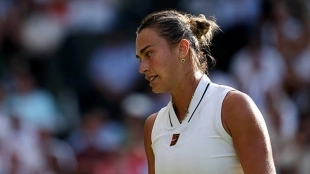 05 Jul 2026 | 20:00Sabalenka opens up after falling at Wimbledon: "I was about to lose it"
 -
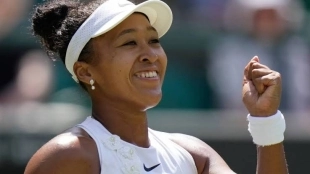 05 Jul 2026 | 22:00Naomi Osaka details the key to her victory today against Sabalenka
 -
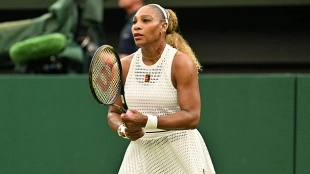 06 Jul 2026 | 09:00Will Serena Williams Play Mixed Doubles at the US Open with Alcaraz?
 -
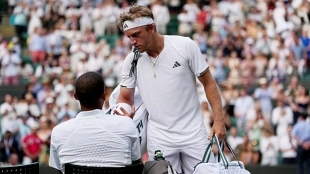 06 Jul 2026 | 10:00What Aliassime did yesterday to Davidovich was a serious lack of respect
 -
 06 Jul 2026 | 00:00Gauff reveals the surreal situation she experienced against Bencic at Wimbledon
 -
 06 Jul 2026 | 11:00Was Djokovic close to being disqualified at Wimbledon?