|
9 Jan 2026 | 22.00
|
9 Jan 2026 | 22.00





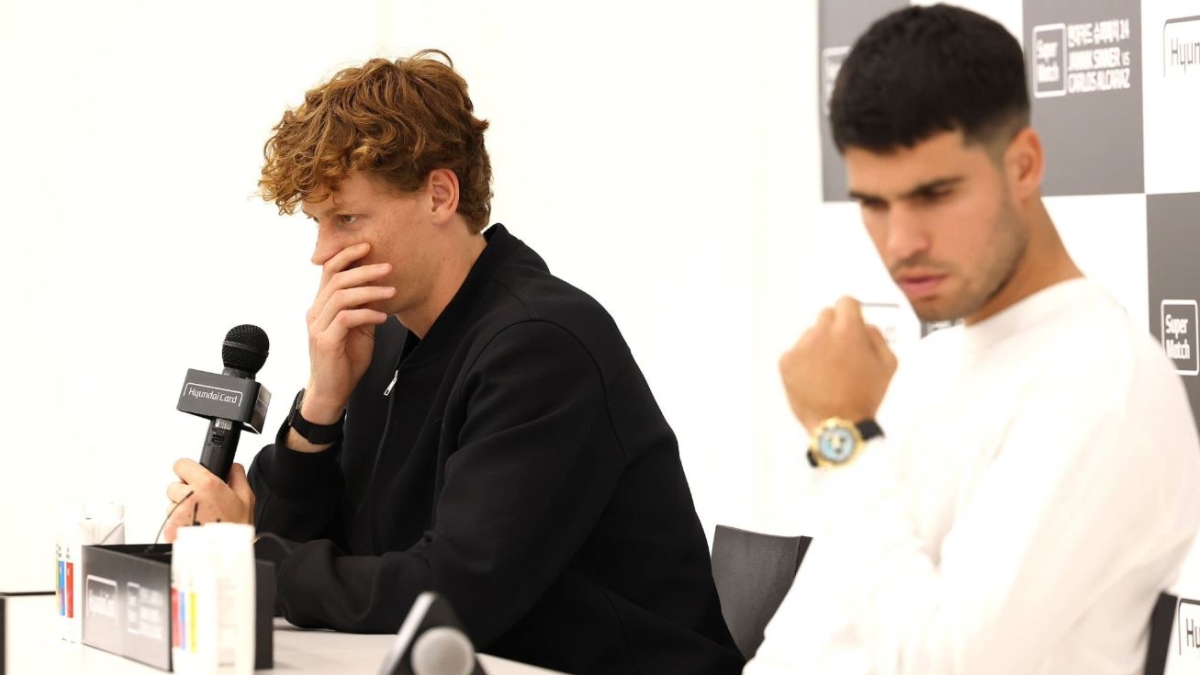


This Saturday, January 10th, Carlos Alcaraz and Jannik Sinner will play an exhibition match in Korea prior to the Australian Open, sparking comments as usual whenever one of them participates in an exhibition match.
After complaints about the schedule, fans use the argument of exhibition matches to criticize them for a perceived lack of coherence, when in fact, exhibitions should not be an issue as long as they do not prevent them from participating in any mandatory ATP tournaments.
Alcaraz and Sinner's Complaints About the Schedule
“Then don’t complain if you're tired or if the schedule is long,” is a common argument these days on X, formerly Twitter, used by many users when discussing the exhibition match that Carlos and Jannik will play in Korea. When delving into what such a match entails, it is easy to see that the argument lacks substance.
When Carlos, Jannik, Novak, or anyone else talks about the length of the schedule, they are acknowledging a reality: the tour obliges tennis players to be available from January to late November. This means they are competing for 11 out of the 12 months of the year.
Hence, they only have a couple of weeks for preseason, a period used to work on certain aspects of their game and to strengthen physically to prevent injuries throughout the year. Not to mention the scarce time they have to spend with family, girlfriends, friends, or to focus on other things. The schedule is lengthy, that's a fact, even acknowledged by the ATP, which mentioned in November that they are working on changing this in the medium to long term.
What they are asking for when raising concerns about the schedule is more free time, more time to use as they wish without being tied to competitive obligations. Unlike 20 years ago, Masters 1000 tournaments now last for two weeks, which means players spend more time away from home. During competitions, players are in a different country, away from their loved ones, with limited freedom to do as they please.
The issue with exhibition matches is straightforward. Players are paid a fortune for a match with no physical or mental strain. In the case of Alcaraz and Sinner, they are reportedly receiving two million each for a match where they will experience minimal wear and tear. No wonder they accept it.
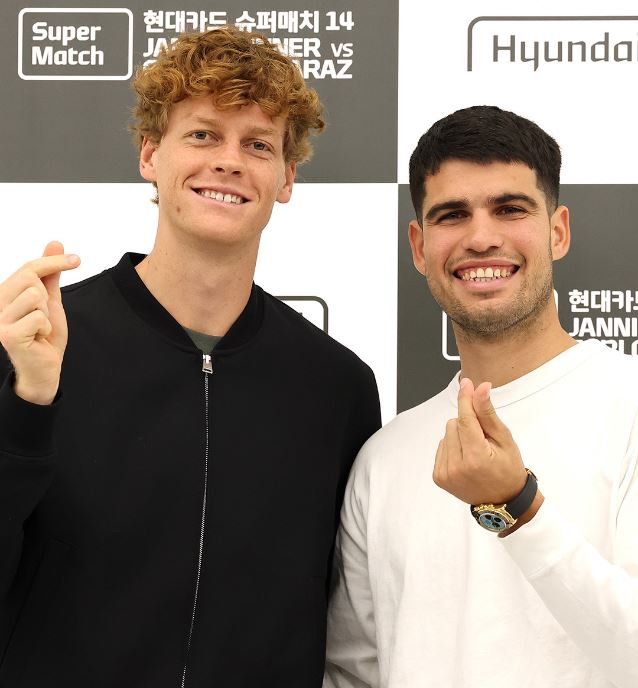
However, this is something they do in their spare time. It's their decision. If they weren’t in Korea playing a friendly match, Carlos and Jannik would probably be having a high-intensity training session elsewhere, resulting in similar or less physical exertion. It's their time, and they are free to decide how to use it. If they want to play an exhibition match, that's fine, just as it would be if they preferred spending that time playing video games on the couch or sweating it out in the gym.
It's their time, which is what they ask for, to be able to use it as they please. It'd be different if any of these exhibition matches prevented them from playing in a tournament. If they chose to play a friendly match in Saudi Arabia instead of participating in the Miami Masters 1000, for instance, it would be a different story and a rather delicate matter, but that is not the case.
Any of us would go anywhere in the world if offered a million or two to play a 90-minute match and entertain the audience. No matter how healthy their bank accounts are, it's an offer impossible to turn down. Then, each person can do or say as they wish. It's obvious that everyone is free to criticize what they believe, but in this specific case, any argument about fatigue or the schedule loses validity when exhibition matches are the topic.
This news is an automatic translation. You can read the original news, Lluvia de quejas hacia Alcaraz y Sinner por su exhibición en Corea


-
 14 May 2026 | 23:00Gauff reveals the changes she has made to her serve to improve
 -
 14 May 2026 | 11:00INTERVIEW | Berrettini: "A person's happiness cannot depend on the ranking"
 -
 14 May 2026 | 21:00The rain and a reborn Medvedev halt an imperial Landaluce
 -
 15 May 2026 | 11:00Svitolina: "It's an unreal sensation to be in the final again"
 -
 15 May 2026 | 14:00Eala opens up about fame and pressure: "My first obligation is to myself"
 -
 14 May 2026 | 11:00Rafa Jódar is lacking two things
 -
 14 May 2026 | 09:00Rublev: "There was a time when I didn't understand the meaning of living"
 -
 14 May 2026 | 14:00Sinner eclipses Rublev to make history in Rome