|
21 Jul 2026 | 15.21
|
21 Jul 2026 | 15.21





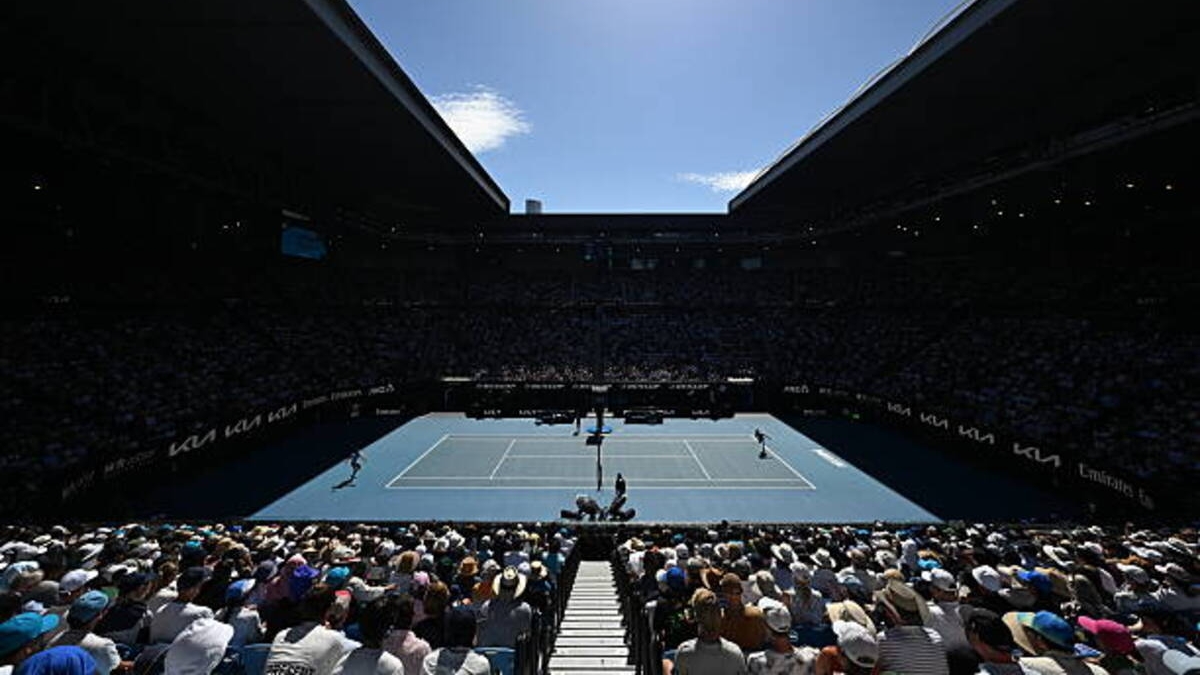


The Australian Open will once again lead the way in innovation among Grand Slam tournaments. Organizers have announced that, for the first time, they will limit the number of Ground Passes, the tickets that provide access to the grounds and secondary courts, during the 2027 edition. This decision stems from an increasingly evident issue at major tournaments: overcrowding of the facilities during the first week of competition.
In recent years, attending a Grand Slam has become a progressively challenging experience for many fans. The growing interest in tennis has filled venues to levels that are difficult to manage, with long queues, massive crowds to access outer courts, and challenges in enjoying practice sessions or matches on secondary courts. Melbourne aims to curb this trend before it worsens.
🚨 THE AUSTRALIAN OPEN LIMITS ENTRIES FOR THE FIRST TIME! 🔒🇦🇺
— Univers Tennis 🎾 (@UniversTennis) July 21, 2026
The Australian Open has announced that the number of Ground Passes (tickets providing access to the site and outer courts) will be CAPPED daily at the 2027 edition.
🎟️ Despite a price unchanged since 2019 (at… pic.twitter.com/JobcDfjZvd
A pioneering measure by the Australian Open that could set a trend
The Australian tournament will maintain the price of these tickets unchanged from 2019, starting at around 30 euros, but will reduce the number of available spots each day. The goal is clear: to enhance spectator comfort and ensure a higher-quality experience for those attending Melbourne Park.
The decision doesn't come as a surprise considering the Australian Open, a tournament that has historically led numerous organizational and technological innovations in tennis. Event organizers anticipate a record demand for 2027 and believe that controlling attendance is essential to prevent saturation scenes that have frequently occurred at major circuit venues.
The big question now is whether other Grand Slams will follow suit. Roland Garros, for instance, has faced numerous criticisms in recent editions due to the massive concentration of people in the early days of the tournament, a situation that has significantly impacted the experience of many attendees. If the Australian initiative yields the expected results, it wouldn't be surprising if other top-tier events consider implementing similar measures in the coming years. The debate between maximizing attendance or prioritizing the quality of the experience is already on the table, and Melbourne has decided to make its move ahead of the curve.
This news is an automatic translation. You can read the original news, El Open de Australia introduce un cambio histórico en la venta de entradas
-
 20 Jul 2026 | 08:00Rublev conquers Bastad and strengthens his return to the tennis elite
 -
 20 Jul 2026 | 11:00Badosa is forced to retire in the final of the Iasi tournament
 -
 21 Jul 2026 | 15:00The statistical keys that explain Tsitsipas' rebirth in Gstaad
 -
 20 Jul 2026 | 16:00Badosa rises again after another physical blow: "Today I couldn't continue"