|
9 Feb 2026 | 21.31
|
9 Feb 2026 | 21.31





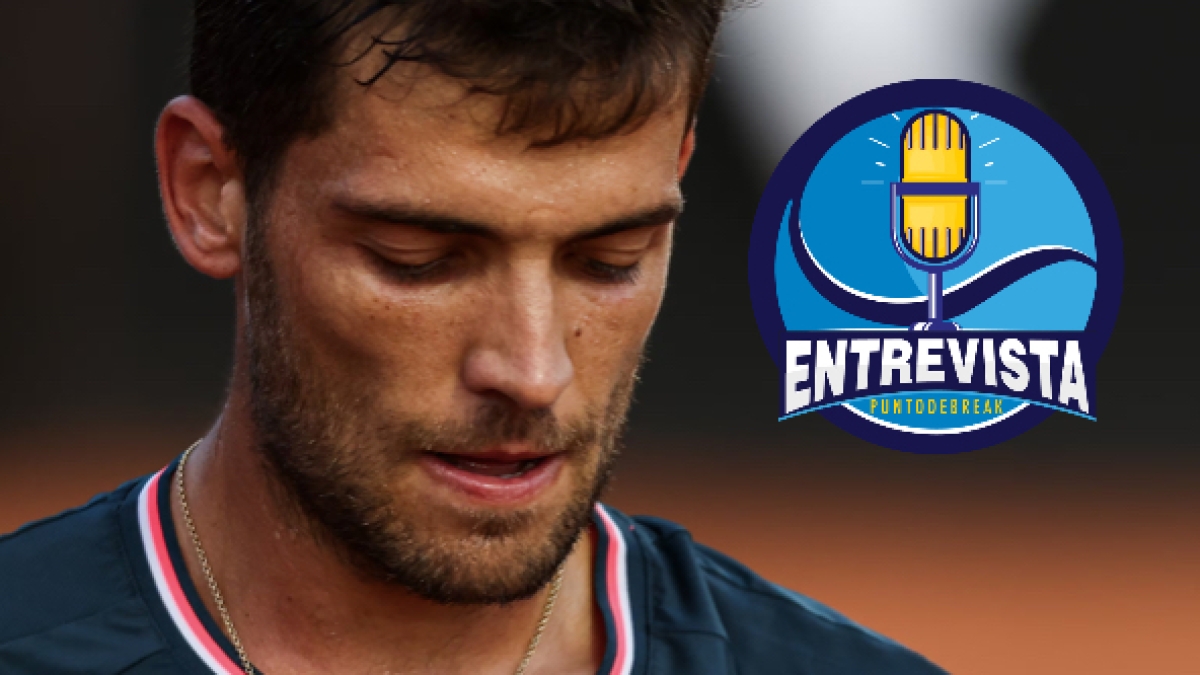


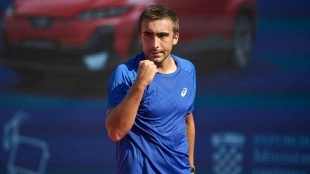
Tennis is an extremely challenging sport that can always become more complicated. Imagine you're about to step onto the court, you check your phone, and you find this message: 'We have your entire family located, if you don't lose your match today, we will proceed to kidnap them. You won't make it out alive either'. Sounds like a movie, but it's not fiction. It's the nightmare that Nikolás Sánchez Izquierdo (Barcelona, 1999) experienced last week at the Challenger de Rosario, moments before playing his round of 16 match.
The news spread worldwide, and it's no wonder why. After reporting the threats to the appropriate authorities, the Spanish player ended up playing and losing the match, behind closed doors and with maximum security. Two hours later, he was on a plane back home, where he spoke to Punto de Break to recount one of the worst experiences of his life. Niko is clear in the details, but there are parts accompanied by a brief silence, the kind that still reminds him inside that this story could have ended differently. Thankfully, this interview brings harmony after the storm.
Niko, how are you feeling?
Now more at ease, watching everything being resolved, but already further from the scare and initial fear. Luckily, none of what they said has come true, so I am calm.
At what moment did you receive the first messages?
One hour and forty minutes before the match. At 3:18 PM, I received a message asking if I was Nikolás, it was an unknown number. I told them yes, and, three minutes later, they messaged me again. And what did they say to you? They told me they had located my family, writing out their full names, both of my parents and my brother. They explicitly wrote my family's address: street, entrance, floor, and door. They subtly suggested that I should lose the game I was going to play, but not to dare say anything; otherwise, my family would be kidnapped, and I would face serious consequences. All this to your personal number. Exactly, hence the seriousness. How did they get my phone number? It had never happened to me before; that's what's concerning, that they also know my ID number. They said that if I don't comply with their demands, I won't leave there alive. Do you know if any player had been through something similar? What they tell me is that there is no precedent for something like this, that's what they communicate to me from the higher bodies of tennis. What was your initial reaction after reading those messages?Looking around and searching for someone laughing, I thought it was a joke. The next thing I do is look for someone I don't know in the environment, especially because of the threat that something serious will happen if I don't follow the instructions. In a few minutes, my body changes and I rule out that it's a joke... basically because if it's not and then what they say happens, I could never forgive myself. My family suffering over a tennis match? This cannot happen under any circumstances.
What is your next step?
I show the messages to my coach. He quickly gets up and goes to report it to the supervisor. That's when they come for me and take me out of the players' lounge to a room where I stay for about three hours.
And what do you do there?
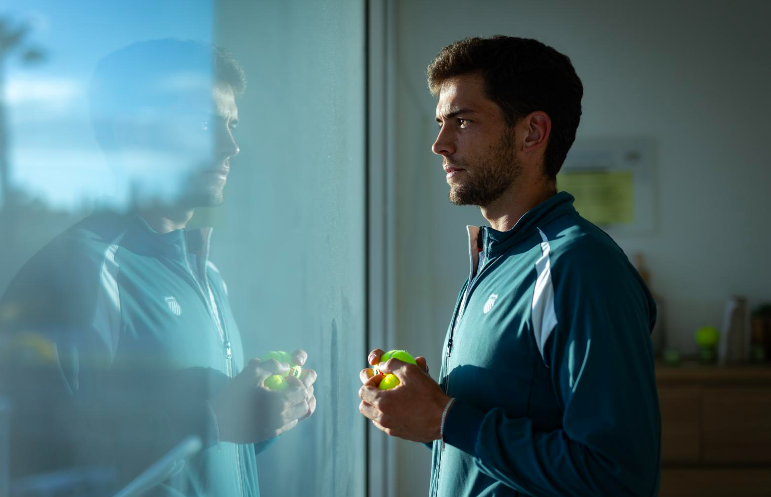
I wait for the protocol issues to be studied; they contact the top officials to determine how to proceed. Meanwhile, I was in touch with my family to make sure they were okay, but without conveying the fear I had in my body; it made no sense to call them crying. I tried to locate them first, asking them to stay at home and not go out for a walk or anything. With no experience in such a case, we all started to act in the best way we know. The tournament director was incredible with me, providing me with maximum security at all times. It was moments of anguish and a lot of fear.
And ahead, a game to play.
For me, that takes a back seat. What concerns me is the security, the lack of privacy, the fear of thinking... Could there be someone in the entrance of my building? My brother is coming back from the gym, could there be someone following him? The game falls to a fifth place, it is not a priority, I even think about not playing it. During this time, all players usually receive horrible messages, eventually you allow everything that comes your way, until one day this happens. My intention now is to draw a line of zero tolerance, to hire a lawyer and spend money on these resources, reacting immediately to the first message that goes beyond an opinion. That person must pay for what they have done, I see no other solution.
Just as that person had your phone number, now you have theirs. Can't it be traced?
That's what we're working on now, always through legal frameworks and private institutions. That person has to be identified, in the end, a phone number contacted me, so I assume it must be associated with a name or a bank account, I have no idea. We hope to find that person in the coming weeks.
Why do you decide to play the game?
For me, it was a lose-lose situation, because my family's health was at stake after that message. I thought about not going out on the court, wishing I had been 15 minutes away from home to return to my family, but I was many kilometers away. We tried to delay the schedule for as long as possible so they could continue assessing the situation, but we couldn't get the match canceled. My goal that day was to win, earn points, and prize money, as in every tournament I enter. If I didn't play, I would lose all of that, so in the end, after much discussion, there was no choice but to compete.
To compete, or at least try.
Mentally, I wasn't prepared; it hadn't even been half an hour since I was informed that the match was on. I went from being isolated in a room, with a bottle of water, unable to leave the facility, to stepping onto the court. Rosario is a tournament with a lot of fans, but we played it behind closed doors for safety.
And you didn't do it badly.
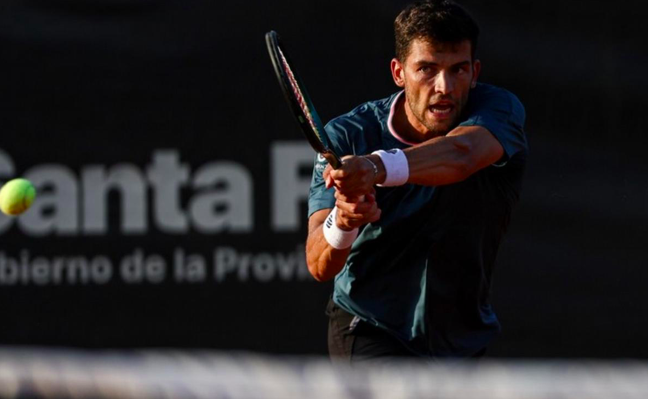
I tried, but I never had control over my thoughts; I tried to focus on one thing and my mind wandered elsewhere. In the end, you play with fear, feeling like something could happen at any moment. My control over my tennis abilities was greatly affected, especially the mental aspect. It was very distressing, a very ugly situation.
How many times have you gone out to play a match influenced by a message or threat?
I would say none, I don't remember anything like it. On the field, you may encounter people who cheer too much, or people who get upset when things don't go well, that can make you uncomfortable. But before playing? Nothing like that had ever happened to me. At most, the pressure one puts on oneself due to the desire to do well that day. After the match, yes, that's when you find social media filled with hate. Sometimes a relative has written to me asking: Why are all these people insulting you? That's why I want to stop it radically, even if it takes time to capture, inform the relevant authorities, and report each case. I don't see any other way to pave the way for it not to happen again.
What were you thinking at the end of the match?
I don't know if you'll see it on camera, but I ended the match crying, with red eyes [...] I couldn't hold it, I couldn't manage it, I collapsed. I went straight to the locker room with my head down and covering myself with the shirt. I felt anger, frustration, helplessness, etc. Then the first thing I did was call home to ask if everything was okay.
And at that moment, you decided to return to Spain.
The intention was to continue with the tour; this was the fourth week, but I still had to play the Qualys in Buenos Aires or Dallas. I was very close to playing those ATP tournaments. Talking with my coach, we realized it was impossible. My mind and body were asking to be with my family, beyond the economic cost of returning immediately to Spain. I wasn't thinking about sports, but it hurts to let an opportunity like this pass, especially since I'm not used to playing ATP events. This time, I had to prioritize the personal sphere.
Did your coach return with you?
Yes, we both returned at that moment, the next day, on the first available flight. We finished at 11:00 at night at the tournament, and by 01:00 we were already coming back.
Do you feel ready to travel again?
In that sense, I'm a bit reckless. The other day, my family asked me about it, but the plan was to continue with this tour because there were still tournaments to play. The thing is, I would have to play again in Argentina, but my family couldn't understand seeing me go back there again. I don't know how many weeks I'll be without competing, so now we'll have to sit down and carefully study when we resume activity. Now I want to close this issue once and for all, leave it in the hands of lawyers, and focus again on everything related to training, physical preparation, and tournaments.
Have you received any advice to protect your privacy?
Changing my phone number and address, but of course... a tennis player of my ranking generates what they generate. We can't afford this, but perhaps changing the number is something I should do. The phone is a tool you can't get rid of, it's necessary to stay in touch with your people. If you take that away from me, life on the circuit would be even tougher.
Do you have any enemies on the circuit? Someone who could use all that information to harm you?
I have thought about it, but I don't have any problems with anyone in my life... beyond one or two people at most. If it really was one of these two individuals, we are talking about people from a distant past. If now they have come up with something like this, well, they know best, but in my last 27 months, I haven't had any issues with anyone. That's why I have ruled out that option, I have no idea who could do something like this. I have tried searching for this information about myself, and not even Chatgpt has been able to retrieve it, so I don't know how it could have been leaked.

Therefore, you rule out those two people...
I don't consider these individuals I mentioned to be good people, but I also can't imagine them doing something like this. I don't think they have so much free time to do such a thing. Even though I share no values with them, it would be very hard for me to think that, after so long without contact, they would have done this.
How can we eradicate this trend of intimidating the player? Before, the issue was on social media, but now they're going straight to the player's personal phone.
There should be a very clear protocol, measures, and sanctions so that this matter is not radioactive for the player, so that it doesn't splash back on us. This is no longer about winning or losing a match; we are talking about people and their health. When discussing these topics, they should be untouchable to me. The moment this matter affects the player, there should be resources to identify the person and prevent them from doing it again, zero tolerance. Betting is one thing, but conditioning the player is another. We know the audience is part of tennis, that insults should never be allowed, but even more so, a player should not be allowed to be conditioned in this way through threats involving their family. That line should never be crossed.
Daria Kasatkina confirmed at the Australian Open that she was going to close her social media accounts, that she had given up on that issue.
But why should a player deprive themselves of their social media networks because of all those comments? Removing yourself from all social media activity can end up affecting your mental health and performance more than anything else. We shouldn't have to reach that point; players should have greater protection regarding the vulnerability and exposure we face on social media. I also don't know how to solve this problem, but we have reached a point where we treat this as if it were normal. If we give up social media or our phones, we would end up living solely for tennis; I also don't know if this is good for mental health. Imagine if Kasatkina goes to a restaurant and encounters someone accusing her of losing €20 due to one of her defeats. What do we do then? Stop going out to dinner as well?
What do you suggest to prevent something like this from happening again?
I am going to fight tooth and nail for this. Players are often rivals, but what I have experienced, I wouldn't wish it on any player, not even my worst enemy. No one should have to go through that, so I will work with my surroundings so that, in the event of a similar case recurring, the player can be better protected, and the protocol of action is clearer. Let this case at least serve to prevent future similar cases.
This news is an automatic translation. You can read the original news, Nikolás Sánchez Izquierdo relata su pesadilla: “Esto no se lo deseo ni a mi peor enemigo”
-
 20 Jul 2026 | 08:00Rublev conquers Bastad and strengthens his return to the tennis elite
 -
 20 Jul 2026 | 16:00Badosa rises again after another physical blow: "Today I couldn't continue"
 -
 19 Jul 2026 | 18:00Bombshell: WTA to require players to undergo sex determination tests
 -
 19 Jul 2026 | 14:00"Sinner's serve is now among the best in history"
 -
 20 Jul 2026 | 11:00Badosa is forced to retire in the final of the Iasi tournament
 -
 19 Jul 2026 | 19:00ATP Ranking: Rublev and Tsitsipas Redeem Themselves, Mérida Surpasses Itself