|
23 Sep 2024 | 15.03
|
23 Sep 2024 | 15.03






There is a recent trend in the world of sports that directly challenges the calendar. How the accumulation of matches and tournaments threatens the athletes' health, tired of adding more and more minutes to their machinery and seeing how the physical demands are ever-increasing. Organizations and entities exploit the golden goose, and it is the athletes who keep the show going: this is a topic that has come out stronger than ever in the past Laver Cup 2024, where names like Alexander Zverev and Carlos Alcaraz have spoken out against the ATP and the calendar changes.
"They are killing us". With that harshness, Alcaraz expressed what appears to be a widespread complaint among the best tennis players in the world. In recent weeks, other names like Jack Draper have also complained about the lack of rest in today's tennis, although this is a recurring debate that has been present in the tennis ecosystem for decades. Still, are there reasons to notice a clear change in recent times? Are players playing more tennis than ever at present?
The data... invite us to believe the opposite. They suggest that the period of greatest wear and tear and match accumulation, even narrowing the focus to tennis in the 21st century, took place ten or fifteen years ago. Thus, the six most demanding seasons for players in terms of the number of matches occurred between 2004 and 2012, with protagonists like Nikolay Davydenko, David Ferrer, or the three members of the Big Three. Since then, there have been no seasons in which any player has come close to those numbers, including Davydenko's 98 matches in 2006 and Federer's and Djokovic's 97 matches in 2006 and 2009 respectively. The contrast is clear: to date, Alcaraz has played just 52 matches so far this year.
ZVEREV'S CASE AND LESS REST TIME
However, there is a player well positioned to at least approach numbers that we had not seen for a long time. This is Alexander Zverev, who has already played 75 matches in total (57 wins and 18 losses) and still has several mandatory events to compete in, including two Masters 1000 and, if nothing changes, the ATP Finals. If the German manages to find consistency in the final stretch of the year, he could get closer to the top five... but his season, of course, is by no means typical among the top players in the world.
Sascha has played up to 18 events this season, including appearances at various ATP 250 tournaments, representing Germany in the United Cup and the Olympics (another extra event that has further compressed the calendar). The extraordinary circumstances of the Olympic season fuel the players' complaints, but it does seem to be a fact that we are not, by any means, in the era when the most matches are played per year... although there are factors that may legitimize the protests.
It seems evident that the inclusion of week-and-a-half Masters 1000 tournaments has led to a clear increase in players' exhaustion. More so, even at a mental level. If you exit early from one of these tournaments, you are left in limbo until the next one, a time in which you have to keep training and which cannot be considered as rest; before, you could choose to play a 250 tournament or take a week off, now you are immersed in the fiercest competition whirlwind, in addition to adding extra matches if you go far. This will worsen in 2025 (Canada and Cincinnati will also become two-week tournaments), further compressing a calendar that is shifting towards being exclusively composed of premium events. Will we soon reach the figures from a decade ago again? Is the direction modern tennis is taking becoming increasingly dangerous for players? And, in the meantime, complaints and exhibitions come and go... Now, I hand over the word to you.
This news is an automatic translation. You can read the original news, ¿Es tan duro el calendario ATP con respecto a hace una década?


-
 16 May 2026 | 13:00Bublik: "Doubles is not tennis. It is very simple"
 -
 16 May 2026 | 18:00Svitolina topples Gauff and reigns for the third time at the WTA Rome
 -
 16 May 2026 | 22:00Gauff reveals her biggest lesson after losing the final of WTA Rome
 -
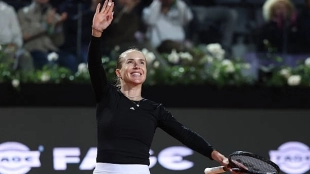 15 May 2026 | 11:00Svitolina: "It's an unreal sensation to be in the final again"
 -
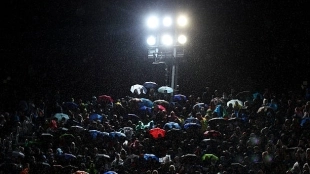 15 May 2026 | 23:00Rain suspends the Sinner - Medvedev match, which will finish tomorrow
 -
 16 May 2026 | 17:00Sinner talks about his physical problems after defeating Medvedev at ATP Rome
 -
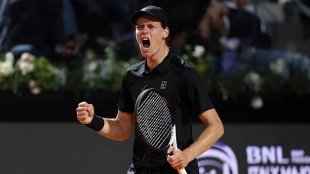 16 May 2026 | 16:00Sinner ends Medvedev's resistance and will face Ruud in the Rome final
 -
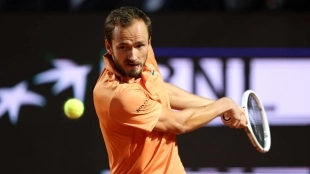 16 May 2026 | 01:00This was the perfect tactic that Medvedev was applying to Sinner in Rome
 -
 15 May 2026 | 14:00Eala opens up about fame and pressure: "My first obligation is to myself"
 -
 16 May 2026 | 17:00Medvedev gives his opinion on the controversy of Sinner and cramps