|
26 Jul 2026 | 08.38
|
26 Jul 2026 | 08.38





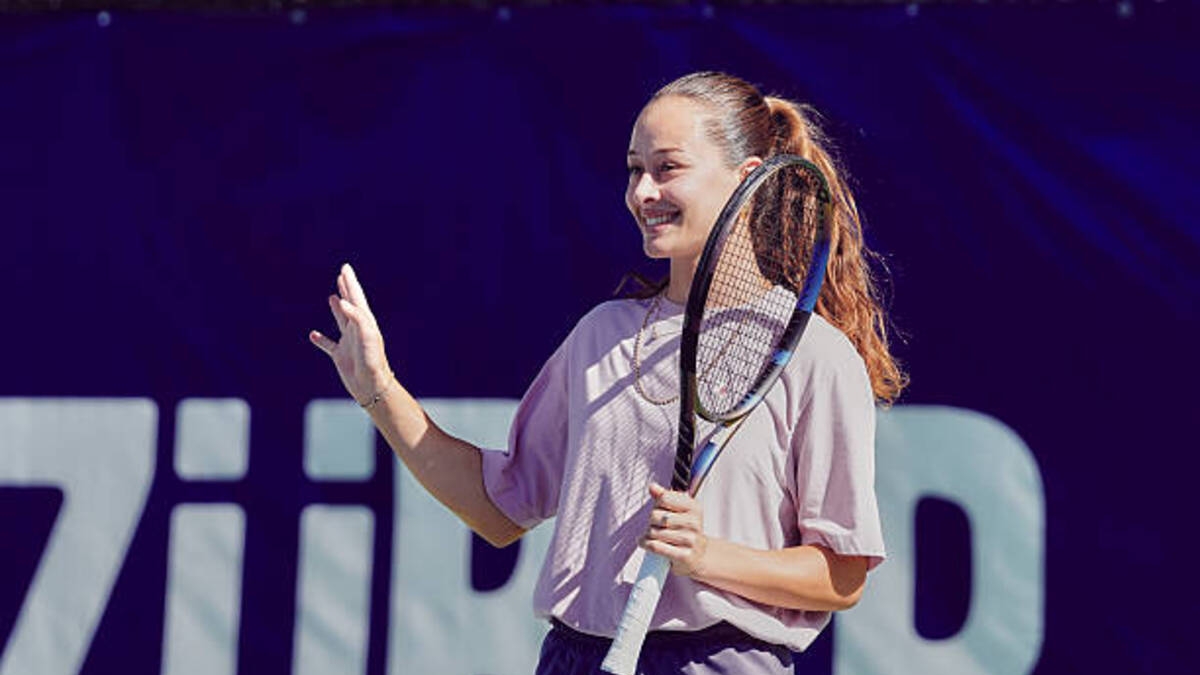


Zeynep Sonmez is experiencing the best moment of her career, firmly established at 24 years old in the top-50 of the WTA ranking, but reaching that point has required overcoming obstacles that go far beyond the purely tennis-related. She reflected in an interview with the Turkish magazine Bee Haber on the personal sacrifice demanded by the elite and the difficulties of coming from a country without a strong tradition in this sport.
The emergence of Zeynep Sonmez constitutes an event of enormous significance for Turkish tennis, placing her in scenarios that practically no compatriot has experienced before her. Constant travel, long absences from home, accelerated learning, and the obligation to maintain an extraordinary physical, mental, and tennis stability for practically eleven months a year form the flip side of a progression that from the outside may seem merely exciting.
Sonmez explains the difficulties of growing up without a consolidated tennis culture
There are countries where a young talent has references, experienced elite coaches from the early stages, established structures, and previous generations of players capable of passing on knowledge. Sonmez considers that she had to discover many things on her own.
"I come from a country where tennis is not very popular. I didn't grow up in an environment where tennis culture was widespread. That's why I had to learn many things on the fly," explained the Turkish player.
Zeynep Sönmez, tenis kültürünün yaygın olmadığı bir ülkeden gelmenin zorluğunu anlattı:
— Bee Haber (@beehaber) July 23, 2026
🔹 “Tenisin çok popüler olduğu bir ülkeden gelmiyorum.”
🔹 “Tenis kültürünün yaygın olduğu bir ortamda büyümedim.”
🔹 “Bu yüzden birçok şeyi yolda öğrenmek zorunda kaldım.”
🔹 “Bazı… pic.twitter.com/ByAbdWMQCN
Sonmez does not use this circumstance as an excuse, but rather as a way to explain why her maturation process has been different from that of other colleagues. Reaching the elite involves much more than hitting a ball well. One must learn to manage schedules, travel, pressure, defeats, surface changes, and all the small routines that allow survival in an extremely demanding circuit.
"Some of my friends have already learned many things as they grew up. By the time they reach that level, they already know some topics in advance. I, however, learned almost everything through experience," acknowledged Sonmez, aware that she is still encountering completely new situations.
This continuous learning is one of the great challenges identified by the world No. 48. While other tennis powers have a collective memory passed down through generations, Turkey continues to build its own.
"That's why, in some aspects, there may be areas where I lack something. The number of things I experience for the first time is greater," she admitted. "They can receive the transmission of experience from players in their own countries. The tennis culture also teaches them many things at an earlier stage," she added.
Her words help understand the difficulty of paving the way. Sonmez not only aims to continue progressing in the ranking, but she is also gaining an experience that could prove very valuable for the future generations of Turkish tennis. Everything that is now a first-time experience for her could become available knowledge for young players trying to follow in her footsteps.
Zeynep Sonmez reveals the mental rigor required to be top-50
However, there is another difficulty that does not differentiate by nationality. Establishing oneself among the top 50 in the world requires maintaining a enormous mental strength throughout an endless season, where there is barely time to disconnect. "To be in the top 50, you need to be mentally very strong. Because almost every week we are traveling. You have to be prepared to be away from your family and loved ones," Sonmez pointed out.
Zeynep Sönmez, dünya sıralamasında ilk 50’ye girmenin en zor tarafını anlattı:
— Bee Haber (@beehaber) July 23, 2026
🔹 “İlk 50’de olmak için mental olarak çok güçlü olmanız gerekiyor.”
🔹 “Çünkü neredeyse her hafta seyahat ediyoruz.”
🔹 “Ailenizden ve sevdiklerinizden uzak kalmaya hazır olmalısınız.”
🔹 “Bu,… pic.twitter.com/THv9i6nrO7
The professional circuit demands chaining continents and tournaments for months. To this physical demand is added the need to compete each week with renewed enthusiasm, quickly embrace defeats, and prevent bad results from contaminating the next commitments. Maintaining emotional stability throughout the year can be as decisive as any technical skill.
For Sonmez, there is also a particularly painful aspect. "This has been one of the most difficult parts of my job. Being away from Istanbul and my family has always been hard for me," she confessed.
Zeynep emphasizes the need to spend more time at home during the season
The Turkish player offered a particularly revealing confession to understand how challenging it is to adapt to the circuit dynamics. A defeat did not only mean being eliminated from a tournament but also immediately sparked the desire to return to her environment. "Every time I lost a match, I thought, 'What if we go back home?' Even between tournaments, I wanted to go back home," she revealed.
This is precisely where one of the major differences between occasionally playing big tournaments and establishing oneself in the elite emerges. A player must learn to accept that the next destination is often thousands of kilometers away from home and that a defeat does not mean the end of a journey, but simply the beginning of preparing for the next week.
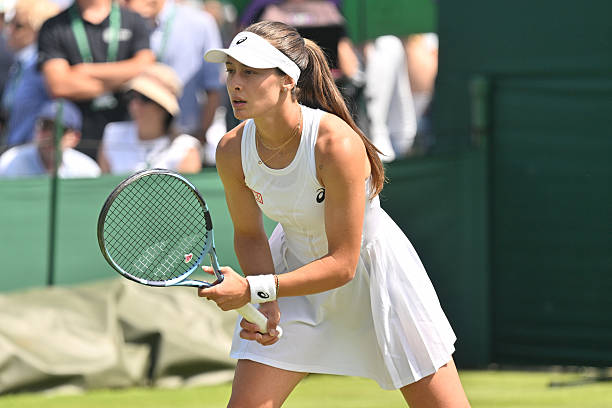
The figure provided by Sonmez summarizes better than any explanation the necessary sacrifice. "Last year, we only spent 50 days in Turkey," she revealed. Achieving the 48th spot in the ranking means breaking down numerous barriers but also opening new ones. Sonmez now needs to turn great results into a constant and learn to handle increasingly high expectations without losing the enthusiasm that drove her growth.
Her situation also underscores to what extent succeeding in tennis depends on much more than talent. Mental stability, the ability to live far from home, continuous learning, and access to a structure familiar with the particularities of the elite can make huge differences.
Sonmez has had to acquire much of that knowledge as she advanced and competed against players who grew up in a much deeper tennis tradition. Now, established in the top-50, she faces a different but equally complex challenge: ensuring that everything learned ceases to be a series of first experiences and becomes the necessary routine to remain among the world's best for many years.
Cette actualité est une traduction automatique. Vous pouvez lire la nouvelle originale Zeynep Sonmez desnuda la cara más dura del tenis: "El año pasado pasé 50 días en casa"
-
 25 Jul 2026 | 11:00Le calendrier met en échec le Masters 1000 du Canada
 -
 25 Jul 2026 | 10:00Sinner dit adieu aux 9 Masters 1000 en un an avec une décision surprenante
 -
 24 Jul 2026 | 20:00Coup mortel au Masters 1000 de Canada : Sinner et Djokovic se retirent
 -
 26 Jul 2026 | 14:00L'idée de Roland Garros pour freiner le boycott des tennistas
 -
 25 Jul 2026 | 21:00Les 5 grands favoris pour le titre au Masters 1000 de Canada
 -
 25 Jul 2026 | 12:00Auger-Aliassime et l'opportunité de sa vie au Masters 1000 de Canada
 -
 26 Jul 2026 | 15:00Eala change complètement la vision du tennis aux Philippines