|
2 Jul 2026 | 15.48
|
2 Jul 2026 | 15.48





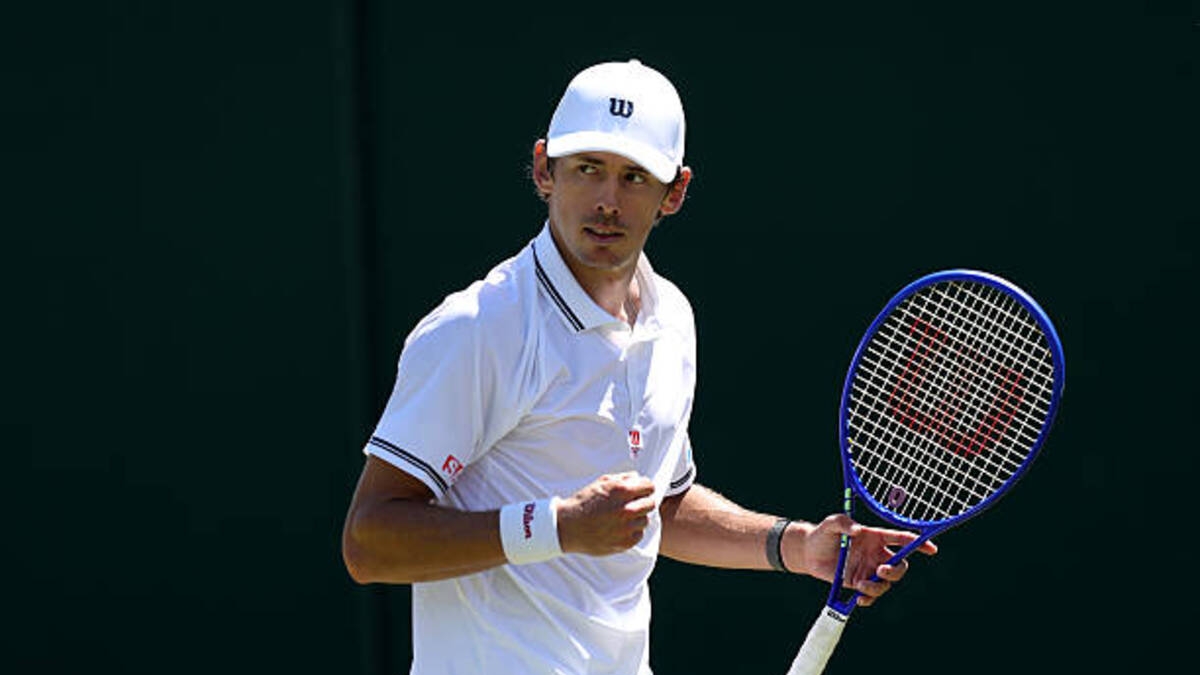


Alex de Miñaur continues to advance firmly in Wimbledon 2026. The Australian delivered one of his most convincing performances of the tournament by defeating Adrian Mannarino convincingly with a score of 6-3, 6-2, and 6-2, confirming the good sensations he has been showing on the London grass.
After the match, the Australian number one explained how he modified his serving approach to overcome one of the best returners on the circuit, reflected on the importance of the mental aspect in Grand Slams, and shared an interesting theory on how to approach the two weeks of competition in a major. Álex de Miñaur also discussed the Wimbledon 2026 draw following Ben Shelton's elimination and one of his great passions off the court: vintage watches and cars.
Alex de Miñaur explains the philosophy with which he faces Wimbledon
De Miñaur reveals how he transformed his serve to surpass Mannarino
The Australian admitted that his initial plan was not working against one of the best returners on the circuit and that he had to completely change his strategy during the match. "I am very pleased with the level I showed. I knew it was a very tough match, and I think I did exactly what I needed to turn it around. There were tough moments, but the serve helped me a lot to get through them.
Adrian is one of the best returners on the circuit and puts a lot of pressure on all your service games. Initially, my idea was to make a very high percentage of first serves, taking some speed off and aiming more for his body.
But it wasn't working. I was missing many first serves even without risking too much. Interestingly, when some important points arrived, I decided to hit with much more determination and increase the speed. I started serving over 200 kilometers per hour, got free points, and began to gain a lot of confidence. In the end, I understood that instead of just aiming for the percentage, I needed to trust my serve and be more aggressive."
The Australian believes that tennis is no longer the issue: it's all about mental strength
After several irregular months, De Miñaur believes his tennis is back to where he wants it, but points out another aspect as the real challenge to compete for great results again. "It was a very solid match. Against someone like Adrian, you never feel like you are playing comfortably because we both make each other feel uncomfortable. There are many unusual exchanges, very flat shots, the ball always stays low, and there was also some wind.
I am proud of how I managed the tough moments. I know I still have room to play better, but I really like the mentality with which I am facing these last few days. I am clear that if I want to have a chance of going far, that mental aspect has to match the tennis I am showing. The level of play is there. Now I need my head to be up to the task when the crucial moments arrive."
De Miñaur explains the great lesson he learned to compete in Grand Slams
The Australian shared a very interesting reflection on how his approach to facing major tournaments has changed compared to the early years of his career. "At the beginning of my career, I was too demanding on myself. I wanted to start the Grand Slams playing my best tennis from day one, and that often ended up frustrating me when things didn't go as expected.
Over time, I learned that the first week is solely about surviving and progressing. It doesn't matter if you play incredibly or poorly. It doesn't matter if you win beautifully or in a struggle. The only thing that matters is staying alive in the tournament.
When that first week ends, everything changes. It's almost like a reset. There you can change gears and really start thinking about going far or even winning the tournament. It's two completely different mindsets. First, you have to survive any situation that comes up, and then you can start enjoying the tournament much more."
Álex doesn't want to look at the draw despite Ben Shelton's elimination
Asked about Ben Shelton's unexpected defeat, who was his potential quarterfinal opponent, De Miñaur made it clear that he doesn't intend to deviate from his philosophy. "Right now, I'm only in the third round. Obviously, I want to go far, but there are still many matches ahead.
I didn't even know who my next opponent would be until after my match. If I play against Kamil Majchrzak, I will try to get my revenge because he defeated me recently and is playing with a lot of confidence. If it's Svajda, it will be our first encounter. This sport constantly proves that anything can happen. Surprises are common. The ranking means absolutely nothing when a match begins. Both players start from scratch."
Alex de Miñaur continues to convey excellent sensations at Wimbledon, both through his level of play and the maturity with which he faces each match. The Australian believes he has found the balance between tennis and mental strength, a combination he considers essential to finally be able to make a deep run at the All England Club.
Cette actualité est une traduction automatique. Vous pouvez lire la nouvelle originale De Miñaur explica cuál es la lección más importante para aprender a competir en un Grand Slam
-
 01 Jul 2026 | 22:00Le manque de lumière reporte la fin du match Jódar-Carreño jusqu'à demain
 -
 02 Jul 2026 | 00:00Tsitsipas, à propos de la rupture avec son père : "Siento un gran alivio"
 -
 02 Jul 2026 | 16:00Horaire et où regarder Novak Djokovic contre Arthur Rinderknech à Wimbledon 2026
 -
 02 Jul 2026 | 10:00Le témoignage brutal de Swiatek pour défendre sa psychologue
 -
 02 Jul 2026 | 08:00Pegula donne son avis sur le polémique changement de lieu des Finales WTA
 -
 02 Jul 2026 | 15:00Jódar trouve la lumière pour remonter Carreño à Wimbledon
 -
 02 Jul 2026 | 09:00Ce Sinner n'est pas celui d'avant Roland Garros
 -
 01 Jul 2026 | 22:00Djokovic carbure et domine un Tsitsipas inoffensif