|
25 Jul 2026 | 16.34
|
25 Jul 2026 | 16.34





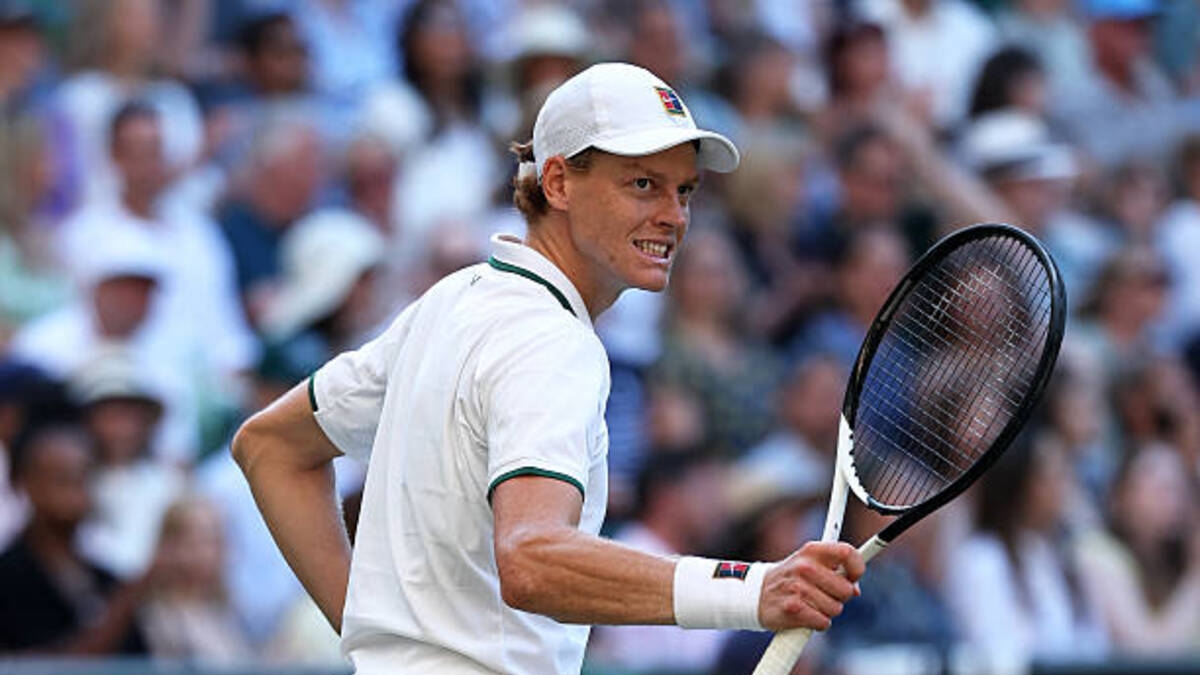


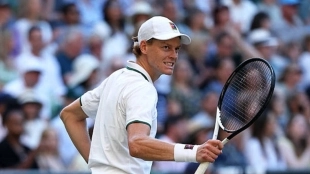
Jannik Sinner has granted an interview to Il Secolo XIX in which he reflects on his present and future, the importance of his family, and the legacy he wishes to leave beyond his sporting successes. The world number 1 and reigning Wimbledon 2026 champion acknowledges that he wants to convey "joy and positive energy" with his tennis as he prepares for the return to hard courts.
At 24 years old, Jannik Sinner already boasts five Grand Slam titles and over 80 weeks at the top of the ATP rankings. However, his discourse continues to distance itself from any public obsession with records. After taking a few days to recover from his second consecutive Wimbledon, he talked about the dizzying speed at which 2026 is passing, his roots, and the family values that he considers essential to understanding both the tennis player and the person.
Sinner is already preparing for the return to hard courts
The season is entering a decisive moment. After defending his crown at Wimbledon, Sinner now has his sights set on the North American swing and, especially, on the US Open where he will once again be among the top contenders for the title.
"Together with my team, we are already preparing for this second part of the season and the return to the hard courts. The first seven months have flown by, and we have achieved excellent results. Obviously, we are very happy to have defended the title at Wimbledon; it was a truly special moment for all of us," he explained.
The Italian has plenty of reasons to make a positive assessment. His dominance in 2026 has been extraordinary, winning all the Masters 1000 events he has participated in so far, in addition to reclaiming the throne at the All England Club.
Now he must decide how to manage his efforts ahead of New York. Toronto and Cincinnati loom on the horizon, although it is not yet decided whether he will compete in both Masters 1000 events or choose to reduce his schedule to arrive in optimal conditions for the last Grand Slam of the year.
Jannik Sinner ensures that the pursuit of excellence is what drives him
The location of the interview allowed Sinner to look back. Born in San Candido and raised among the mountains of South Tyrol, his life changed radically when he left home at just 13 years old to settle in Bordighera and develop his tennis under the guidance of Riccardo Piatti.
That move to Liguria established a special relationship with a landscape radically different from his childhood. "The sea is beautiful. In Italy, we are very lucky, we have the sea, the lakes, the mountains, and the islands. The landscapes of our country are very diverse and incredibly rich," he stated.
"The sea has always conveyed to me a sense of vacation, relaxation, tranquility, and beauty. With Explora Journeys, I can experience it in a different way, aboard a boat, immersed in the sea and surrounded by nature," Sinner added.
Finding moments of disconnection is becoming increasingly important for someone subjected to competitive pressure almost year-round. His collaboration with the company allows him, as he explained, to combine that constant pursuit of excellence with a very Italian way of understanding enjoyment outside of work.
"We always try to give our best and seek excellence in everything we do. One could say that we never stop. But we are also Italian, and we know how to enjoy the beautiful things in life: a good dinner, a trip to a new place, the time we spend with the people we love," he reflected.
Sinner points to his parents as a fundamental influence
Once again, the family emerges as one of the central pillars of his discourse. Sinner has never hidden the significance of his parents in allowing him to pursue his career without turning sporting expectations into a burden. "I consider myself very fortunate to have the parents I have. They always helped and supported me, never pressuring me," acknowledged the world number 1.
This is an idea that Sinner also tries to convey when asked about the children who currently look up to him as a role model. His success has brought about a profound transformation in the popularity of tennis in Italy, and many young people aspire to follow in his footsteps. But he deems it essential that sports do not prematurely become an obligation.
"I think it is important to let children choose the sport they like the most. Above all, they must have fun and appreciate the sport they practice without feeling pressured," he defended.
It is significant that this philosophy comes from someone who left home at a very young age to pursue the dream of becoming a professional tennis player. The tremendous demands that culminated in reaching the top do not alter his conviction that enjoyment should always be the starting point.
Jannik vindicates his desire to be remembered for his personality, not just his tennis
Sinner is only 24 years old, yet his sporting achievements inevitably raise questions about his legacy. Already the most successful Italian tennis player in history, he has captured five Grand Slams and ten Masters 1000 titles, with only Roland Garros remaining to achieve the Career Grand Slam.
However, when asked what he would like people to remember about him in a decade, his initial reaction was to downplay the question. "I am only 24 years old; it is not easy to answer this question. Beyond the results achieved on the court, I would like people to remember me for the type of person I am and for the values my parents have instilled in me," he confessed.
This response aligns with the image Sinner has projected during his rise. Winning has become a constant, but the Italian insists on separating sporting results from what he truly deems important when contemplating the legacy he wishes to leave behind.
There is, however, a second aspect of that legacy that is closely tied to his tennis. Sinner wants his matches to be remembered not only for the trophies they produced but also for the emotions generated among those who watched them. "Perhaps someone will also remember me because they had fun watching my matches," the Italian expressed.
This reflection gains special relevance due to the social impact his success is having in Italy. Sinner has decisively contributed to turning tennis into a mass phenomenon in his country and particularly perceives that connection whenever he competes in front of his compatriots. "When I play in Italy, the audience always gives me tremendous support, and I hope to be able to also convey joy and positive energy," he concluded.
Jannik Sinner will now face a second half of 2026 full of sporting goals. The North American swing, the US Open, and the chance to continue building a historic season once again put results at the forefront. However, his words in Il Secolo XIX reveal a much broader perspective. He wants to win, but he also wants to transcend his victories. And when the time comes to look back, he aspires for his titles to be just a part of the tennis world's memory of him.
This news is an automatic translation. You can read the original news, Sinner, sobre su legado: "Quiero que me recuerden por el tipo de persona que soy"
-
 25 Jul 2026 | 10:00Sinner says goodbye to the 9 Masters 1000 in a year with a surprising decision
 -
 24 Jul 2026 | 13:00The most unexpected Grand Slam champions and finalists in tennis history
 -
 25 Jul 2026 | 11:00The calendar puts the Masters 1000 in Canada in check
 -
 24 Jul 2026 | 20:00Lethal blow to the Masters 1000 in Canada: Sinner and Djokovic withdraw
 -
 25 Jul 2026 | 12:00Auger-Aliassime and the opportunity of his life at the Masters 1000 in Canada
 -
 24 Jul 2026 | 19:00"Federer knew he was very good and didn't deny it"
 -
 25 Jul 2026 | 16:00Sinner, on his legacy: "I want to be remembered for the type of person I am"