|
1 Jul 2026 | 22.05
|
1 Jul 2026 | 22.05





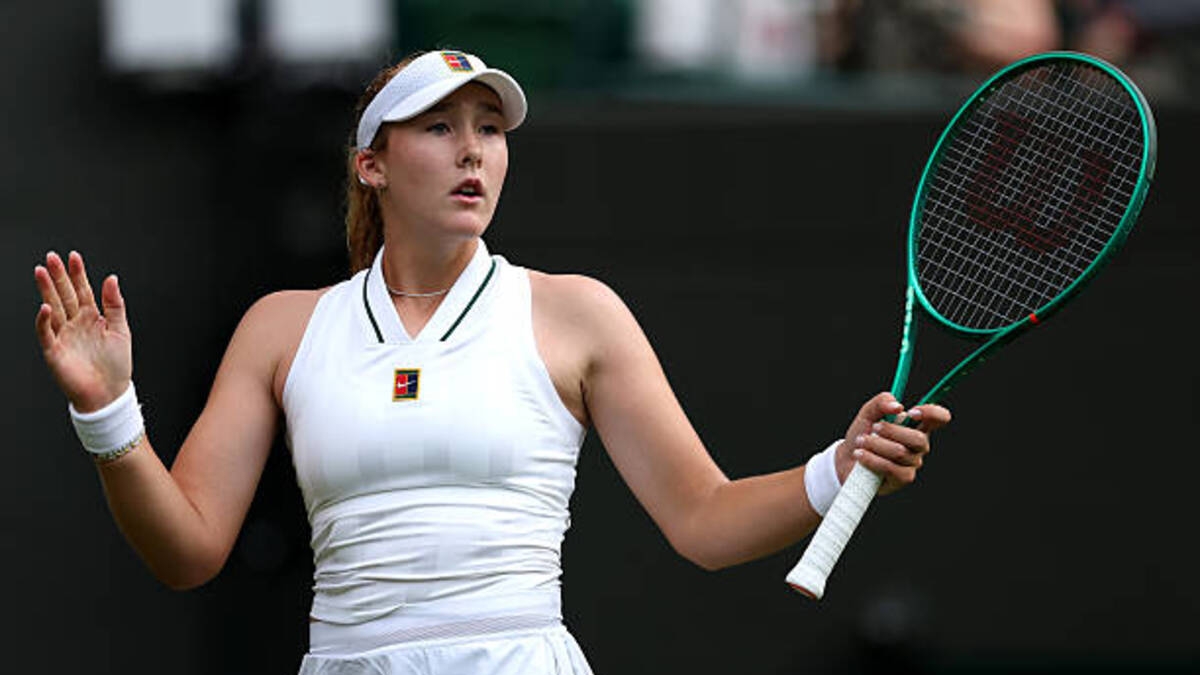


The adventure of Mirra Andreeva at Wimbledon 2026 ended much sooner than expected. The recent Roland Garros champion fell in three sets against Barbora Krejcikova (4-6, 7-5, and 6-4), in a highly competitive match that confirmed why the Czech remains one of the most uncomfortable opponents on the circuit when she is healthy.
Beyond the outcome, the defeat calls for a contextualization of a particularly challenging scenario for the Russian player: just a few weeks after winning her first Grand Slam and on a surface where she is still learning, she faced a double Grand Slam champion whose current ranking does not truly reflect her level.
The draw was particularly harsh on Andreeva. Krejcikova has dropped many positions in the last year due to physical issues that have affected her consistency, but she remains an extraordinarily dangerous player, especially on grass. Her tennis full of variations, changes of pace, drop shots, slices, and constant invitations to step out of the comfort zone represent exactly the kind of challenge that can unsettle a player as aggressive and dominant from the baseline as the Russian.
The result may be surprising given the form of both players at the moment, but the match's development confirmed that probably few rivals posed as much danger to Andreeva in a second-round encounter.
Mirra Andreeva's adaptation to grass is still a process
Andreeva never made excuses after the defeat. The Russian acknowledged that she had opportunities to turn the match around, but she also admitted that her opponent ended up imposing the type of game that suited her best. "It was a tough match. She played very well. I think I had my chances and options, but they didn't work out as I wanted. Today, she was the winner," she explained.
When asked about the difficulties she encountered during the match, she quickly identified the main issue. "She is a very tricky opponent, especially on grass. She changes the pace a lot. Her slices and drop shots here barely bounce, they stay very low, and I had a lot of trouble with that."
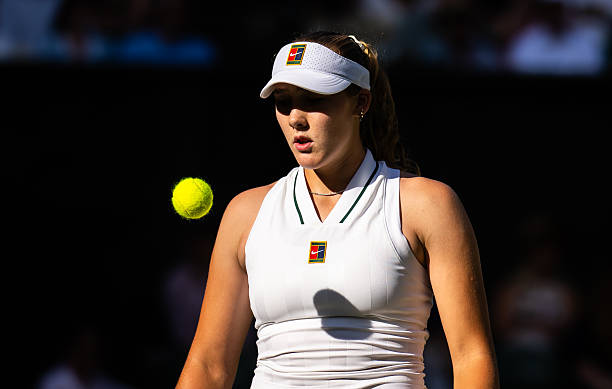
The reflection perfectly illustrates one of the significant differences between clay and grass. While at Roland Garros Andreeva can impose the weight of the ball and dominate the rallies from very solid positions, at Wimbledon there are players like Krejcikova, capable of constantly disrupting the match rhythm and forcing opponents to hit from very uncomfortable heights.
The Russian herself acknowledged that she did not showcase her best form. "I also made many mistakes. She played very well, but I feel I could have played much better myself."
Success at Roland Garros also requires enormous emotional strain
Although Andreeva avoided using Roland Garros as an excuse for the defeat, it is inevitable to think that the transition between both Grand Slams represents one of the biggest challenges in the calendar. When directly asked about that transition, she responded naturally. "It's not easy, of course. But I'm not the only one who has to do it. More or less, we all are in the same conditions."
The response reflects the maturity with which the Russian is learning to manage a new scenario for her. Just a few weeks ago, she won the biggest title of her career in Paris and became one of the top contenders wherever she competes. This new status also implies coping with different pressure and almost constantly adapting to a completely different surface.
It doesn't seem coincidental that the defeat came precisely against a specialist like Krejcikova, a player with a lot of experience, winner of Wimbledon and Roland Garros, whose current ranking does not reflect the real threat she poses when she strings together several matches.
Krejcikova reminded why she remains one of the great competitors on the circuit
From the other side of the net, the Czech did not hide the respect she feels for the new Roland Garros champion. "I'm very proud and happy to have managed to win this match. Playing against Mirra is very difficult. She just won Roland Garros a few weeks ago," she stated.
The outcome was particularly dramatic. Krejcikova wasted up to six match points before finally closing the match, but she never stopped believing. "I knew perfectly well that Mirra was going to keep returning all the balls and that she would force me to win the last point. Even when I couldn't close the match with my serve, I was convinced I would have another opportunity on the return."
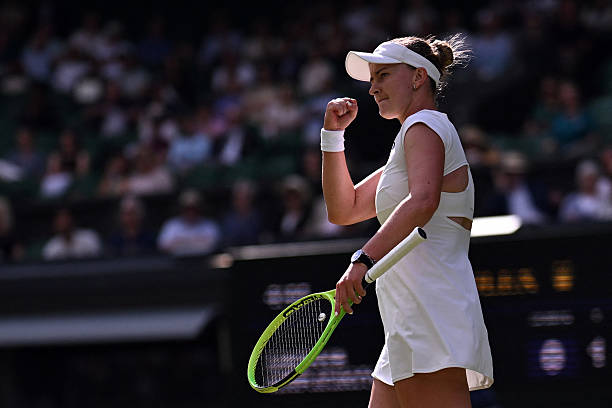
That experience ended up making the difference in the decisive moments. The Czech knows perfectly how to manage these kinds of situations and, furthermore, she feels especially comfortable on the Centre Court of the All England Club. "Every time I step on the Centre Court of Wimbledon, I feel something very special. It's an almost unreal sensation. Thinking that a little girl can make it here always moves me."
Krejcikova, a much more dangerous opponent than her ranking indicates
One of the big mistakes that can be made when analyzing this defeat is to focus solely on Krejcikova's ranking. The Czech has significantly dropped in the rankings due to the limited continuity caused by injuries and physical problems that have also affected a large part of this season.
In fact, she herself admitted that she arrived at Wimbledon with many doubts after being ill during the previous tour. "A couple of weeks ago, I fell ill, and it was very tough because it happened right before a final. I felt I was playing very well, and that was a significant setback."
So, she was even surprised by the level she displayed against Andreeva. "Honestly, I was surprised that I could play such a good and lengthy match. Physically, I had difficult moments, but in the end, I responded quite well."
Her victory confirms a reality that the circuit has known for a long time: when Krejcikova is healthy, she remains a player with more than enough tennis to compete for the most important titles.
Defeat doesn't change Mirra Andreeva's tremendous growth
The elimination is painful, especially due to the way it happened and the opportunity that seemed to arise after winning Roland Garros. In fact, Andreeva couldn't hold back tears when asked about how she would face the upcoming days. "I think I will need a couple of days," she responded emotionally before explaining that she will soon return to training to prepare for the North American tour.
She also recalled a moment that could have turned the match around. After saving six consecutive match points, she believed that the match had definitively shifted in her favor. "I felt I could level the score with my serve. I thought it could be the turning point, but in the end, it wasn't. I didn't serve as well as I usually do, and I missed many easy points with my serve."
However, turning this defeat into an alarm signal would be unjust. The Russian is currently experiencing the best moment of her career and fell to an opponent who, based on experience, variety, and grass adaptation, probably represented one of the most uncomfortable matchups that could be offered in these early rounds. This match clearly showed that Mirra Andreeva still has room to grow on grass. And that Barbora Krejcikova, despite what the rankings say, remains a champion capable of defeating anyone when she finds consistency.
This news is an automatic translation. You can read the original news, Andreeva explica lo que sintió al ser eliminada por Krejcikova de Wimbledon
-
 01 Jul 2026 | 19:00Medvedev: "Winning a Grand Slam is a greater achievement than being number 1"
 -
 01 Jul 2026 | 22:00The lack of light postpones the end of Jódar-Carreño to tomorrow
 -
 01 Jul 2026 | 18:00What if Wimbledon's dark horse is Davidovich?
 -
 01 Jul 2026 | 10:00Alcaraz's refuge to disconnect from his injury: an island in southern Italy
 -
 01 Jul 2026 | 13:00The incomprehensible curse: Fran Cerúndolo is now part of the club
 -
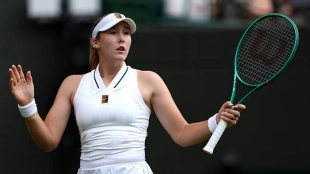 01 Jul 2026 | 22:00Andreeva explains what she felt when eliminated by Krejcikova at Wimbledon
 -
 01 Jul 2026 | 22:00Djokovic is revving up and dominates an harmless Tsitsipas
 -
 01 Jul 2026 | 09:00What a disappointment!
 -
 01 Jul 2026 | 11:00We Tested the Wilson Blade 98 V10 16x19: More Aggressive, Just as Blade