|
16 Jun 2026 | 09.08
|
16 Jun 2026 | 09.08





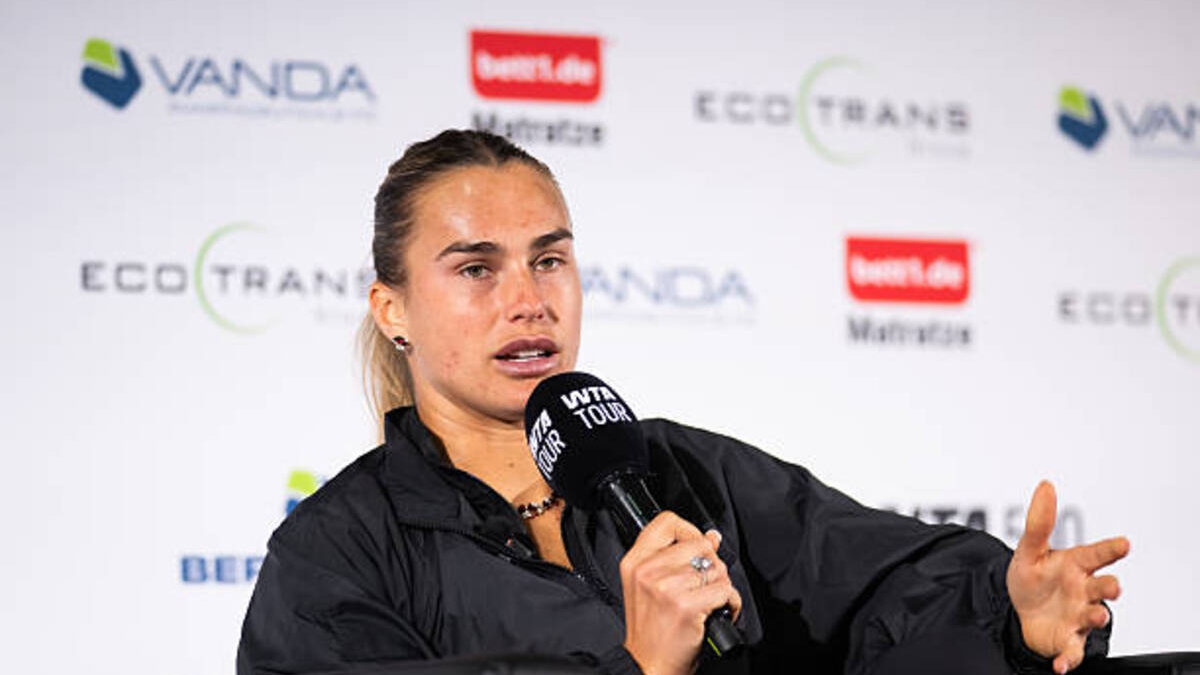


Aryna Sabalenka appeared before the media present at WTA 500 Berlin 2026 to talk about how she is facing the start of the grass court season, dreaming of achieving something big at Wimbledon 2026. However, the most interesting part of her statements was the acknowledgement of severe emotional issues that arose after her defeat at Roland Garros.
The Belarusian has built a significant part of her career learning to deal with frustration. For years, she was considered one of the most talented players on the circuit, but also one of the most emotionally vulnerable in crucial moments.
Over time, she managed to transform that image, won Grand Slams, reached the number one spot in the world, and became one of the most consistent competitors on the planet. However, not even that process fully immunized her against painful losses.
Two weeks after her exit from Roland Garros, Aryna Sabalenka faced the media in Berlin and made one of the most surprising confessions in women's tennis in recent months, as revealed by Bounces. The world number one admitted that she needed professional help to process what happened in Paris and confessed that she sought out a psychiatrist to find tools to move past a defeat that still weighed heavily on her.
Aryna Sabalenka and the emotional blow of Roland Garros
The defeat suffered at Roland Garros made a mark. Sabalenka arrived in Paris as one of the top favorites for the title and feeling like she was going through one of the most solid moments of her entire career. However, the loss to Diana Shnaider ended up having a much bigger emotional impact than she expected.
The Belarusian acknowledged in Berlin that she needed time to come to terms with what had happened. "I definitely needed time to recover after Roland Garros." Far from trying to conceal the pain, Sabalenka explained that for several days she continued to dwell on what had happened on the court. "I was thinking a lot about that match." The feeling was particularly difficult to manage because she felt she had let a great opportunity slip away. "It was a very tough defeat."
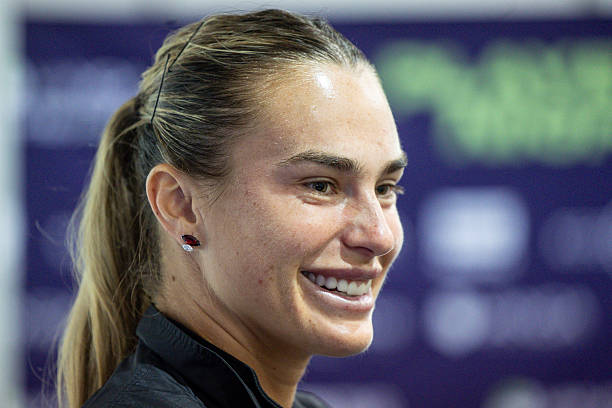
The most striking moment of the entire appearance came when she explained how she tried to approach the emotional recovery process. "I went to see a psychiatrist." The statement caused a huge impact due to the straightforward manner in which it was delivered. Sabalenka shared that she needed help to manage the emotions accumulated after Roland Garros and to prevent herself from getting mentally stuck in that defeat.
"I was looking for a way to move past what happened." The Belarusian acknowledged that the conversations held during those days helped her see the situation from a different perspective. "It helped me a lot." And she added an especially interesting reflection on the importance of seeking help when necessary. "Sometimes you need to talk to someone."
Far from presenting the visit to the specialist as something extraordinary, Sabalenka described it as another tool in the preparation of a professional athlete.
One of the most revealing aspects of her statements was observing how she now interprets that episode. The world number one stated that she tries to find lessons even in the most painful defeats. "I learned a lot about myself." This is not a casual remark.
Over the past few years, Sabalenka has repeatedly explained that a fundamental part of her evolution came when she began to better understand her emotions and actively work on them. In fact, much of the transformation that took her from being an inconsistent player to becoming a Grand Slam champion was related to the psychological work done off the court.
That's why she believes that even unpleasant experiences like the one at Roland Garros can have long-term value. "These situations make you stronger."
Sabalenka already thinking about Wimbledon
Despite everything, the Belarusian made it clear that her intention is to turn the page as soon as possible. "I can't keep thinking about it." The grass court season has already begun, and Berlin represents the first step towards Wimbledon, one of the major goals of the season. Sabalenka emphasized that remaining emotionally anchored to a defeat would not help her at all.
"I have to move forward." That ability to reset quickly has been precisely one of the characteristics that best explain her rise to the top of the world rankings.
The confession made in Berlin also helps to better understand the pressure that the top stars on the tour endure. From the outside, Sabalenka's career seems like a continuous success. She is the world number one, holds several Grand Slam titles, and has been among the best players in the world for years. However, her words remind us that even those at the top experience moments of great vulnerability.
"Sometimes you simply need to accept what happened." Perhaps that statement summarizes better than any other the moment she is going through. Roland Garros is now in the past. The disappointment lingers, but it no longer dominates her thoughts. Now, all attention is focused on the grass court season and Wimbledon. And if anything Aryna Sabalenka has shown throughout her career, it is that few players know how to rebuild themselves better after a fall.
This news is an automatic translation. You can read the original news, La confesión más dura de Sabalenka: "Fui a ver a un psiquiatra después de Roland Garros"
-
 15 Jun 2026 | 20:00Davidovich reveals how he prepares for the grass court tour
 -
 15 Jun 2026 | 00:00ATP Ranking: Djokovic's Presence in the Top 10 in Danger Eight Years Later
 -
 15 Jun 2026 | 13:00Mensik explains what is the hardest thing about playing on grass for him
 -
 15 Jun 2026 | 17:00BREAKING: Jodar withdraws from Queen's due to injury
 -
 15 Jun 2026 | 23:00Daniel Evans' dart at the Queen's tournament after not receiving a wildcard
 -
 15 Jun 2026 | 08:00Alcaraz's recovery enters a crucial moment
 -
 16 Jun 2026 | 10:00The worrying consequences of Jódar's injury ahead of Wimbledon
 -
 15 Jun 2026 | 21:00The serious risk Djokovic faces at Wimbledon
 -
 15 Jun 2026 | 18:00Alcaraz aims for three possible tournaments for his return
 -
 16 Jun 2026 | 07:00Swiatek talks about Chwalinska's feat at Roland Garros: "It changed her life"