|
28 May 2026 | 10.11
|
28 May 2026 | 10.11





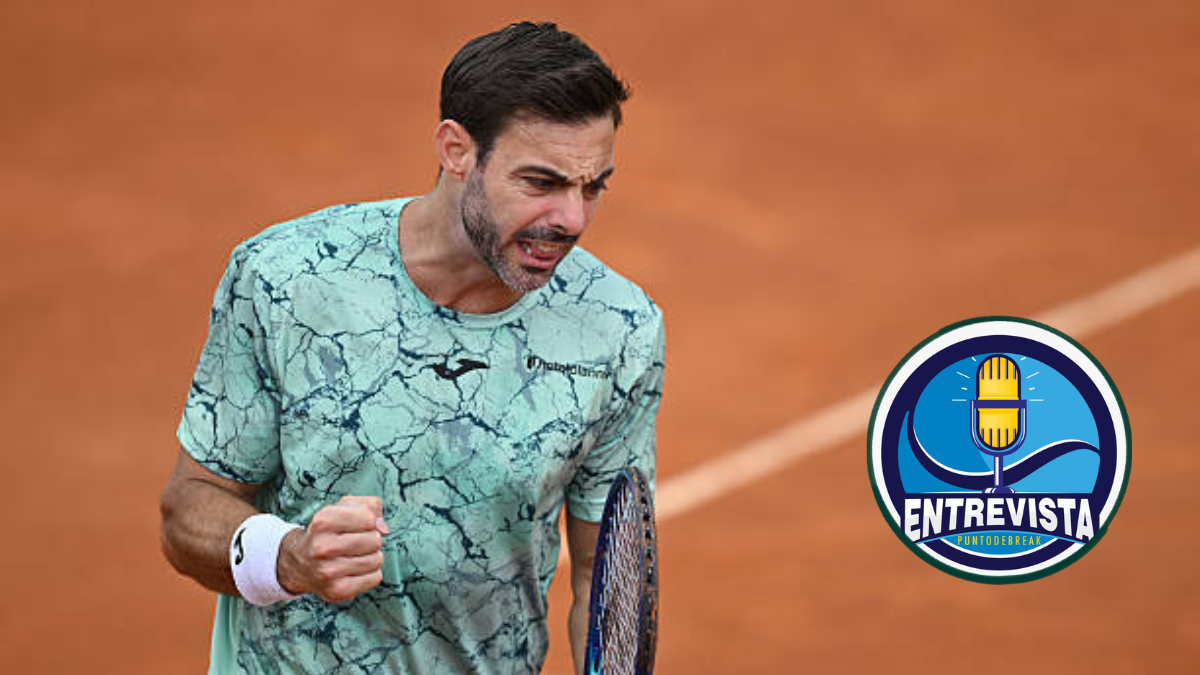


For the first time in his career, Marcel Granollers (Barcelona, 1986) arrived at a Grand Slam as the defending champion. It seems that neither he nor his partner, Horacio Zeballos, have been overwhelmed by the pressure as they started their title defense at Roland Garros without complications against Miomir Kecmanovic and Marcos Giron.
After their smooth debut, Marcel Granollers sat down with Punto de Break to analyze a year in which they haven't won any titles yet, as well as discussing the possible timing of his retirement. Additionally, he shared his opinion on the Roland Garros prize money controversy and provided insight into the current state of doubles.
It's the first time you've arrived as a Grand Slam title defender. Have you felt the extra pressure of being last year's champions?
No, because ultimately it's a stroke of luck to come and have to defend the title. I wish this would happen in every tournament because it means you won the previous year. We truly aimed to defend this title the following year, so it's a privilege to come here as last year's champions.
It's been quite hot these days in Paris. Does doubles play make it less grueling than singles?
Yes, those playing singles are suffering greatly in this heat. It's a discipline where physical condition is crucial. I can say this from experience because when I played singles, under these conditions, it was very tough.
In doubles, the points are much faster, there aren't as many exchanges, and, in the end, singles have five sets while doubles have three. Doubles is a bit more manageable. In singles, you need to be in very good physical condition and be prepared to endure.
In 2021, you haven't won a title yet, although you've reached finals and semifinals. Does this concern you, or is it more important that you're playing well?
We're not concerned at all. We’re playing well. It's very difficult to win titles, especially in the tournaments we compete in: Masters 1000 and Grand Slam. We are showing very good consistency, and I believe that's the most important thing.
We need to maintain our current level. If we win titles, great; if not, we're competing at the highest level against the best pairs and players. It's not easy. Last year, we won several tournaments, and it's not normal to win so many titles in a year. We need to stay grounded and appreciate what we're doing.
Seeing how competitive you are, especially at 40 years old, does that make you postpone your retirement decision?
I take it one step at a time. In my case, it won't depend on winning more or less. Obviously, if you don't win anything, the decision is almost made for you. But I hope my decision won't be based on "if I win, I continue" or "if I don't win, I quit." It will be a personal decision, irrespective of winning or losing.
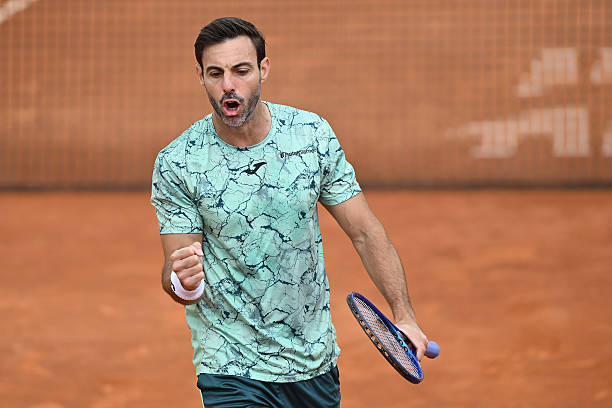
Your partner Zeballos mentioned a few months ago that he's the best player thanks to you. How have you improved with him since you started, both tennis-wise and mentally?
In doubles, an achievement or success can't be understood without your other half, your partner. It's a team effort. I believe we both make each other better. The same goes for me. Horacio is very dedicated in our daily work. Despite our age, good ranking, and results, both of us keep an open mind to keep evolving. That's one of the keys. Sometimes, when you achieve good results, you might fall into complacency in your daily routine and stop wanting to improve. The key is to keep refining details every day because all players can keep getting better.
Today, you played against a pair that usually plays singles. What makes singles players dangerous in doubles?
They have that freedom. It's not their priority, and they can play with a freedom that maybe doubles players don't have. They have that spontaneity, play more by instinct. Singles players have excellent all-around strokes; they're used to long rallies, especially on clay. Here, you have a bit more time, and you can play more from the baseline. They're accustomed to long points. The doubles player has to try to shift the match to the doubles territory. That's where the battle of styles lies.
The main topic at this Roland Garros has been many players criticizing the prize money. We don't hear much about the opinion of doubles players, whose prize is considerably lower. What's your take?
I haven't spoken with doubles partners about this. I've listened a bit to singles players. I do believe we need to fight for better conditions for players. I can't intervene much because, ultimately, doubles doesn't sell. No one specifically comes to watch me in a doubles match. They come for the overall spectacle, but mainly for singles matches.
I can't demand much either because doubles doesn't sell tickets. Here at Roland Garros, people come for the singles matches. Put me on any court, and I'm happy to play there because playing at Roland Garros is a dream for me. But I would fight hard so that singles players, who are the ones truly providing the spectacle, can earn as much as possible. We need to find that balance between the tournament and players because the players need to be happy: they truly provide an incredible show.
Of course, they emphasize mainly base-level players, those ranked 250, who can't make a living from this. But in doubles, it may be even more challenging.
It's about ensuring that as many players as possible can make a living. For those with not such high rankings, it's tougher, and the sacrifice is enormous. Being ranked 150, 80, or 200 in the world is very tough. There are so many people who play well.
I believe the percentages need to be revised so that singles players can earn more, and so can doubles players. But personally, I can't complain much. I speak for myself: I don't sell a single ticket here at Roland Garros, so I can't complain.
In September, there's a Davis Cup tie against Chile after the US Open. Have you talked with David Ferrer?
I haven't been able to discuss this matter. I don't know yet. Three months remain, and a lot can happen. I don't have that on my mind yet.
This news is an automatic translation. You can read the original news, Granollers: "Mi retirada no va a depender de si gano más o menos partidos"
-
 14 Jul 2026 | 18:00Sinner is right: tennis needs Alcaraz more than ever
 -
 15 Jul 2026 | 21:00Losing to Make History: Zverev Is Now Part of an Exclusive Group
 -
 14 Jul 2026 | 15:00Serena Williams's coach calls for a revolutionary change in the Grand Slams
 -
 15 Jul 2026 | 15:00Badosa: "If I had a daughter, I wouldn't make her play tennis"
 -
 15 Jul 2026 | 15:00The historic statistic where Sinner and Alcaraz threaten the Big 3
 -
 15 Jul 2026 | 17:00Fery Sets New Goals After His Historic Wimbledon
 -
 14 Jul 2026 | 23:00Do expectations need to change with Zverev for the US Open?
 -
 15 Jul 2026 | 22:00Alcaraz aims for Cincinnati: appears on the tournament's entry list