|
1 Apr 2026 | 19.56
|
1 Apr 2026 | 19.56





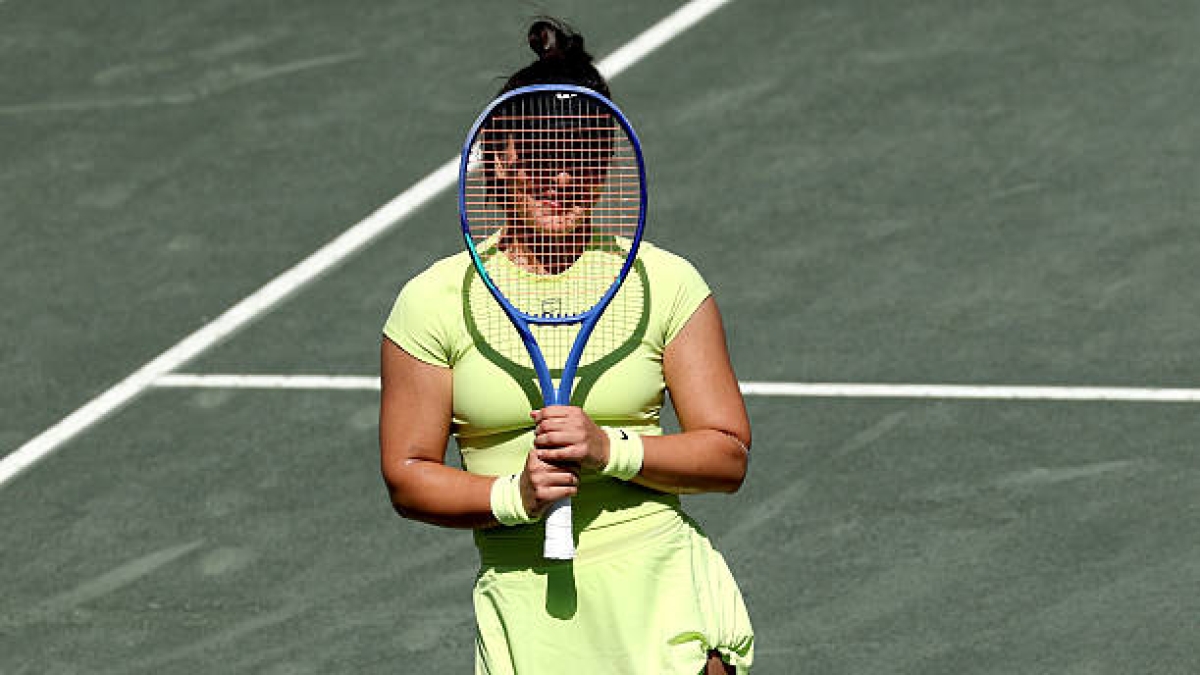


Bianca Andreescu shows signs of life on the circuit again after a period marked by injuries, doubts, and personal reinvention. The Canadian, champion of the US Open in 2019, is now going through a reconstruction phase where the outcome is important, but not the only thing. Her feelings are improving, and after achieving a valuable victory in the WTA 500 Charleston 2026, she shared profound reflections.
Building a house starting with the roof is usually not a good idea, and Bianca Andreescu ran into harsh reality. Injuries, inconsistent performances, poor decisions, and a series of misfortunes and mistakes from which she has learned and from which she aspires to gain strength for the future. There are positive signs in her tennis and, above all, in her philosophy of life and tennis career.
This is how Bianca Andreescu's mentality has changed in recent times
Starting over from scratch: a necessary decision
Far from the big stages, Andreescu decided to take a step back to propel herself forward again. "I thought it was a great decision, I didn't have expectations to win or lose, I just wanted to play matches," explained the Canadian about her time on the ITF circuit, an uncommon choice for players of her caliber.
That change in mentality also meant putting her ego aside. "Maybe in 2024, my ego prevented me from doing it, but now I understood that I needed to compete," confessed Andreescu, showing a rare process of self-criticism. The results soon followed, but the most important thing was another aspect. "I played many matches in a row and my body responded very well, that was what I needed to check," she stated, emphasizing the importance of regaining competitive rhythm.
Personal learning: patience, balance, and perspective
Beyond tennis, Andreescu has undergone a profound internal transformation in recent months. "I have changed a lot, I am learning more about myself," explained the Canadian, pointing to a process that goes beyond the court.
One of the biggest breakthroughs has been mental. "My patience has improved a lot, before I wanted to control everything, now I have learned to let go," she confessed, introducing a key concept in her evolution.

This learning is also linked to her way of interpreting adversities. "I try to see everything as a challenge and not as an obstacle," stated Andreescu, in a declaration that summarizes her new approach to injuries and setbacks.
Injuries and doubts: the lowest point and the conviction to continue
Injuries have been a constant in her recent career, to the extent of generating existential doubts. "There were moments when I thought that maybe this was not my path," confessed the Canadian, showing the emotional toughness of the process.
However, her conviction eventually prevailed. "In my heart, I feel that this is what I must do at this stage in my life," affirmed Andreescu, reaffirming her commitment to tennis despite the difficulties.
This ability to reinterpret pain has been crucial. "My injury from last year opened my eyes and allowed me to meet incredible people," she explained, offering an uncommon perspective on adversities.
A different approach: mind, spirituality, and balance
Andreescu has always been an atypical player, and her relationship with the mental aspect confirms this. "Meditation has always been part of my life and it will not disappear," she asserted, highlighting the influence of her family environment in this area.
Her vision goes beyond purely sports. "Life is not just about perfect moments, challenges are part of the purpose," she stated, in a reflection that directly connects with her recent journey.

Moreover, she has developed interests outside of tennis that help her maintain balance. "I have learned to build important relationships and to value what exists beyond tennis," explained Andreescu, aware that her identity is not confined to the court.
Competing without losing oneself: Andreescu's new challenge
In this new chapter, the Canadian seeks a complex balance between ambition and well-being. "I am clear about what I want, but also that not everything depends on me," she stated, making it clear that her approach has changed. Even in competition, her mentality is different. "I don't want to base my happiness on results, although winning gives you a reference of the work you are doing," explained the North American, in a mature reflection on performance.
At 25 years old, Bianca Andreescu faces perhaps the most important challenge of her career: to return to competitiveness without losing the stability she has worked hard to build. And this time, she seems to have a much clearer path. It will be interesting to see if this shift in mental perception soon reflects in results.
This news is an automatic translation. You can read the original news, Andreescu: "Mi ego me impidió entender lo que necesitaba"
-
 02 Jun 2026 | 19:00Jódar reveals what he has learned from his match today against Zverev
 -
 03 Jun 2026 | 14:00Alcaraz's recovery is progressing with small but firm steps
 -
 02 Jun 2026 | 18:00Zverev reveals if he would trade his Olympic gold medal for winning a Grand Slam
 -
 02 Jun 2026 | 23:00An incomparable Mensik soars at Chatrier and sinks Fonseca
 -
 02 Jun 2026 | 03:00The town does not trust Zverev
 -
 02 Jun 2026 | 17:00Kostyuk: "I don't think about winning, I'm here to represent Ukraine and enjoy"