|
17 Dec 2025 | 10.45
|
17 Dec 2025 | 10.45





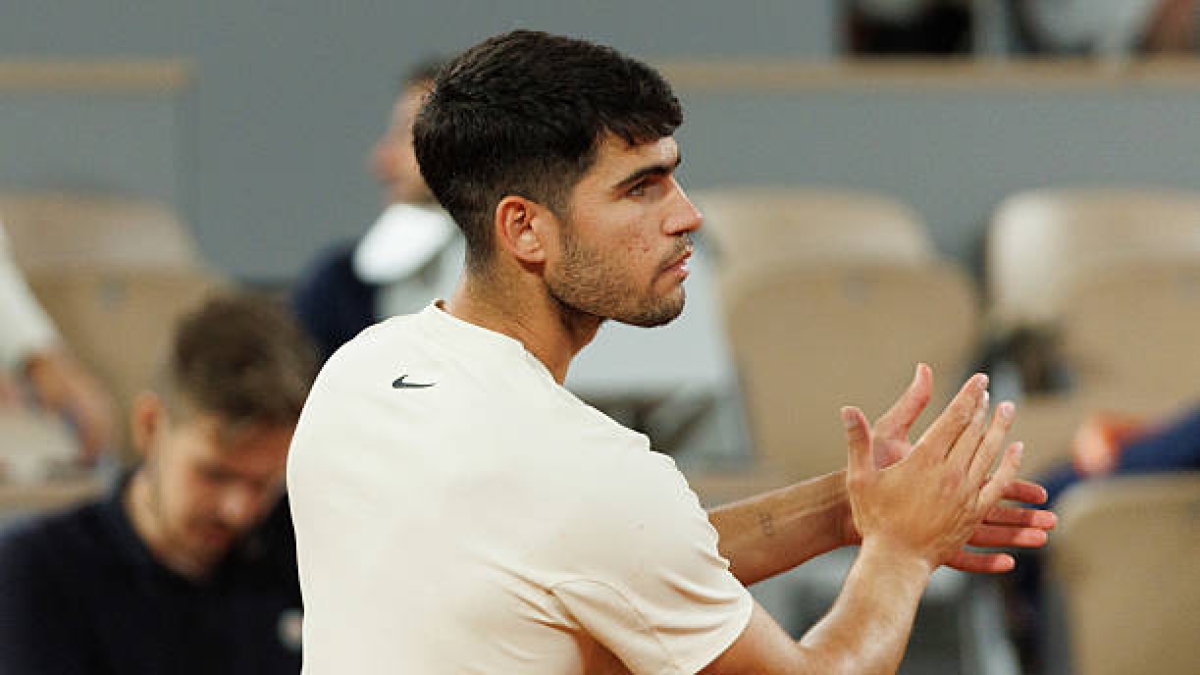


There is less and less room to design the elite ATP calendar for tennis players, who are required to fulfill a series of commitments if they do not wish to give up economic privileges and ranking considerations. Carlos Alcaraz seems to have taken a step forward in managing his sporting commitments, but former tennis player Greg Rusedski believes he has much to improve and should look at Jannik Sinner.
Ending a year after having played 80 official matches is no trivial matter. Carlos Alcaraz has had resounding success in most of the tournaments he has played, leading to a significant number of matches. While it is true that the Spaniard has managed to compete at a high level until the end of the season, the physical issues that kept him from competing in two important events for him, such as the Mutua Madrid Open, the Shanghai Masters 1000, and the Davis Cup, are seen by many as the result of an improvable calendar management.
Alcaraz missed two Masters 1000 in 2025 due to injuries suffered in previous ATP 500 tournaments
To make matters worse, many fans still fail to understand why the player from Murcia participates in numerous exhibitions during the season and in the break between one season and the next, believing that he should prioritize his health over economic interests. This perspective is shared by Greg Rusedski, a renowned former player and esteemed tennis commentator, who, in words spoken on his podcast, was critical of the Spaniard.
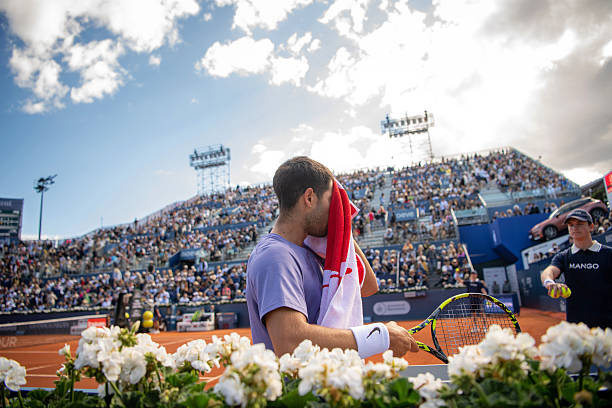
"He missed two Masters 1000 because he played in Barcelona and Tokyo, then got injured at the ATP Finals, having to withdraw from the Davis Cup, yet shortly after he was playing exhibitions in the preseason. He is young and can recover, but I believe he should be smarter and more astute with his calendar. He should learn from Sinner, who played the Six Kings Slam exhibition and won it, but apart from that, he has done nothing in the preseason other than rest and train, skipping the Davis Cup," argued the Brit.
What changes could Alcaraz make to his calendar for upcoming seasons?
It cannot be denied that Carlos Alcaraz has improved his calendar management in 2025, but it is also clear that he will need to make decisions in 2026. He often mentions that he struggles to play at the Australian Open because he lacks rhythm, so it might not be unreasonable for him to register for the United Cup to also compete in one of the mandatory ATP 500 events to aim for ranking advantages and prize money earned. This would give him peace of mind to skip other events of that level throughout the rest of the season.
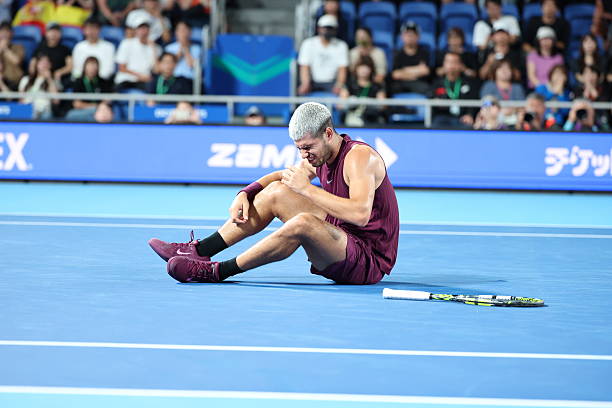
The feeling is that he is determined to make Rotterdam a regular stop on his calendar, then facing the dilemma in the clay court swing of playing in Monte Carlo and Barcelona, seriously jeopardizing the Mutua Madrid Open, or prioritizing the Barcelona tournament over the one in the Principality to arrive safely at the Madrid event. Following these, potential involvements in the Davis Cup and the management of the Asian tour may be subjects for consideration in future seasons.
Regardless of what happens, Carlos Alcaraz must be aware that his health should be paramount and that the money from bonus pools for playing ATP 500 and Masters 1000, as well as ranking points, should take a back seat when it comes to preserving his physical and mental well-being. Exhibitions should not be as much of a concern since they are played at a different pace and offer a spectacular source of income that can offset the economic losses from playing fewer ATP 500 events. In conclusion, there are many decisions to make for the upcoming seasons.
This news is an automatic translation. You can read the original news, "Alcaraz tiene que aprender de Sinner, necesita ser más inteligente con su calendario"
-
 02 Jun 2026 | 03:00The town does not trust Zverev
 -
 01 Jun 2026 | 23:00Osaka, on Sabalenka: "Facing her is different from everything else"
 -
 01 Jun 2026 | 23:00Sabalenka: "I would like to play more times in the night session"
 -
 01 Jun 2026 | 17:00Shnaider reveals what his biggest change was to regain confidence
 -
 01 Jun 2026 | 22:00Berrettini moves all of Roland Garros with a heartbreaking press conference
 -
 01 Jun 2026 | 19:00Can Jódar upset Zverev in the Roland Garros quarterfinals?
 -
 01 Jun 2026 | 21:00Sabalenka is too much for Osaka at Roland Garros