|
1 Dec 2025 | 20.25
|
1 Dec 2025 | 20.25





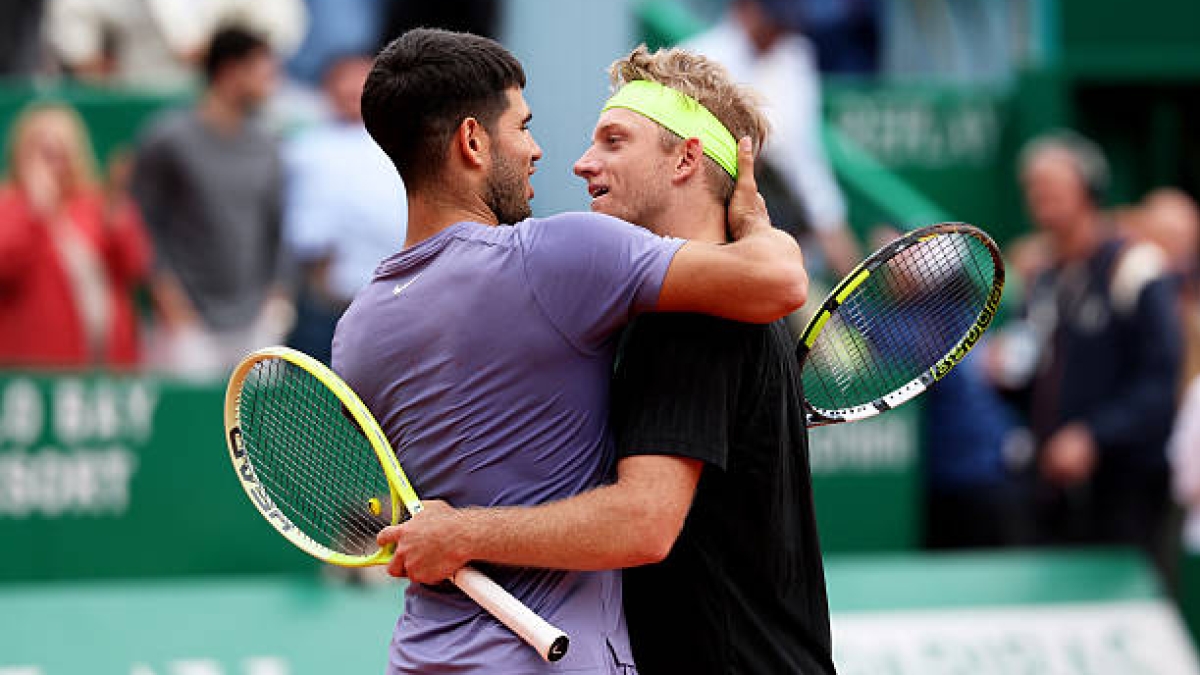


The always difficult task of making people forget about a golden generation caused a certain division in public opinion whenever the subject of Spanish tennis came up. The inevitable decline of standards in our country (see Roberto Bautista or Pablo Carreño), plagued by injuries in 2024, painted a gloomy picture: the lack of capable lieutenants to accompany Carlos Alcaraz in the elite plunged us into a kind of lethargy that, fortunately, lasted just a short while. Why? 2025, of course, changed everything: Spain ends the year with flying colors, with its three best swords experiencing the peak of their careers.
Many countries would like to have Carlos Alcaraz as the spearhead of their tennis. Speaking of many, perhaps all except one (Italy). It is never a bad time to remember: even though Spain no longer boasts the astounding number of top-100 players from a decade ago, it can pride itself on currently having the best version of the best player in the world. There is no need for much reminder about Carlitos' year: his advancements in many aspects (calendar management, consistency, service percentages, maturity on and off the court) ensure a myriad of successes for our country, successes promising to go far beyond what is already, 2025, his best season.
Munar and Davidovich, examples of evolution proving that our tennis is more alive than ever
Nevertheless, the optimism reflected in these lines is not solely about what Alcaraz does. After all, a country's strength is also defined by its depth and ability to support its spearhead; in this sense, 2025 has been the year when Alejandro Davidovich and Jaume Munar took a step forward, reaching new heights and achieving their best seasons to date. The man from Malaga might regret not winning a title; his four ATP finals (Delray Beach, Acapulco, Washington, and Basel), his semifinals in Monte Carlo, his unforgettable comebacks in Australia (highlighted by his match against Mensik), and his final spot in the top-15 (#14 of the year) will undoubtedly allow him to rest easy after a year where, above all, he found stability both on (working closely with Félix Mantilla from the sidelines) and off the court (getting married to his partner, Paloma).
If Davidovich's evolution has been as celebrated as perhaps expected at some point, Munar's has taken us all by surprise. Not so much due to his results or progression, but because of the radical change in his tennis style, unlocking what he has described as "a new door, a new dimension." Improvements in his service and attacking tennis have accompanied the best defensive percentages of his career, making him a more complete player, adaptable to all surfaces. He finishes the season as the #36 in the world, with notable wins against top-20 players, establishing himself as another strong candidate to clinch his first title sooner rather than later.
The hope of a new group of young talents: Jódar, Landaluce, Mérida, or Llamas
The new "golden triumvirate" of Spanish tennis, a trio expected to bring plenty of joy in the future, is combined with a transitional phase that has shown quite a few positive signs in 2025. Pablo Carreño had a strong recovery season, winning several Challengers and returning to the top-100 after a serious injury, although he still seems somewhat distant from the heights he once reached; not so Roberto Bautista, once the epitome of consistency but more affected than ever by discomfort in this 2025. That Praetorian guard, which still resists fading out, promises to be replaced by a new group of youngsters who have stepped up this season.
Undoubtedly, one cannot help but be amazed by a Rafa Jódar who seems to aim higher than anyone else. His five months on the circuit, the ones he could make the most of during his university years, saw him capture three Challengers, break into the top-170, and secure his debut in Grand Slam qualifiers. Additionally, he will feature in the NextGen Finals, alongside a somewhat inconsistent Martín Landaluce, who approached the top-100 more than ever in a 2025 that began with shoulder issues. While his progress is expected to be more gradual, with longer maturation times, his statements and actions reveal a very mature individual, increasingly aware that the journey to stardom is long but that he possesses all the tools to navigate it.
These are the two most prominent men among the group of young Spanish talents, but they are not the only ones. Pablo Llamas made an impressive qualitative leap after overcoming a serious injury, qualifying for two Grand Slams from the preliminary rounds and moving from outside the top-700 to nearing the top-200; Dani Mérida seized his first Challenger title and left his mark in the early stages of the Grand Slams, showing that he can be another great lieutenant in a cohort set to replace figures like Zapata, Carballés, or Pedro Martínez.
The success of the Davis Cup, the latest major victory in an unforgettable year
The People's Davis. A cry that echoed across every corner of Bolonia, a hallmark of a group of guys who proved that rankings do not matter in this competition. Spain fell just short of its seventh Davis Cup despite not having a single minute from its two best players (Alcaraz and Davidovich), a clear sign that there is talent to build upon, with players stepping up and becoming 'Davis men.' The best example, a Pedro Martínez pivotal against Denmark and instrumental in doubles; at 39 years old and with two Grand Slams in 2025, Marcel Granollers continues to show that Spanish tennis is more than secure in a discipline crucial for securing the Davis Cup.
In conclusion, we can dream of reestablishing our dominance at the national team level: a group that eagerly awaits Carlos Alcaraz to take the next step and elevate the team to the next level. Regardless of what happens in this legendary competition, 2025 has become one of the best seasons for Spanish tennis in recent times and, above all, a window of optimism towards a future that seemed somewhat bleak just months ago. Looking ahead to 2026, of course... dream of more and better.
This news is an automatic translation. You can read the original news, La brillantez de Alcaraz, la evolución de Davidovich y Munar, la ilusión de Jódar: el tenis español renace en 2025
-
 26 Jun 2026 | 22:00Davidovich, Mallorca and the golden opportunity to end his great nightmare
 -
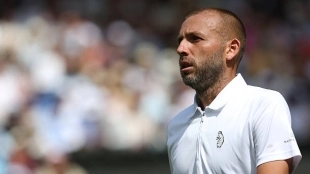 26 Jun 2026 | 14:00Farewell to Dan Evans, an irreverent genius of the kind that no longer exists
 -
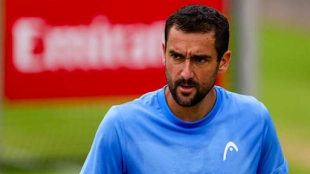 27 Jun 2026 | 12:00Carlos and Jannik are very close to the level of Federer, Nadal, and Djokovic
 -
 26 Jun 2026 | 23:00Sabalenka and the Wimbledon crossroads: title or alarm
 -
26 Jun 2026 | 14:00Farewell to Dan Evans, an irreverent genius that is no longer found
-
 27 Jun 2026 | 13:00Sinner reveals the plan outlined to endure longer matches
 -
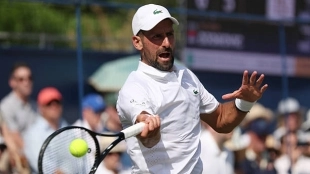 26 Jun 2026 | 18:00Schedule and where to watch Djokovic's debut at Wimbledon 2026 against Yibing Wu
 -
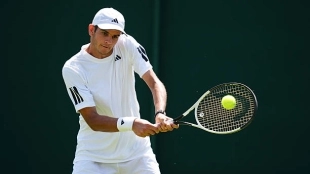 26 Jun 2026 | 18:00Schedule and where to watch Jódar's debut at Wimbledon 2026 against Gill
 -
 26 Jun 2026 | 13:00What can we expect from the Spaniards at Wimbledon 2026?
 -
 26 Jun 2026 | 16:00The big winners and losers of the Wimbledon 2026 draw