|
19 Oct 2024 | 13.47
|
19 Oct 2024 | 13.47





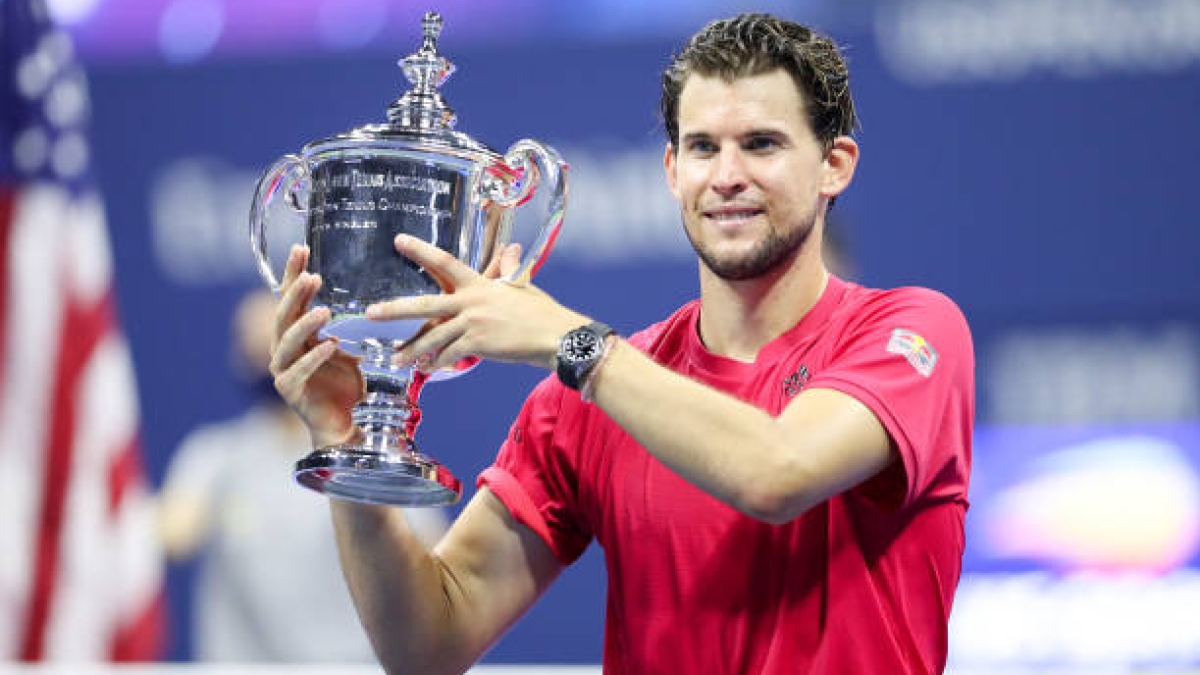


Dominic Thiem will endure in the collective memory as one of those giants capable of challenging the members of the Big Three. His career found reward back in 2020, during a time of closed-door matches where he shone brighter than ever, conquering his first and only Grand Slam at the US Open. That event, fortunately or unfortunately, was a turning point in his tennis career, a career that will come to an end in the coming days, a subject he reflects on in a deep and fantastic interview with Tennis Majors.
- How winning a Grand Slam changed his life
"Honestly, when I look back, I realize that I gave it too much importance. I thought it would make me happy forever, that it would change my life... but that's not how it is. It's an illusion. The truth is that nothing changed. And honestly, if in 20 years, I'm still here, no one will care if I was a Grand Slam champion or not. At that moment, I didn't think that way. I thought that if I didn't win a Grand Slam, my career wouldn't be good, and I would always have doubts. It wasn't an easy situation. It's very nice to have that trophy at home, but in the end, it's just a trophy; it shouldn't make a difference in life. That's how I see it now. I suddenly realized this, and shortly after winning the title, I realized that it didn't have to make me happy forever. After three or four months, things returned to normal, not in the way I expected. It was a challenging experience, but I'm happy I lived through it."
- About putting success into perspective and giving important advice to the youth
"I'm not sure if people can understand what I'm saying, but when I think about happiness and long term life, I believe it's better to understand it this way. I was down 3-5 in the fifth set: it could have ended my career easily, without any Grand Slam... and I would see it the same way. What's truly important is giving your all and showing your best version in every match, enjoying the process. Your life shouldn't depend on two or three points. If you give your all, what more can you ask for?"
- Incredible experiences defeating members of the Big Three
"In 2017, if I remember correctly, I defeated Rafa in Rome and Novak at Roland Garros. They were two incredible victories. That's when I realized that if I played my best tennis, I had chances no matter the surface or tournament. It was key because you have to believe in yourself every time you step onto the court against those legends. It's the same now: if you step onto the court against Alcaraz or Sinner, the only way to have chances is by believing you can do it.
For every player, thinking that if you play your best, you can beat anyone is absolutely crucial. The only match that didn't work out was the 2019 Roland Garros final against Rafa because I feel that I played my best tennis, and he could step it up a notch. My best tennis wasn't enough. That's something you have to accept, and it's easy to accept because there's nothing more you can do. It was the only Slam where that thought didn't work, but in the rest, it did, and that's why I could win so much against them."
- The moment he began to realize that tennis caused him distress
"After the 2020 US Open, I continued to play very well. I reached the quarterfinals of Roland Garros, which was good. After that, I made a mistake: I should have taken more rest; I wasn't ready to go to Australia and return to the circuit. Mentally and physically, I was exhausted, that's the word. The circuit demands that you're always ready, and I wasn't. Still, I went. At some point in the 2021 season, I started feeling the internal fire coming back, the motivation returning... and that's when the wrist injury happened.
Unfortunately, the wrist was never the same after that, especially regarding the backhand. I never found the same feeling. It took me a long time to accept that I was simply chasing old feelings: I always believed that one day I would return to who I used to be. And the moment came when I had to accept that it wouldn't be like that."
"However, my career was incredible. I achieved much more than I expected. Now, I'm no longer the player I was before, and my wrist isn't the same. I could have continued, maybe be in the top 50 or top 100, but honestly, I never enjoyed the tennis lifestyle. If the process yielded results, it gave me the chance to be at the top and win major titles, but now, I prefer to start a new chapter. I prefer it to chasing the top 100. It's not worth it to me, and the risk is no longer the same."
"Sometimes I still feel pain in the wrist. The biggest issue is the sensations; the acceleration isn't there anymore. A crucial part of why I hurt my opponents was because my shots had an extra spin and depth, and the wrist is essential for that. I've lost that extra in my shots, and I'm not the best server in the world; I'm not a talent like Kyrgios to play based on serves, drop shots, and that type of stroke: I need my baseline shots to be at 100%. If they're not, I'm no longer a world-class player."
- How he would like to be remembered and how he will feel on the day of his retirement
"I would like to be remembered, first of all, as a fair and kind player, but also as someone fun to watch playing. That's important, although the most crucial thing is hopefully having been an inspiration for many children and young people to be drawn to this sport. Sport is a fundamental part, especially in challenging times for the world like the ones we live in today. I'm not the type of person who cries a lot, I do not know why, that's just how I am: if there are many emotions, they will be associated with images and memories, especially from tournaments. It will be my 14th time at the Vienna tournament, which is the one I've played the most times: when I play my last points there, all those memories and images from the last 14 times will come up."
This news is an automatic translation. You can read the original news, Thiem y la vida tras ganar tu primer Grand Slam: "Pensé que cambiaría mi vida, pero..."
-
 30 Jun 2026 | 01:00Djokovic explodes against current tennis: "We need a complete reset"
 -
 29 Jun 2026 | 16:00Jódar: "It doesn't surprise me that Nadal did well at Wimbledon"
 -
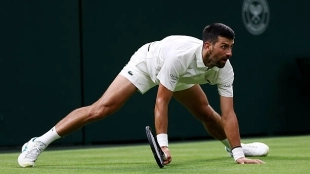 29 Jun 2026 | 23:00Djokovic performs a balancing act to avoid the abyss at Wimbledon
 -
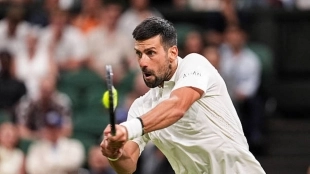 30 Jun 2026 | 10:00Schedule and where to watch Novak Djokovic against Tsitsipas at Wimbledon 2026
 -
 30 Jun 2026 | 10:00Maya Joint, the chosen one
 -
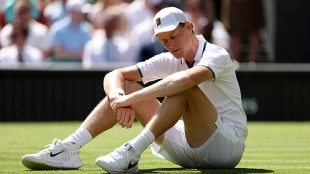 29 Jun 2026 | 19:00Sinner alleviates concern after his slip at Wimbledon: "Grass is like that"