

First, become a professional; then, perhaps you'll be ready for university
Universities, eager to win and taking advantage of the more permissive rules of the NCAA, are recruiting players with considerable professional experience, including some top 200. To what extent is this positive? Gabe Jaramillo, an expert in the field, offers his exclusive analysis.

For years, we advised young tennis players with sensible advice: go to college, get an education, mature physically and emotionally, and develop your game. If professional tennis is still within your reach, pursue that goal with a stronger foundation. Now I wonder if we need to update that advice.
First, play professionally. Win a few titles. Qualify for a Grand Slam. Build a resume in the ATP. Then, perhaps you’ll be ready for college tennis.
Apparently, prior professional experience is now preferred for entry-level access. After more than 50 years of training players, this is quite concerning to me. College tennis has been one of the most valuable opportunities for ambitious young people with great potential who still need time. My concern is that at the highest levels, that opportunity is increasingly offered to players who have already made significant progress in their professional careers.
Consider the University of Texas. In July 2026, Texas announced the signing of Matej Dodig, highlighting his highest ATP singles ranking of 199, a Challenger singles title, and his experience in Grand Slam qualifying rounds. On October 20, they announced the addition of Rodrigo Pacheco Méndez for the spring of 2027, with a best singles ranking of 196 and seven professional titles in singles and doubles.
Texas also added Gabriel Debru, from the University of Illinois, whose resume includes a highest singles ranking of 233 and two Challenger singles titles. These are impressive credentials. Very impressive. They also raise the question of whether a junior should submit a video of their play or ask their agent to arrange a meeting. To be clear: universities recruit players; the NCAA sets the eligibility rules.
I am not claiming that neither Texas nor these athletes have violated any rules. Players have ample reason to seek an excellent education and a solid tennis program. Coaches have every incentive to form the best possible team. Precisely for that reason, these rules deserve to be examined. A system can produce questionable results even when everyone follows the rules.

In April 2026, the governing body of NCAA Division I approved changes that allow future students entering the 2026-27 academic year to accept monetary awards before enrolling, without that alone affecting their eligibility. It also allowed for professional sports agents before entering college. The announcement explicitly distinguished these changes from the rules governing monetary awards
after enrollment. There are reasonable arguments for allowing young athletes to keep the money they earn.
Tennis is costly, and accepting a tournament prize should not automatically erase someone's educational future. But that does not resolve the underlying question: what role should college tennis play in the development of young athletes?
There is a significant difference between a junior testing themselves in professional tournaments and a recruit arriving with several Challenger titles and extensive circuit experience. An ATP ranking alone does not tell the whole story. Neither does the term “freshman.” However, both players may be competing for the same college opportunity.
Imagine the conversation with a 17-year-old who works hard every day. They have trained seriously, maintained good grades, competed in junior tournaments, and followed the advice of adults. They need another two or three years to strengthen, gain confidence, and become a more complete player. We told them that college would be an ideal place to achieve that.
Now imagine having to explain to them that a player with a much more established professional track record is more attractive to the team. “Keep developing,” we say. Sure. Where? The answer cannot always be “somewhere else.” No player is guaranteed a spot at Texas or any other university. College tennis must be competitive. But there is a difference between demanding excellence from developing juniors and creating incentives for them to complete much of their development before a university decides to invest in them.
This starts to resemble a university announcing that its business school prefers candidates who have already created a successful company. Great for the new class's statistics. A bit uncomfortable for the educational mission. Advocates of this model will argue that the best players raise the level. That's true. Training and competing against experienced rivals can speed up development. But that benefit only reaches the junior who makes the team. It does little for those who never get the opportunity.
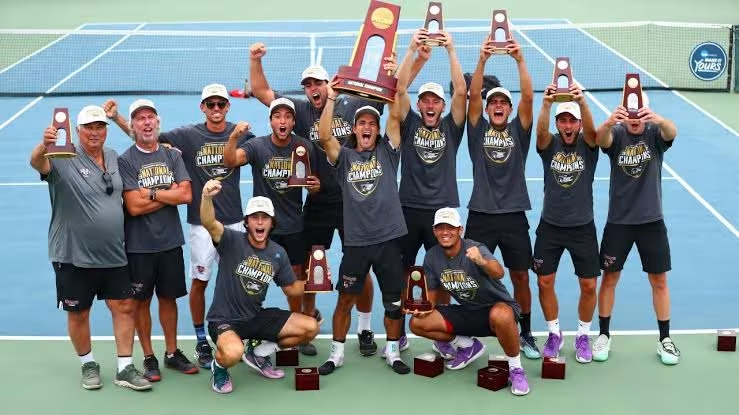
We must also be honest about what the tests show and what they do not. These recruits do not tell us how many juniors have lost a spot. However, they do illustrate an incentive that deserves attention: why bet on potential when you can recruit someone with an established professional trajectory?
As a coach, I worry about where that incentive may lead families. Will they feel pressured to delay college enrollment, finance more international trips, and pursue professional results just to make their children more competitive candidates in the college recruiting process? Will families that can afford that path gain another advantage over those that cannot? Previously, we presented college as a way to mitigate the economic and developmental risks associated with a professional tennis career. It would be an extraordinary achievement to turn professional tennis into the costly preparatory course to get there. My concern extends to juniors worldwide. I have dedicated my career to working with players from various countries. Nationality is irrelevant in this debate. What matters is the opportunity to develop.
I am not suggesting that we abandon the advice to go to college first. For many young people, it remains an excellent path. Precisely for that reason, we must protect its value. The NCAA and its member institutions should examine who is accessing these opportunities, who is being displaced, and whether the eligibility rules adequately consider significant competitive experience before college. They should publish relevant data on the ages of new players, the time elapsed since they graduated high school, and their prior professional experience.
Families deserve clear rules and an honest view of the landscape. Above all, college tennis needs to decide how much it values developing potential, in addition to recruiting those who have already demonstrated their performance. Winning matters. I have dedicated my life to teaching players to compete and win. But the responsibility of an educational institution should go beyond assembling the strongest available lineup.
For decades, we told juniors that college could prepare them for professional tennis. Before investing that phrase, perhaps someone should explain what happened to the young person it was supposed to help. In the meantime, young players, keep working on your serve, your return, and your grades. And perhaps add a Challenger title to your college application. Apparently, extracurricular activities are becoming increasingly demanding.
This is an automatic translation. You can read the original news, Primero hazte profesional; después, quizás estés listo para la universidad