|
18 Jul 2026 | 19.33
|
18 Jul 2026 | 19.33





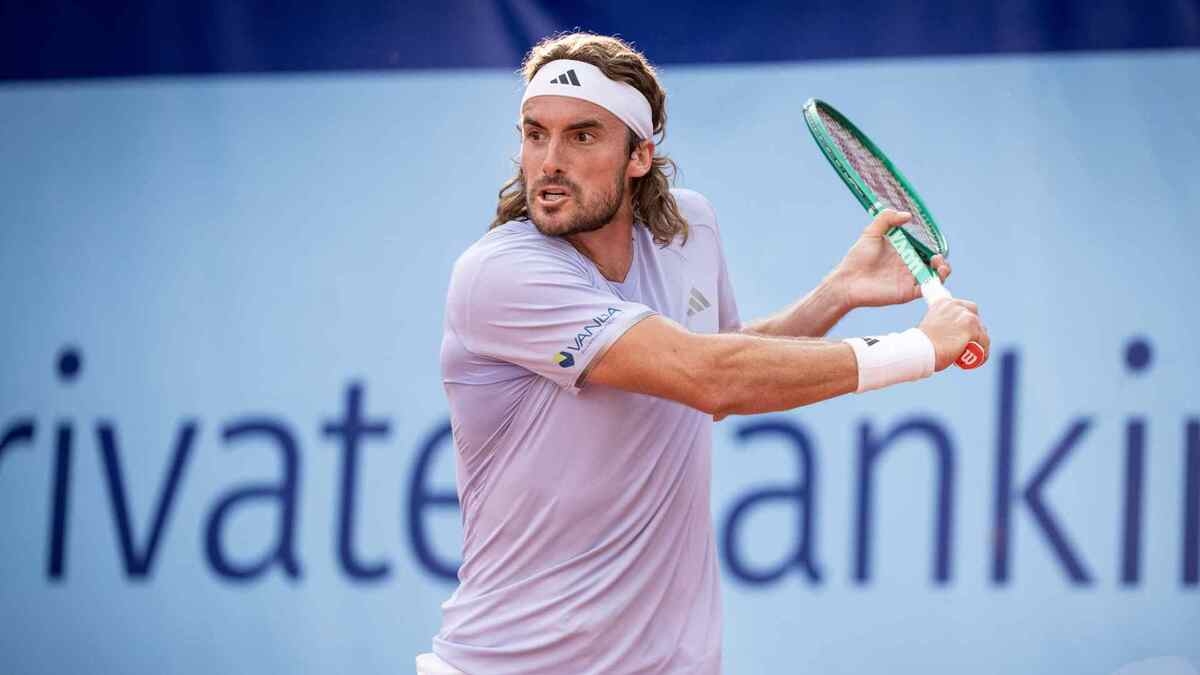


Stefanos Tsitsipas will play the final of the ATP 250 Gstaad this Sunday after defeating Alexander Shevchenko, ending a very long wait. The Greek reaches his 31st ATP final, the first in 504 days, since Dubai 2025, and also the first on clay in 818 days, since Barcelona 2024. He spoke in a press conference about what this means to him, as reported by the Greek outlet sdna.gr.
Beyond the chance of winning a new title, this week represents a real turning point for Stefanos Tsitsipas. He arrived in Switzerland ranked 85th in the world and is already set to climb to the 64th position in the ATP ranking, while a victory in the final against Raphael Collignon would place him at number 51.
However, the most valuable aspect of this resurgence seems to go far beyond the points: rediscovering competitiveness, regaining confidence, and confirming that his tennis is approaching the level that made him one of the best players in the world for years. There is still much work to be done, but this week could be a real turning point in the competitive dynamics of the Greek.
A week to believe again after many months of turmoil
Tsitsipas' path over the past year and a half has been marked by an instability that is hard to imagine in a player who was once one of the top contenders to win a Grand Slam. The constant doubts about his game, changes in his team, the break and subsequent reconciliation with his father as coach, fluctuations in his relationship with Paula Badosa, physical condition far from his best, and a worrying competitive plateau gradually distanced him from the elite.
That's why what happened in Gstaad has a special meaning. Beyond reaching a new ATP final, the Greek is once again conveying enthusiasm, confidence, and the feeling that he is beginning to reconnect with a tennis that had been hidden for too long. He admitted that the match against Alexander Shevchenko was full of surprises.
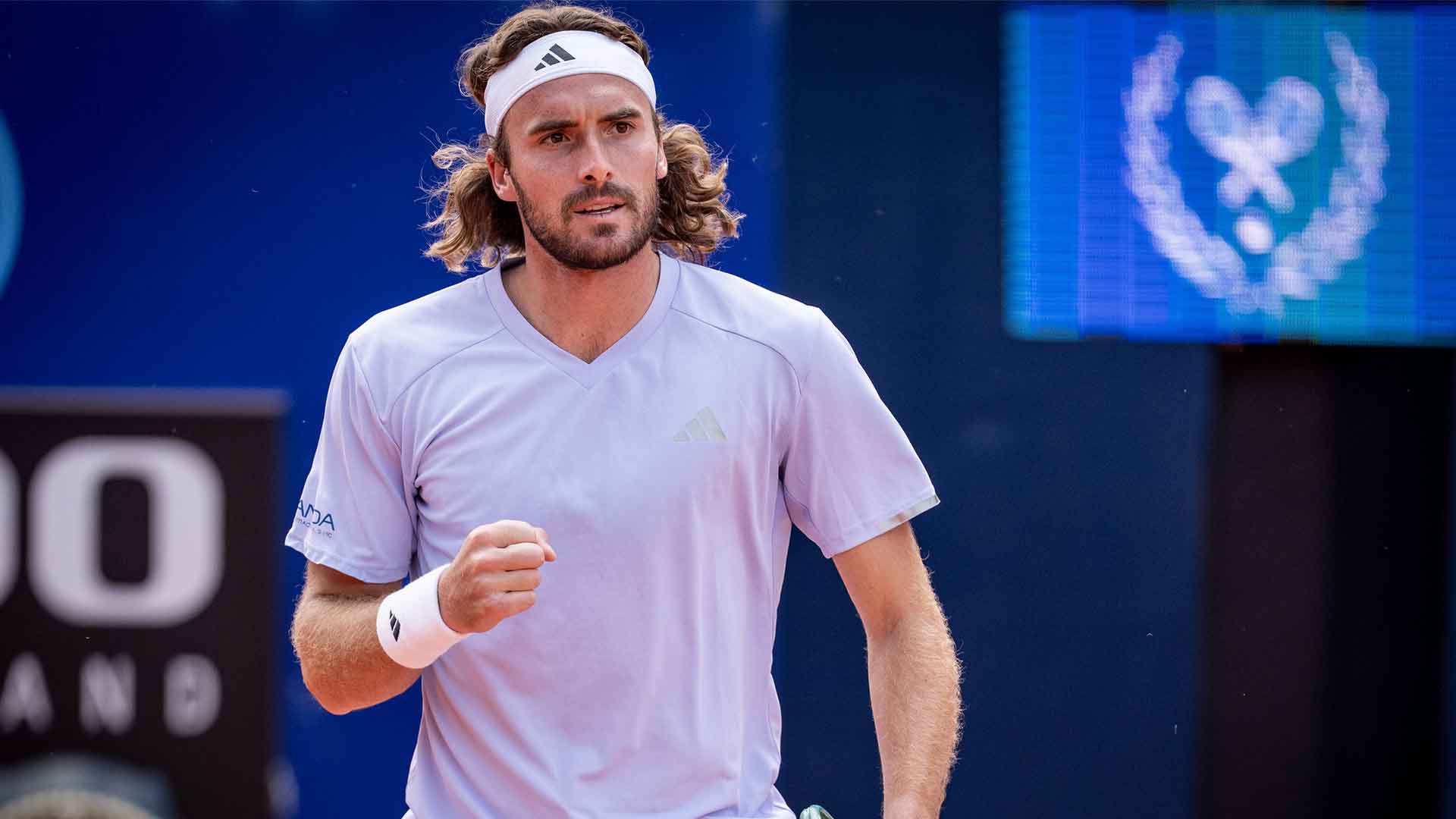
"I broke a racket, almost broke my leg... twice," he joked amidst laughter. "It was a very fun day, full of adventures. Honestly, something like this had never happened to me before. It was so dramatic and so bad. I literally rolled through the middle of the court like a sack of potatoes. I was scared because when your foot gets stuck in the clay, you can twist your ankle, and that's an injury that can keep you out for many months."
Beyond the scare, Tsitsipas highlighted the toughness of the match and his ability to stay in the game when things started to get complicated.
"It was an excellent match. I fought a lot. There were ups and downs. I started with a lot of energy, then dropped a bit as he raised his level. I hit some really good shots, although I couldn't do it with the consistency I would have liked, especially on high balls. I missed some good opportunities because of that."
Tsitsipas explains the importance of having regained a fighting spirit
If there's one idea that Tsitsipas constantly repeats in his discourse, it's the importance of regaining the competitive spirit. After so many months where he seemed to lose confidence very easily, the Greek believes that has been the major change this week.
"The most important thing is to fight. First and foremost, you have to know how to compete and seize every opportunity, every moment. Whether you win or lose, you have to stay competitive and keep fighting. That's always what I try to do. Then comes the next step, which is finding the solution to win the match. I did it again, and that was fantastic."
He also wanted to highlight the excellent atmosphere he has been experiencing throughout the week in the Swiss resort, where the presence of Greek fans has pleasantly surprised him.
"There are Greeks everywhere. I meet them in the hotel shouting my name. There are even many Greek workers here. I did not expect such a large Greek presence in Gstaad. I am very happy to be here and even more so now that I have managed to reach the final. Tomorrow, I will fully regain my competitive mindset and try to surpass myself once again."
Stefanos Tsitsipas looks to the long term with renewed hopes
After over a year without playing an ATP final, Tsitsipas did not hide his satisfaction at being back to competing for a title. "Yes, this final is special. I think about how beautiful it is to compete for a title again. I feel full of confidence. I am happy to be back in a position where I can fight for important trophies and be one of the last two players left in a tournament."
He also stated that he is beginning to see very positive signs in his tennis. "My tennis is showing very good signs. I feel I can produce shots at a very high level. But I have to keep working on my consistency because my goal is long-term. I want to get back on the court every day and keep improving."
Precisely that word, consistency, repeatedly appeared during his reflections. The Greek explained that he is still seeking to regain the stability that allowed him to be among the world's best for years.
"I have experienced what it means to be at the top of the ranking, play the final rounds of Grand Slam and Masters 1000. I know how much pain and suffering it takes to do it constantly. Believe me, it's not pleasant. You have to be a bit masochistic to enjoy that suffering. That's what sets the best apart from the rest. They can endure a bit more."
He added a very significant self-critique about the past few months. "I feel that my serve has worked very well in these last few matches. There has been a drop in some aspects over the past months. I have been able to beat Top-10 players this year, but I couldn't maintain that level consistently. For me, that's the most important thing. Victories against top players are great, but you have to keep doing it day after day."
Gstaad's altitude, a perfect setting for Tsitsipas' tennis
Another crucial aspect that Tsitsipas considers in his great week is Gstaad's altitude itself. Accustomed to training by the sea in Monte Carlo, the Greek explained that the adaptation was not easy, although he quickly discovered that the conditions favor some of his main strengths.
"It's complicated to play here, especially during the first few days. I came from Monte Carlo, at sea level, and now I'm in the mountains. It is difficult to get used to the ball bounce, but I think these conditions improve my game. The altitude benefits my best shots, makes the ball jump a bit more, and those of us with a strong serve and strong arms can benefit from it."
Before thinking about the final, Tsitsipas also wanted to say a few words about Alexander Shevchenko after a tremendously tight semifinal. "It was a great battle. I think we both played very well, and it's a shame that only one could win. I feel that we both deserved to be in the final. I want to congratulate him on the incredible effort he put in today."
Now he faces Raphael Collignon, another player who comes in very physically demanding after a week full of long matches. Tsitsipas expects another battle. "Both of us have had very tough matches, and both of us want this title. We will go out there and give it our all. I expect nothing less than a great fight. In a final, you always want to give it your all, and that's exactly what I will try to do."
After too many months marked by doubts, Gstaad has already given Stefanos Tsitsipas something that seemed even more important than a final: the feeling of believing in himself again. Now he just has to take one last step to complete a week that could mark the true beginning of his sporting reconstruction.
This news is an automatic translation. You can read the original news, Tsitsipas: "Hay que ser masoquista para disfrutar del sufrimiento que supone ser uno de los mejores tenistas del mundo"
-
 18 Jul 2026 | 00:00The keys for Dani Mérida to win his first ATP title in Umag against Dzumhur
 -
 18 Jul 2026 | 13:00Pegula and Keys are amazed by Sinner's new serve: "It's crazy"
 -
 18 Jul 2026 | 23:00Fonseca: "I want to be admired for my charisma, not just for my tennis"
 -
 18 Jul 2026 | 14:00Andreeva seeks to overcome her own barriers at the US Open
 -
 18 Jul 2026 | 16:00The urgency of breaking a historical curse for American men's tennis
 -
 18 Jul 2026 | 07:00Djokovic: "My body reminds me of the age I am, but I still want to prove things"
 -
 18 Jul 2026 | 20:00Badosa honors tennis with a titanic triumph in Iasi with brilliant consequences