|
2 May 2026 | 20.11
|
2 May 2026 | 20.11





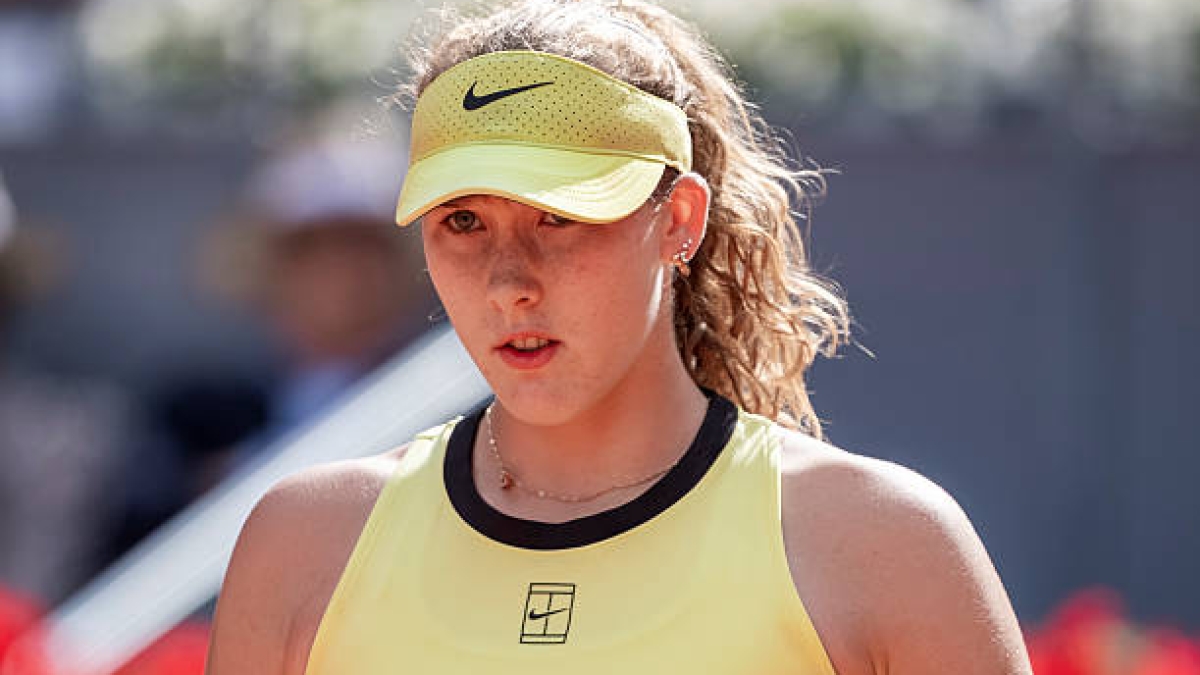


Mirra Andreeva fell just short of the title at the Mutua Madrid Open 2026 after losing to Marta Kostyuk in a final that went far beyond the sport. The match, also marked by the political context between Russia and Ukraine, carried a clear emotional weight from the first point. On the court, the Ukrainian claimed her first WTA 1000 title, while Andreeva, aiming for her third, could not finish her great tournament.
At 19 years old, the Russian once again showed that she is already a fixture on the circuit, but also revealed the more human side of sports. In a press conference, she analyzed the pressure, her evolution compared to previous seasons, and the crucial role of her team.
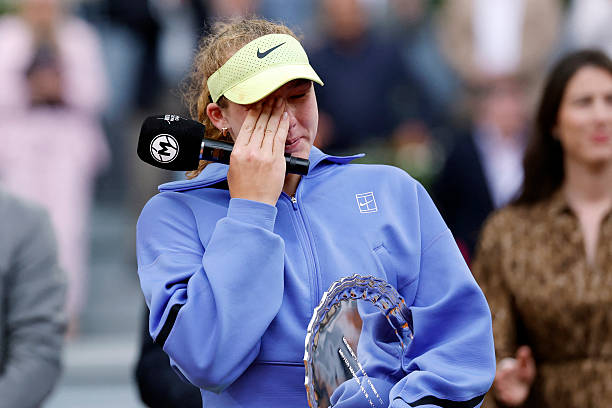
Andreeva reflects on her time in Madrid
"Today is a tough day. But overall, when we discuss it with my team, I believe we can draw many positive things from this week. It has been demanding, but in general, these have been two quite good weeks for me. The tournament is not over yet, so I will also give my all in doubles tomorrow."
The importance of her team
"One word for all of them? I would say 'important.' Because each of them does something that helps me perform at my maximum level. Sometimes things don't go well, but I know they always give 200% for me. That also motivates me to return that effort. They are all very, very important to me."
Evolution over the years
"I think my approach to matches has changed a lot. When I played against Aryna here for the first time, I just wanted to enjoy the atmosphere. I didn't expect anything from myself, I played as if each game was the last. Now I know the level I can reach, and everyone else knows it too. Now it's about maintaining that level and being consistent in every match."
What Conchita said after the defeat
"We haven't spoken yet, she just gave me a hug. Every time she tries to talk to me, I start crying, so we haven't been able to talk yet."
Physical and mental state
"I am more tired, mentally and physically, but not completely exhausted. Regarding the opportunities, it's tennis, it happens. I had many in the first set, but I made mistakes. It's my fault, but it's not like I missed on purpose, I was trying to be aggressive. On set points, one was her ace, nothing to do. On another, maybe I could have been more cautious, but I wanted to be brave. It didn't work out, but that's how it goes."
The pain of defeats
"Honestly, I don't know what's better. Every time I lose, I feel like it's the end of the world. I see other players smiling after losing, and I don't understand it. I wish I could do it. For me, every loss is very painful. I hope to be able to improve in the future and manage those moments better."
Assessment of her performance in the final
"There were moments when I played well, but when I lose, I can't be happy. To win, you have to maintain that level throughout the match. She played very well, was very aggressive, hit many winners. I tried to press and also be aggressive, but sometimes it worked better for me to build the points slowly. Nothing worked well enough because I didn't win. It was a combination of her level and mine."
Handling pressure
"It doesn't affect me too much. I thought about it at some point, but then I didn't think about it again. It's easier to play without being the favorite, but it's not easy in any case. I've been in both situations. I tried to focus on my plan and on what I needed to do to win."
This news is an automatic translation. You can read the original news, Andreeva: "Cada vez que pierdo siento que es el fin del mundo"
-
 23 Jun 2026 | 20:00The top favorites for the title at Wimbledon 2026
 -
 24 Jun 2026 | 00:00The toughest possible draw for Djokovic and Sinner at Wimbledon 2026
 -
 23 Jun 2026 | 10:00Did Vondrousova Hide Something or Not Know the Rules?
 -
 23 Jun 2026 | 19:00Jódar returns to London awaiting to know if he can play at Wimbledon
 -
 23 Jun 2026 | 13:00Draper and Raducanu, the great hopes of the United Kingdom for Wimbledon
 -
 24 Jun 2026 | 09:00The Montreal Masters will have a new stadium with a roof
 -
 23 Jun 2026 | 12:00Gaudenzi points out the biggest mistake in tennis: "We are still too fragmented"
 -
 23 Jun 2026 | 14:00McEnroe: "I don't consider Zverev a favorite to win Wimbledon"
 -
 24 Jun 2026 | 07:00Tennis players seeking redemption at Wimbledon 2026