


 |
2 Apr 2026 | 08.55
|
2 Apr 2026 | 08.55






Jessica Pegula faces each clay season with a blend of realism, adaptation, and constant evolution. The American, reigning champion in Charleston, has learned to coexist with a surface that doesn't always match her natural style, but where she increasingly feels more competitive.
After her debut on the clay tour with a hard-fought victory, lasting over three hours, against Putintseva, Jessica Pegula shared insightful reflections on how she adjusts her game to these conditions, the challenges she encounters, and the tools she has incorporated to be more dangerous and competitive in the major events on the clay court circuit.
Jessica Pegula's Assessment of Her Feelings on Clay
Charleston, a Special Place and a Return to Her Roots
The Charleston tournament holds a special meaning for Pegula, not only for defending her title but also due to her personal connection to the area. "This is where I learned to play tennis, grew up in this area playing on green clay," explained the American, highlighting that emotional bond.
This past experience makes each return different. "Returning as a champion and seeing people who watched me play at seven or eight years old is amazing," Pegula stated, expressing a sense of full circle. This familiarity also influences her confidence on the surface, especially in a transition that is not easy for many players.
Adapting Without Giving Up Her Identity
Pegula is clear that her evolution on clay does not involve radically changing her style. "I'm never going to play like a true clay court specialist, I will continue to take the ball early and play aggressively," affirmed the American, emphasizing her identity.
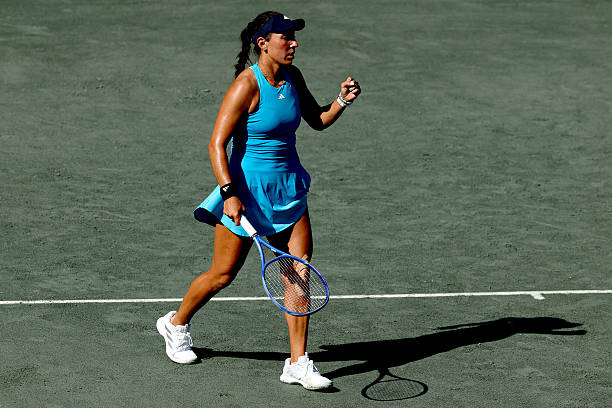
However, she has introduced key nuances to compete better. "I have to accept playing more defensively, using more slice and also the drop shot," explained Pegula, pointing out tools that allow her to construct points differently.
This adaptation also involves understanding when to step back. "Sometimes you need to hit a bit deeper behind the line to reset the point," she added, showing a more tactical reading of the game on clay.
Serve and Point Construction, Key in the Transition
One of the areas where she has noticed the most change is in her serve. "Serving on clay is different, you have to build the point more from there," Pegula explained, aware that she cannot rely solely on immediate effectiveness.
In her debut, she did not have her best feelings. "It was probably my worst serving match of the year," confessed the American, although she managed to compensate from other areas.
This mental adjustment is crucial. "You have to serve smarter on clay," stated Pegula, emphasizing the importance of decision-making on a slower surface.
Learning to Survive in the Chaos of Clay
The first match on clay always brings uncertainty, and Pegula experienced it firsthand. "It was the type of opponent I least wanted for a clay debut," confessed the American, acknowledging the discomfort of the situation.
During the match, she had to manage moments of doubt. "I felt that nothing I did was working, I couldn't find solutions," Pegula explained, demonstrating the complexity of adapting in real time.
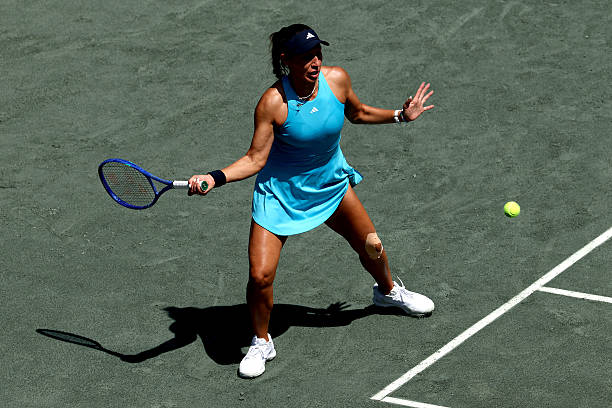
The key was to persist. "I just committed a bit more, was more aggressive on the return, and that helped me get into points better," she stated, showcasing her adaptability.
A Solid Foundation for the Entire Tour
Beyond the specific result, Jessica sees these matches as a long-term investment. "This is not just for this tournament but for the entire clay season," explained the American, looking beyond the short term. This mindset allows her to put things into perspective and build progressive confidence. "I wanted to trust what we are working on, not just for tomorrow but for what's ahead," she affirmed, reinforcing the idea of process.
With a very positive balance in the season and a constant evolution in her game, Jessica Pegula approaches the clay tour with ambition and without fear of stepping out of her comfort zone. She doesn't want to give up her essence but also doesn't want to close herself off tactically. Undoubtedly, she will be a player to watch at the WTA 500 Charleston 2026 and throughout the clay court tour.
This news is an automatic translation. You can read the original news, Pegula explica cuáles son los ajustes tácticos necesarios para jugar en tierra batida


-
 26 May 2026 | 15:00Tsitsipas describes what it's like to play in extreme heat at Roland Garros
 -
 26 May 2026 | 18:00Gauff talks about Roland Garros' decision not to put cameras in private areas
 -
 27 May 2026 | 00:00Sinner: "If you don't feel pressure, it means you don't care"
 -
 26 May 2026 | 23:00Sinner's biggest rival at Roland Garros will be his own body
 -
 26 May 2026 | 15:00Sabalenka explains how she learned to slide on clay courts
 -
 27 May 2026 | 16:00Swiatek compares ATP and WTA circuits: "Now the men's is more predictable"


