|
31 Jan 2026 | 05.31
|
31 Jan 2026 | 05.31





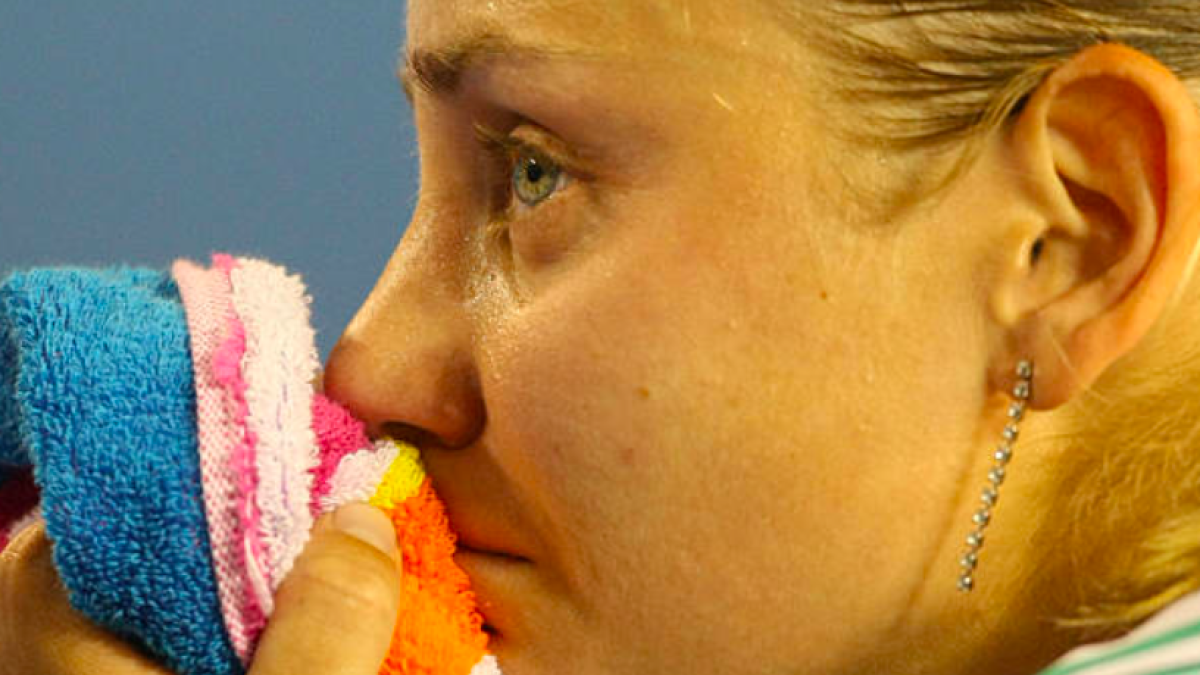


Jelena Dokic, what a story. I don't even know where to begin. A unique talent trapped by the malice of her father and forgotten by a circuit that couldn't find a way to save her. An adopted Australian, a country where she was embraced, destroyed, and later forgiven.
I can't help but smile every time I see Jelena Dokic conducting interviews courtside in this Australian Open 2026. Radiant, daring, approachable, beautiful inside and out. If you don't know her story, you might feel indifference, an emotion you will quickly dismiss if you keep reading these lines. Who was Jelena Dokic? On the court, a top 5 player in the world who reached the semifinals at Wimbledon. Off the court, a girl destined for hell because of a father who never knew how to love her. Her downfall and rebellion took place in the same city: Melbourne. But before that, let me give you some context.
Born in Osijek in April 1983, Jelena Dokic's life changed at the age of 6, when her family fled the country due to war. At that young age, she encountered the two elements that would accompany her into adulthood: tennis and abuse. Damir Dokic – the villain of this story – believed that a heavy hand was essential for the proper development of his eldest daughter, subjecting her to daily physical and psychological abuse. This is how a person gets used to living in fear. In June 1994, they moved to Australia as refugees, where the burden of lifting them out of poverty fell on the young girl. Should she not meet the standards in each training session, Damir, the drunkard, wouldn't hesitate to publicly humiliate her and later physically assault her in private. If this sounds harsh, I recommend reading it in her own words in her autobiography.

I wish I had been terrible at sports, but Jelena had so much bad luck that she was born to be a star. At 15, she was already the Junior World No. 1, an achievement that propelled her to turn professional. While she was winning matches, her father was making money. And so began a journey of darkness and pain that Jelena hauntingly recounts in her memoirs (Unbreakable), a raw work that grips you and doesn't let you breathe. Yet, today she only wishes to explore what happened in 2001, when a series of events caused the cup to overflow.
BETWEEN SERBIA AND AUSTRALIA
An Australian citizen since 1998, Dokic's future never depended on the flag she carried after her name, but on the man behind her. Her father, a despicable being, was a magnet for trouble, a skill that quickly raised alarms within the circuit. His expulsion from the US Open in 2000 for verbal abuse caused ink to flow like never before against him, multiplying a list of enemies that was already extensive. The Australian Tennis Magazine, a leading publication in the nation, suggested he needed psychological counseling after his six-month suspension from the circuit was confirmed. Damir became furious, but pursuing legal action was little for him. "Either the magazine editor apologizes, or we go back to Yugoslavia," he publicly threatened. "Everyone is against me, also against my daughter. All of Australia is racist, always causing us problems," he claimed.
Ljiljana, Jelena's mother, never dared to raise her voice. She preferred to withhold her opinion, agreeing with her husband out of fear of reprisals. She was completely submissive to the terror that reigned under the roof of that home, if it can even be called a home. A victim of fear and misunderstood love. For Damir, there was no distinction; the punishment was the same for both.
Meanwhile, Jelena never wanted anything to do with Serbia; she was happy being Australian. She respected her roots, but for many years now, she identified with Australia, where she had been welcomed as a child. Unfortunately, her father had other plans. For months, she listened to him say atrocities, claiming it was a dangerous country, that they had turned their backs on them, spewing poison against the media, even against Tennis Australia, whom he called Nazis. "They are making me look like a monster," he exclaimed without any shame. It was the publicity he had garnered, although he didn't care either. His mission was to repatriate the entire family, an idea that Jelena never thought he would carry out. "Is he really going to force me to move to Yugoslavia?" She would soon find out.
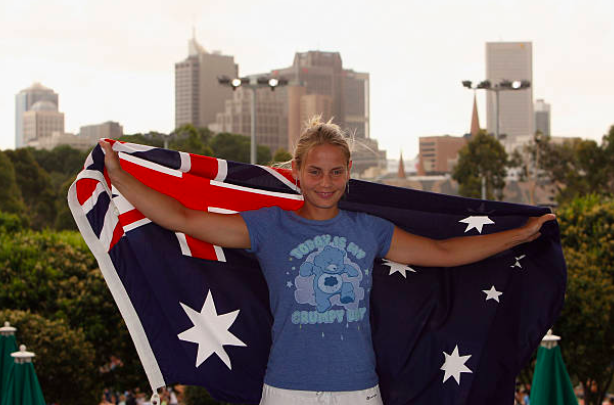
Even though she was only 17 at that time, Dokic experienced something unexpected upon her return to Belgrade. She realized the extent to which she had become a public figure; the press interest was massive, and people clamored for the autograph of a teenager. When a microphone was placed in front of her, the spiral of fear made her deliver a speech that was not her own: "I came here for the Yugoslav passport, I am very grateful to Australia, they helped me a lot, but I always wanted to return. I wanted to return even earlier; that was my greatest desire until today when it finally becomes a reality. I am Serbian, and that is why I wanted this passport," she expressed with the coldness of someone reading instructions.
Her father, the tyrant pulling the strings from behind, had already achieved what he wanted: the photo of his daughter in Serbia with the new passport. His control of the situation increased, although he couldn't forget that Jelena was still a professional tennis player. In fact, she started the 2001 season as #26 in the rankings, an ideal springboard to keep climbing positions. That's how they set off for the Australian Open, where something as simple as chance led to the opening of Pandora's box.
UNLUCKY DRAW OR SOMETHING MORE?
The draw paired Jelena Dokic with Lindsay Davenport, who was ranked No. 2 at that time. Her father, with minimal tennis knowledge, went crazy. 'You are not going to play the tournament anymore; we are leaving, the draw is fixed,' he declared without discussion. It broke his daughter's heart. Trying to convince him was of little use; his response was decisive. Damir had made a decision, and not following it meant a new episode of domestic violence. That's when she understood that the original plan had always been the same: to return to Yugoslavia forever.
"I felt weighed down by not having anyone to talk to about this decision. None of my friends wanted to support me. I had no confidant who knew my story, no one to call and cry to. With a whole hell about to break loose, I felt more alone than ever," Dokic expresses in lines where she speaks from the depths of her being. Her father, a conspiracy fanatic, continued to rant against the 'fascists' of the WTA, claiming that everyone was against him. In fact, he called Tennis Australia to give them the exclusive: "From now on, my daughter will play under the Yugoslav flag." He decided to call a local journalist to give him the scoop, even though he never showed any interest in learning English. How did they do it? He dictated out loud and Jelena translated over the phone. This is how the statement turned out:
"We believe the draw is rigged, we think the country should protect its own player. Jelena was crying all night, I had never seen her cry like that, she said she couldn't believe it. She feels betrayed, she feels nobody here wants her, she thinks she has to leave because she can't find her place. It's not a decision taken lightly, but we have felt forced to make it for her, so she will return to play for Yugoslavia. After this draw, we have no doubts, we will move to Florida in a few weeks, sell everything, and leave the country."

Obviously, it was all a lie. Damir made decisions for the whole family, even attributing statements to them publicly that never came out of his mouth. Of course, Jelena cried that night, that one and all the previous ones since she was 6 years old. It was the price she paid for living with an abuser who didn't hesitate to take his belt for a walk after each defeat. Sometimes, also after a victory. That man knew no mercy, but wait, the second part of the statement is yet to come.
" ... you can't do this to the country's number 1 player. If they really cared about her, they wouldn't write those things about me. I'm afraid of the Australian public's reaction, I fear for our safety. I fear what the Australians might do to us. I'm very afraid that if my daughter doesn't play well, there could be accidents."
The media storm broke loose; in the tournament corridors, this was all people talked about. Without hitting a single ball, her name was already the center of every debate. Meanwhile, Damir continued to ignite fires in numerous interviews, making some atrocious statements: "Australians are racists and fascists, they killed the aborigines as if they were rabbits. They are children of criminals and prostitutes; nothing healthy could ever come out of this country."
Finally, the WTA contacted Tennis Australia to change Jelena's nationality. Damir's victory was undeniable, although his daughter only thought about coming out and telling the whole truth, uncovering the plot, and denouncing that sabotage. The risk was very high, but within the circuit, they already knew who was pulling the strings, no matter what the girl said. "Telling the truth out there would have devastating consequences for me, it would mean a new beating... maybe even being kicked out of the house. What would happen to my mother and my brother? Where will I go?," the frightened player wondered. Her mind did not rest, trapped in a double life. She remembered the pain of every slap, the humiliation of every beating she received, so publicly betraying her father was something she couldn't even consider. And what did she do?
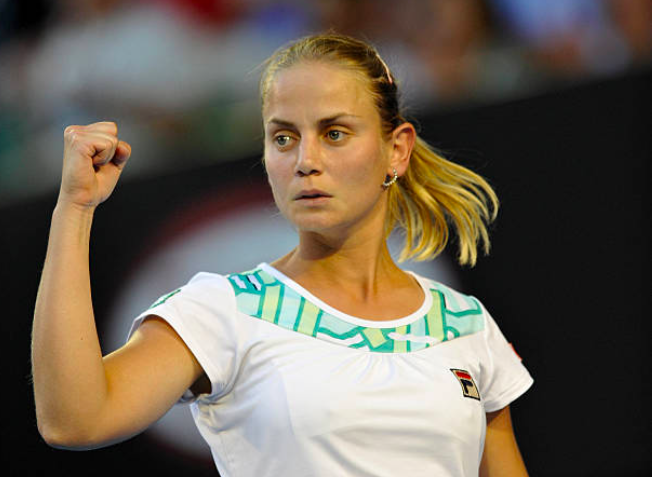
The next day, she appeared at a press conference, took the microphone, and delivered the speech the boss wanted to hear: "I am the number 1 in Australia and yet, I have to play against Lindsay Davenport. This has been one of the reasons for my decision, along with great discontent over the media coverage received," she declared to the press. Right in front of her was her manager, to whom she had promised to finally tell the truth. His face displayed sorrow at seeing a person devoid of freedom, completely immobilized. It was inhumane; they were attacking the country that had supported her tennis dream so much, that had helped her since her arrival. Damir, relentless, kept hitting where it hurt the most, repeating over and over that the best Australian since Evonne Goolagong would now play under a different flag. Making the situation worse was impossible.
THE MATCH JELENA DOKIC WILL NEVER FORGET
Don't ask me how she did it, but Jelena Dokic ended up showing up on that January 15, 2001, at Rod Laver Arena to face the defending champion. 'Do it for Australia!' shouted the crowd when Lindsay Davenport stepped onto the court. When it was Dokic's turn to come out, the audience's response turned into boos. "This is the worst moment not only of my career, but of my life," she recounts in her autobiography. The feeling was terrible. Those who once adored her now mocked her, wished her harm. The Osijek native felt she had disappointed everyone, that's why she accepted this reaction. She was broken inside, unable to focus on her tennis, yet she fought for victory. Once defeated (4-6, 6-4, 6-3), the locker room awaited her to witness her breakdown. It was then that Lindsay appeared and embraced her, without saying a word. Dokic admits she never thanked her but that gesture of compassion marked her forever.
In the press conference, still with red eyes, the Serbian took a deep breath and accepted what had happened. "Truth be told, I expected something worse, but I was close to the world No. 2. Right now, I'm more concerned about my tennis than anything else," she threw at the journalists. Another lie disguised to get through it. It couldn't get any worse, or so she thought. Her back, accustomed to carrying the weight of an obedient daughter, twisted under the obligation to protect her father once again. Another rehearsed, planned, unreal speech.
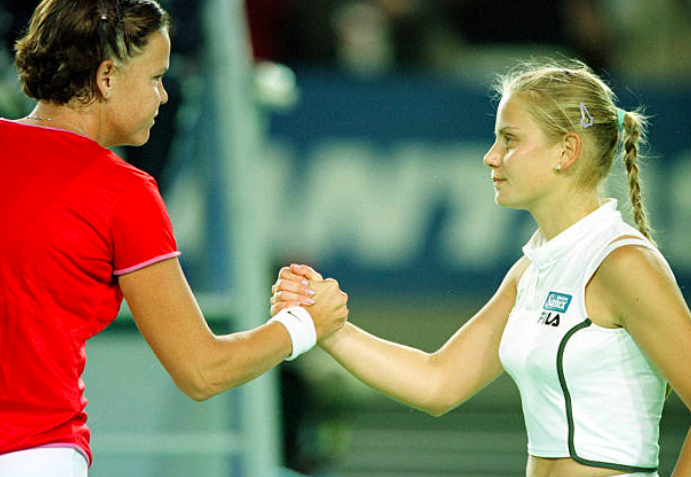
Damir also didn't hold back; he continued his personal crusade in the media. "For the second time in 17 years, Jelena has become a refugee. Last night, she didn't have a single friend on the court, not a single person to support her. Australians are very racist; this is a country of discrimination," he assessed after the defeat. The hate machine never stopped for a single day.
After the storm, the family decides to return to Sydney to pack their bags, but there is not enough space to pack everything. Damir orders his daughter to throw all her trophies in the trash, claiming that all the memories of her childhood no longer hold any value. And of course, she obeys. Inside, she remains shattered, holding back tears as she looks at each trophy, remembering all the effort along the way. She also remembers every beating taken to get there. Once again, Jelena realizes that her father has never respected her, never cared for her. Hence, her next move involves speaking up and making her mother aware.
Although they both shared the same thought, the truth is that Ljiljana is trapped in her role as a wife, completely unable to change course. With her heart in pieces, Dokic wallows in sadness at seeing her connection with Australia completely severed. A country that reached out to her, a government that took care of her payments, a federation that funded her junior career, who invested millions in her development and turned her into a star. The worst part is that Jelena felt truly Australian, she belonged there, which is why she decides to put an end to this nightmare. Of all the decisions she had to accept from her father, none weighed as heavily as rejecting her own identity.
RECONCILIATION IN 2009
Between January 2001 and January 2009, countless things happen, so I will try to summarize them in a paragraph. Dokic runs away from home at 19, leaving her family behind and wandering with her sorrow. She will reach No. 4 in the individual ranking. She falls in love for the first time, but that youth is not for her. She is so disoriented that she considers suicide. She decides to return home. A week later, she runs away again. She drops outside the top 900. She gains 20 kilos. She goes bankrupt. In 2006, she regains Australian nationality, receives a WC for the Australian Open, but loses in the first round as she is not ready. She loses 20 kilos. When 2009 arrives, well-trained, the tournament remembers her again through a new invitation. Now, we can resume the story.
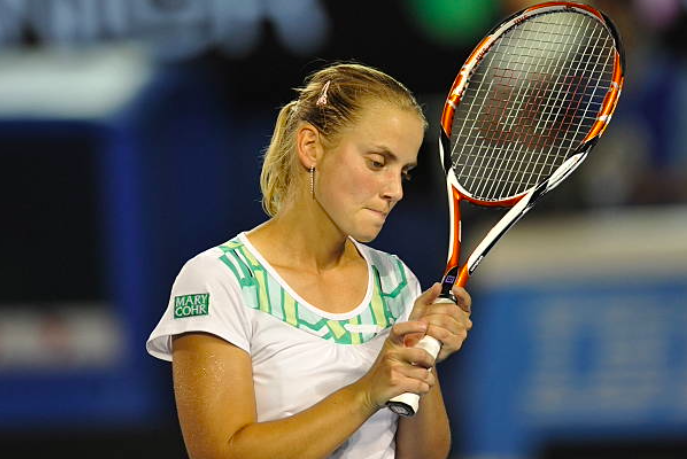
At 26 years old, Jelena Dokic has lived more than most retirees, although her memory album highlights the bad over the good. The 2009 Australian Open will come as a fresh breeze to soothe her wound. Ranked at #187, the Australian debuts in the Hisense Arena against Tamara Paszek. She has a queasy stomach, trembling hands, adrenaline out of control. It's been a long time since she stepped foot in a big stadium, she doubts her physique, she doesn't even think about winning. Her only wish is to leave with better feelings than in 2006 and, above all, 2001. That's when the magic happens.
The victory in three sets (6-2, 3-6, 6-4) represents her first Grand Slam victory since the US Open 2003. Jelena feels as if she is lifting the trophy. If people only knew everything she has been through! When she enters the press room, deeply moved by her good performance, she can hardly find words. The door to affection opens slowly, the support for her tournament soars, the Australian public is back on her side.
In the second round, she faces Anna Chakvetadze, a match that will take place at Rod Laver Arena, a stadium she hasn't set foot in for eight years, when she was booed. Tickets sell out instantly, that's what happens when you compete against a top 20 player, so the nerves escalate. With the fear of bringing back old memories, her ear catches the speaker's introduction: 'From Australia, Jelena Dokic!'. A roar fills the stadium, no matter what happens she has already won... but just in case, she ensures victory in the match (6-4, 6-7, 6-3) and secures a spot among the last 32 in the draw. The affection from the crowd moves her to the point where she forgets that in two days, Caroline Wozniacki awaits her, a 20-year-old gem who threatens to break into the top 10 sooner rather than later. Undoubtedly, she will be her toughest opponent that week, the most consistent one, but she is confident. Nervous, yet confident.
In the end, trust weighs more, so it also takes down the Dane, with a comeback included (3-6, 6-1, 6-2). Here, the wave of excitement is uncontrollable, the newspapers begin to write about her tennis, her new team, the resurrection of a player they had forgotten. Her next target will be Russian Alisa Kleibanova, another tough match that she faces with a mind already exhausted. In that match, she twists her ankle, but giving up is not part of her plans. After three turns of the clock, Dokic ends up prevailing (7-5, 5-7, 8-6) to drive the present audience crazy. The moment overwhelms her, she falls to the ground and breaks down in tears. “I had never experienced anything like it,” she writes in her memoirs. For the fourth time in her career, she was in the quarterfinals of a Grand Slam.

An unthinkable event a year ago, when she considered retirement. Impossible two years ago when she thought of taking her own life. Dokic is drained, with nothing left, but she has no intention of making it easy for Dinara Safina, World No. 3. She holds on until 4-4 in the third set, where the lack of spark condemns her (6-4, 4-6, 6-4). Physically, she was still in great shape, but emotionally she was running low. She leaves the tournament jumping to the 91st position, becoming the fourth wildcard of the Open Era to advance to the quarterfinals of a Grand Slam.
The next day, she can't even move, but the effort was worth it. The phone won't stop ringing that morning, although no call will make her happier than the one from the FedCup captain, inviting her to rejoin the team. At that moment, she can't even imagine what lies ahead, the physical collapse that will forever mark that tournament, so it's better to leave it here and not keep turning the pages. In Melbourne, where eight years ago she wished the earth would swallow her, Jelena Dokic managed to close the circle with tremendous skill. An abyss that first engulfed her only to later rescue her. The wound had finally stopped hurting.
This news is an automatic translation. You can read the original news, El abismo de Jelena Dokic









-
 30 Jan 2026 | 12:00Alcaraz did nothing illegal: his MTO was within the rules
 -
 30 Jan 2026 | 17:00Martín De la Puente, one step away from history (again)
 -
 30 Jan 2026 | 11:00Zverev: "You can't ask for a medical timeout for cramps"
 -
 31 Jan 2026 | 05:00The abyss of Jelena Dokic
 -
 31 Jan 2026 | 12:00Ice Can Overcome Fire
 -
 31 Jan 2026 | 13:00Sabalenka: "I am very upset with myself, I gave my best"