|
26 Aug 2025 | 21.22
|
26 Aug 2025 | 21.22





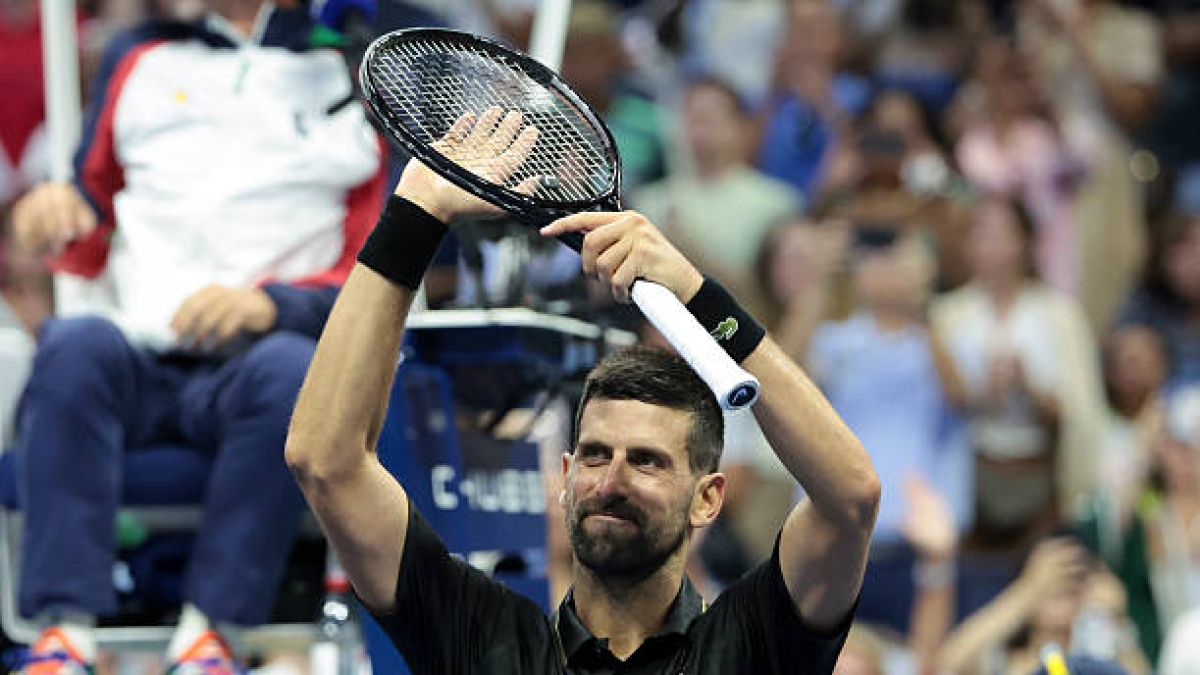


Novak Djokovic not only must be watched playing on a tennis court, but also listened to off the court. His over twenty years as a professional tennis player gives him a depth of wisdom that, combined with his spirituality and personality, allows him to see things from a unique perspective. That's what he did in the interview he gave for Jay Shetti's YouTube channel. A two-hour conversation that will leave no one indifferent.
Always well surrounded
"I am very grateful to have always been surrounded by certain people from the beginning of my career who helped me take care of myself, from a more holistic approach to the multidiscipline of preparation, prevention, and recovery both physically and mentally. And especially being young and not understanding any of that. They didn't have to explain it to me, I believed in them."
His first coach, key in his personal development
"My tennis mom, who was my first coach and passed away 13 years ago, was the one who introduced me to all this. She helped me learn how to view life and understand that tennis is not just an individual sport, it's more than that, because you have no one to help you if things go wrong. She taught me that tennis was not just about hitting balls and dreaming of winning Wimbledon. I used tennis to evolve as a human being."
"I was 10 years old and trained with her three times a week, and my father allowed her to help me in my growth, as she also educated me off the court. Twice a week I would go to her house, and she would show me videos of the greatest male and female tennis players, and that's where my current personality began and the imitations I did of some players."
Reflection on the constant hunger to win
"Tennis consumes most of my life, now less because I have two sons and other things that interest me. I am still a professional tennis player and I continue to experience the best and worst of myself on the court. And when they tell me that I was one of the first athletes to integrate spirituality within me, I would say yes, but I am still surprised at how I continue to work on it, and it was very difficult for me to accept that. When you are at the peak of your career, you feel invincible, you feel like you can even walk on water, and it’s a great feeling. But when ego takes you to those places, it's difficult to go back to the beginning. And maybe you shouldn't go back to the beginning and you should find a balance. In the end, it took me time to accept the fact that no matter how much I have learned and how many things I have done in the last 20 years, it does not always guarantee that you find a solution, something that I had achieved previously. And that was a great revelation for me."
He wants to continue making history
"I have achieved everything I was looking for in tennis, but I want more. And that comes from purpose, inspiration, motivation, and love and passion for the sport and for making people happy when they see you playing tennis. I feel that I continue to expand that light when I play tennis, inspiring the new generations. But my desire to do more also comes from my feeling of not having succeeded enough, and this comes from my origins and my relationship with my father. It is an inner battle that I have with myself regularly."
"I feel that as long as I have the ability to compete for the biggest titles in my sport, I will keep playing. And another thing that inspires me to continue is that I want to challenge my limits, mentally and physically. Because when you reach 30 in tennis, you start counting the days remaining until retirement, but now it's different because body care has improved a lot. Not only the best have many specialists on their teams, now even the top 50 do."
About how he has focused his goals in his career
"In 2011, I won my first Wimbledon and became number one on the same day. And that experience only happens once in a lifetime. From then on, I had to set new goals, I was 23 years old and felt like I was at the peak of my career and I aimed to win all the Grand Slams and then multiple times each of them, then I wanted to win the gold medal for my country and then I wanted to make history, etc. That's why I believe that mentally orienting your goals is super important because clarity is something essential to know what you want to do. It's an ongoing process because I don't see myself completely fulfilled because I feel I can do more, but on the other hand, of course, I feel that I am completely fulfilled, happy, and proud. And I am looking forward to a day when I can realize it 100%, but as long as I keep playing active, I won't be able to."
He was tempered in the Balkan war
"One of the things that has impacted me the most in my life was when my family was given ten German marks and told that was all we had. Everything we lived through in those tough times in my family is what led me to believe that not succeeding as a player was not an option, meaning I had to triumph. It's an existential and survival issue for my family."
The experience of sharing the court with your idols
"It's a completely different feeling. When you are a teenager and start on the circuit, you are in paradise sharing a dressing room with the greatest legends of tennis whom you have always admired and who are now your rivals when they have always been your idols. My favorite player has always been Pete Sampras, even though his tennis and mine are very different, I loved how he handled pressure and played his best tennis in those moments, which is when it truly matters. In addition, he has been one of the greatest in history and held the record for the most Grand Slams won."
"When I arrived on the circuit and saw Rafa Nadal, he was already number two in the world and had won Roland Garros several times. I had already seen him on television, and it was a surreal experience because I wanted to enjoy playing against him, but at the same time, I wanted to beat him because I also wanted to win Grand Slams, be number one, and dominate the circuit."
2011, year of great change
"After winning my first Grand Slam in Australia in 2008, I went three years without winning any, and Nadal and Federer always beat me in every match. I changed my racket, team members, did everything to find the formula to beat them. At that time, I suffered a lot physically, and that's when I realized I was intolerant to gluten. By changing my diet, it helped me mentally, my recovery was better, and I also made better decisions on the court. And in 2011, I experienced that great change and was unbeaten for over 40 matches, won three Grand Slams, and became the world number one."
About a conversation he had with Kobe Bryant
"In a personal conversation I had with Kobe Bryant, I confessed that I didn't like watching replays of matches I lost or played poorly in because it hurt to see myself like that, and he told me that I should watch even a small part of those matches because I had to learn from those mistakes and have the opportunity to correct them in the next match or tournament. So I started watching the matches I lost, but I never watch the match point":
Role model for new generations
"Now that Nadal, Federer, and Murray have retired, a part of me left with them and I felt that, I thought it wouldn't be difficult to shift my focus to my new rivals, but it was very difficult. It's an experience I had never before lived on the circuit, but what I always tell the new generation is that I am here to help them and share my experience. I know it's difficult because we compete against each other, but I feel it's my responsibility because we all want to improve tennis."
The importance of his wife
"My wife is one of the few people in the world who can tell me things I don't want to hear and challenge my ideas and thoughts, and many times her intuition was right and mine was not. She has been an incredible partner in this professional, private, emotional, and romantic journey. If I continue to play tennis, it's also because of the support she gives to our family".
This news is an automatic translation. You can read the original news, Djokovic: "He conseguido todo lo que buscaba en el tenis, pero quiero más"
-
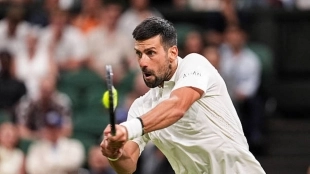 30 Jun 2026 | 10:00Schedule and where to watch Novak Djokovic against Tsitsipas at Wimbledon 2026
 -
 30 Jun 2026 | 10:00Maya Joint, the chosen one
 -
 01 Jul 2026 | 00:00Wawrinka: "I don't want to retire, but I know it's time to stop"
 -
 30 Jun 2026 | 20:00Injury Bitters Serena Williams' Return at Wimbledon
 -
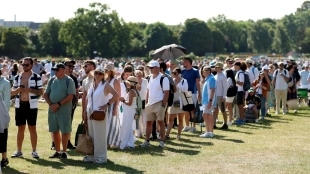 30 Jun 2026 | 18:00"The Queue is an archaic, uncomfortable, and outdated practice"
 -
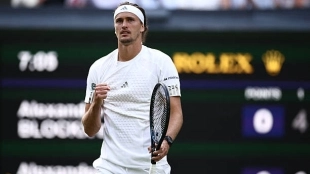 30 Jun 2026 | 21:00Zverev reveals which surface he would choose to beat Sinner and Alcaraz
 -
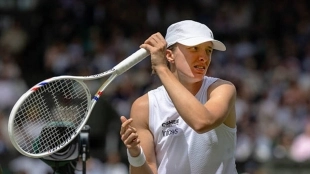 30 Jun 2026 | 18:00Swiatek: "Sometimes, it is not easy to enjoy playing tennis"
 -
 30 Jun 2026 | 23:00Joint describes Serena's aura after eliminating her from Wimbledon