|
15 Feb 2025 | 15.21
|
15 Feb 2025 | 15.21






In a case like that of Jannik Sinner, there will never be a resolution that pleases everyone, and there will be no single understanding of the matter. Some people may think it is an unjust sanction, as the Italian would not deserve even a single day of suspension for not having consciously doped, while others may think the sanction is too light for having tested positive twice. Within all the possibilities in a case like this, we try to answer all the questions that remain open after the three-month sanction agreement between Sinner and Wada.
Why is there an agreement between both parties?
As in any trial, the involved parties can reach an agreement before or during it. In this particular case, one of the two parties must have taken the step to prevent it from dragging on further and decided to sit down and negotiate. The agreement is driven to avoid further delays, to prevent high procedural costs, for a quicker resolution, and to avoid the judge ruling against either party. Both had reasons to win and to lose, thus they understood that the best course for both parties was to negotiate.
It is important to highlight that in any pre-trial agreement, there will always be one party that concedes more than the other. Both accept to lose something in exchange for something else. It is up to each individual's interpretation to determine who loses more in this agreement, Sinner or Wada.
Why does Wada agree to three months?
According to their own statements a couple of days ago, Wada was seeking a one- or two-year suspension. In this case, three months may seem few in the eyes of this organization, which also saw the risk of Sinner avoiding any sanction. They must have weighed the pros and cons. Perhaps the three months compensated for the high costs of the trial, the time it could have taken, and the pressure they may have received from Jannik's lawyers to settle this with an agreement.
Why does Sinner accept those three months if he considers himself innocent?
Regarding Sinner, the Italian knew it was difficult to escape without a sanction despite claiming innocence since, according to one of Wada's rules, the athlete is directly responsible for the actions of his team. They acknowledge he had no intention to dope but must be held accountable for the negligence of the two team members. Under these circumstances, fighting against a sanction would have been tough, leading to the acceptance of this level of penalty. There was a risk of facing a longer suspension.
Reiterating, the three months may seem few, fair, or too many, depending on one's perspective. The two parties have agreed to this, but a judge might have ruled differently on the type of sanction. Greater or lesser, that will remain unknown, but to avoid the risks of a longer or shorter sanction period, the three months were the agreed-upon compromise by both parties.
Why is the sanction coming now and not in another part of the season?
A question understandable from Sinner's perspective. Surely, his team may have pressured Wada to reach an agreement now, in his favor. If they had waited until April, with the possibility of a suspension of X months, the Italian would have missed two Grand Slams. There is nothing wrong with this as one party can press the other to reach an agreement as swiftly as possible, and the other can agree to negotiate. Indeed, that is what has transpired.
Whenever negotiations of this kind occur, they happen because one or both parties are keen to close the matter as soon as possible for whatever reason.
What is noteworthy is that this has come to light today, February 15, while the sanction begins counting from February 9 to conclude on May 4, precisely to enable participation in the Rome tournament starting on May 8. If it had counted from today, he would not have been able to compete there. Probably, both parties agreed to this to avoid further harm to the tennis player upon his return to competition.
Did Sinner dope or not?
With this agreement, the Italian emerges blameless. Wada accepts his version and absolves him of any involvement in his two positive tests. They affirm he never intentionally doped and that he is solely accountable for the negligence of the two members of his team, hence the three-month suspension. Wada sought some form of penalty for the incident, and they found it in these three months.
Has he gained any advantage or preferential treatment?
It depends on one's perspective. Although he did not consciously dope, according to his defense, he breached a rule making him responsible for his team's actions. This rule will change shortly, and cases like Sinner's will not result in penalties for other athletes in the future. However, within this specific framework, it constitutes a violation for which a sanction should be imposed.
It is true that there are similar cases, although never identical, where the process spans many months, even years, with a very different, much tougher resolution for the athlete. Sinner is not to blame for this, as scrutiny should be directed at the system, which has dealt differently with others and with Jannik in this case. It remains to each individual's judgment whether he received preferential treatment or not.
This news is an automatic translation. You can read the original news, Todas las preguntas que quedan en el aire tras la sanción a Jannik Sinner
-
 14 Jun 2026 | 15:00Djokovic and Wimbledon: eternal glory or the beginning of the end
 -
 14 Jun 2026 | 18:00It is never too late for Majchrzak
 -
 13 Jun 2026 | 19:00Majchrzak, 'The Reborn' on the grass court circuit
 -
 14 Jun 2026 | 13:00Serena is playing doubles to see how her body responds and if she can handle it
 -
 14 Jun 2026 | 10:00The grass court season, where the anomalous becomes routine
 -
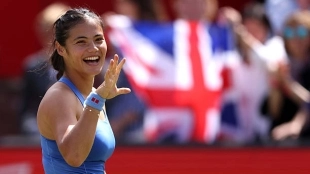 13 Jun 2026 | 20:00Raducanu regains her smile at Queen's
 -
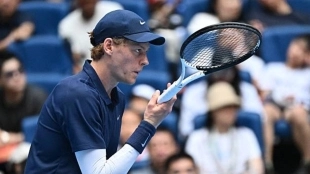 13 Jun 2026 | 16:00Jannik Sinner, a key part of a possible boycott of the US Open
 -
 13 Jun 2026 | 14:00Rafa Jódar already knows his roadmap for the assault on Queen's
 -
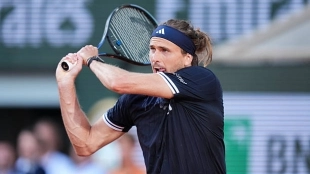 13 Jun 2026 | 18:00Zverev's stringer reveals amazing secrets of the German with his racquets
 -
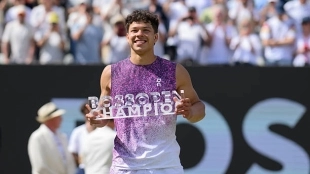 14 Jun 2026 | 17:00Shelton conquers Stuttgart and wakes up in time for Wimbledon