|
26 Jul 2026 | 08.38
|
26 Jul 2026 | 08.38





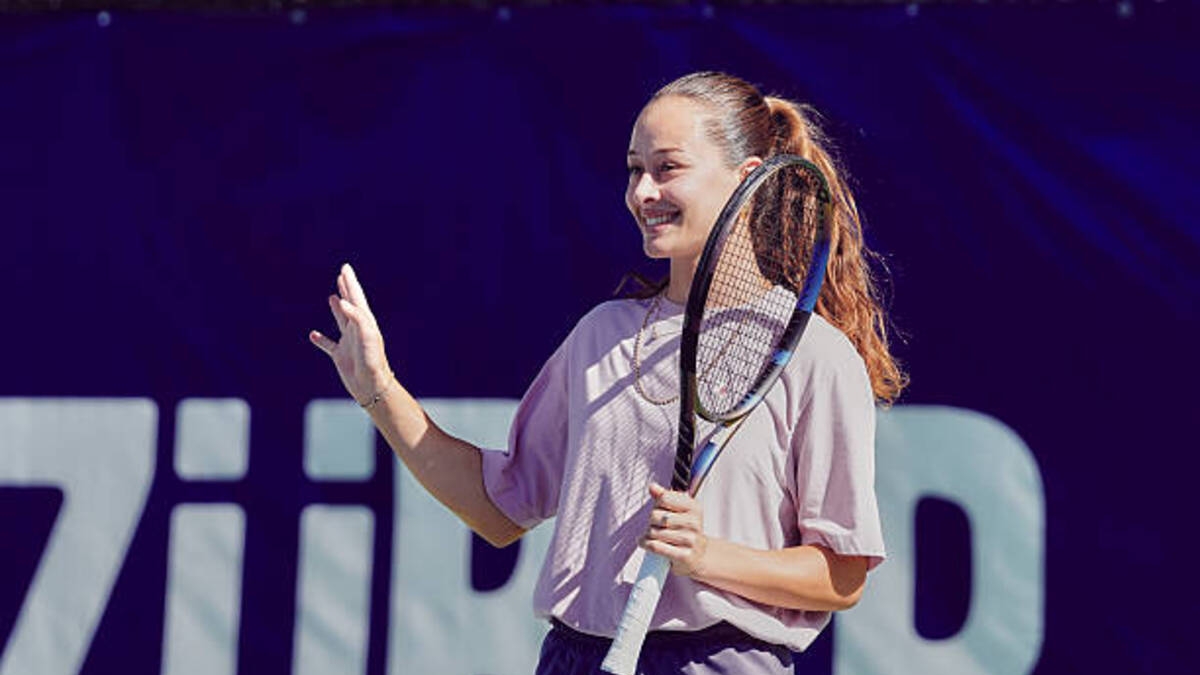


Zeynep Sonmez is experiencing the best moment of her career, firmly established at 24 years old in the top-50 of the WTA ranking, but reaching this point has required overcoming obstacles that go far beyond purely tennis-related challenges. She reflected in an interview with the Turkish magazine Bee Haber on the personal sacrifices demanded by the elite and the difficulties of coming from a country without a strong tradition in this sport.
The emergence of Zeynep Sonmez is a significant event for Turkish tennis, placing her in scenarios that practically no compatriot has experienced before. Constant travel, long absences from home, accelerated learning, and the obligation to maintain extraordinary physical, mental, and tennis stability for almost eleven months a year make up the flip side of a progression that from the outside may seem merely exciting.
Sonmez explains the difficulties of growing up without a consolidated tennis culture
Some countries provide young talent with established references from the outset, experienced elite coaches, consolidated structures, and previous generations of players capable of passing on knowledge. Sonmez believes that she had to discover many things on her own.
"I come from a country where tennis is not very popular. I did not grow up in an environment where the tennis culture was widespread. That's why I had to learn many things on the fly," explained the Turkish player.
Zeynep Sönmez talked about the difficulty of coming from a country where tennis culture is not widespread:
— Bee Haber (@beehaber) July 23, 2026
🔹 “I don't come from a country where tennis is very popular.”
🔹 “I didn't grow up in an environment where tennis culture was widespread.”
🔹 “That's why I had to learn many things on the go.”
🔹 “Some… pic.twitter.com/ByAbdWMQCN
Sonmez does not use this circumstance as an excuse but rather as an explanation of why her maturation process has been different from that of other colleagues. Reaching the elite involves much more than hitting a ball well. One must learn to manage schedules, travel, pressure, defeats, surface changes, and all the little routines that enable survival in an extremely demanding circuit.
"Some of my friends have already learned many things as they grew up. By the time they reach that level, they already know some subjects in advance. In contrast, I learned almost everything through experience," acknowledged Sonmez, aware that she is still encountering entirely new situations.
This continuous learning is one of the great challenges identified by the world No. 48. While other tennis powers have a collective memory passed down through generations, Turkey continues to build its own.
"That's why, in some aspects, there may be areas where I lack something. The number of things I experience for the first time is greater," she admitted. "They can receive experiential knowledge transmission from players from their own countries. The tennis culture also teaches them many things earlier," she added.
Her words help understand the difficulty of paving the way. Sonmez not only aims to continue climbing in the rankings but also is acquiring an experience that could prove very valuable for the future generations of Turkish tennis. Everything that for her is a first-time experience now could become knowledge available for young players trying to follow in her footsteps.
Zeynep Sonmez reveals the mental toughness required to be top-50
However, there is a difficulty that transcends nationalities. Establishing oneself among the top 50 globally requires maintaining enormous mental strength throughout an endless season, with barely any time to disconnect. "To be in the top 50, you need to be mentally very strong. Because we are traveling almost every week. You have to be ready to be away from your family and loved ones," highlighted Sonmez.
Zeynep Sönmez talked about the most challenging aspect of breaking into the top 50 in the world rankings:
— Bee Haber (@beehaber) July 23, 2026
🔹 “To be in the top 50, you need to be mentally very strong.”
🔹 “Because we are traveling almost every week.”
🔹 “You must be prepared to stay away from your… pic.twitter.com/THv9i6nrO7
The professional circuit demands linking continents and tournaments for months on end. To this physical demand is added the need to compete each week with renewed enthusiasm, quickly take in defeats, and prevent poor results from contaminating future commitments. Maintaining emotional stability throughout the year can be as decisive as any technical skill.
For Sonmez, there is also a particularly painful component. "This has been one of the most difficult parts of my job. Being away from Istanbul and my family has always been challenging for me," she confessed.
Zeynep advocates the need to spend more time at home during the season
The Turkish player made a particularly revealing confession to understand how difficult it is to adapt to the circuit's dynamics. A defeat not only meant being eliminated from a tournament but also immediately awakened the desire to return to her surroundings. "Every time I lost a match, I thought, 'What if we go home?'. Even between tournaments, I wanted to come back home," she revealed.
This is precisely where one of the major differences between occasionally playing big tournaments and establishing oneself in the elite appears. A player must learn to accept that the next destination is often thousands of kilometers away from home and that a defeat does not signify the end of a journey but simply the beginning of preparation for the following week.
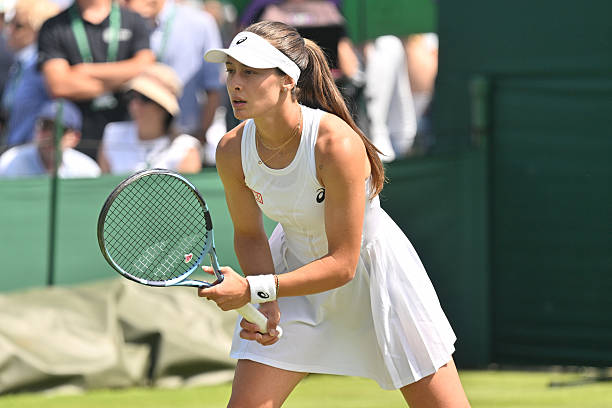
The figure provided by Sonmez summarizes better than any explanation the necessary sacrifice. "Last year, we only spent 50 days in Turkey," she revealed. Reaching the 48th spot in the ranking means breaking down numerous barriers but also opening new ones. Sonmez now needs to turn great results into a constant and learn to handle increasing expectations without losing the enthusiasm that drove her growth.
Her situation also underscores how much succeeding in tennis depends on much more than talent. Mental stability, the ability to live far from home, continuous learning, and access to a structure familiar with the intricacies of the elite can make significant differences.
Sonmez has had to acquire much of this knowledge as she advanced and competed against players who grew up surrounded by a much deeper tennis tradition. Now, positioned in the top-50, she faces a different yet equally complex challenge: ensuring that all she has learned stops being a series of first experiences and instead becomes the necessary routine to remain among the world's best for many years.
This news is an automatic translation. You can read the original news, Zeynep Sonmez desnuda la cara más dura del tenis: "El año pasado pasé 50 días en casa"
-
 24 Jul 2026 | 20:00Lethal blow to the Masters 1000 in Canada: Sinner and Djokovic withdraw
 -
 25 Jul 2026 | 11:00The calendar puts the Masters 1000 in Canada in check
 -
 25 Jul 2026 | 21:00The 5 top favorites for the title at the Masters 1000 in Canada
 -
 25 Jul 2026 | 10:00Sinner says goodbye to the 9 Masters 1000 in a year with a surprising decision
 -
 25 Jul 2026 | 16:00Sinner, on his legacy: "I want to be remembered for the type of person I am"
 -
 24 Jul 2026 | 19:00"Federer knew he was very good and didn't deny it"
 -
 25 Jul 2026 | 12:00Auger-Aliassime and the opportunity of his life at the Masters 1000 in Canada