|
26 Jul 2026 | 18.45
|
26 Jul 2026 | 18.45





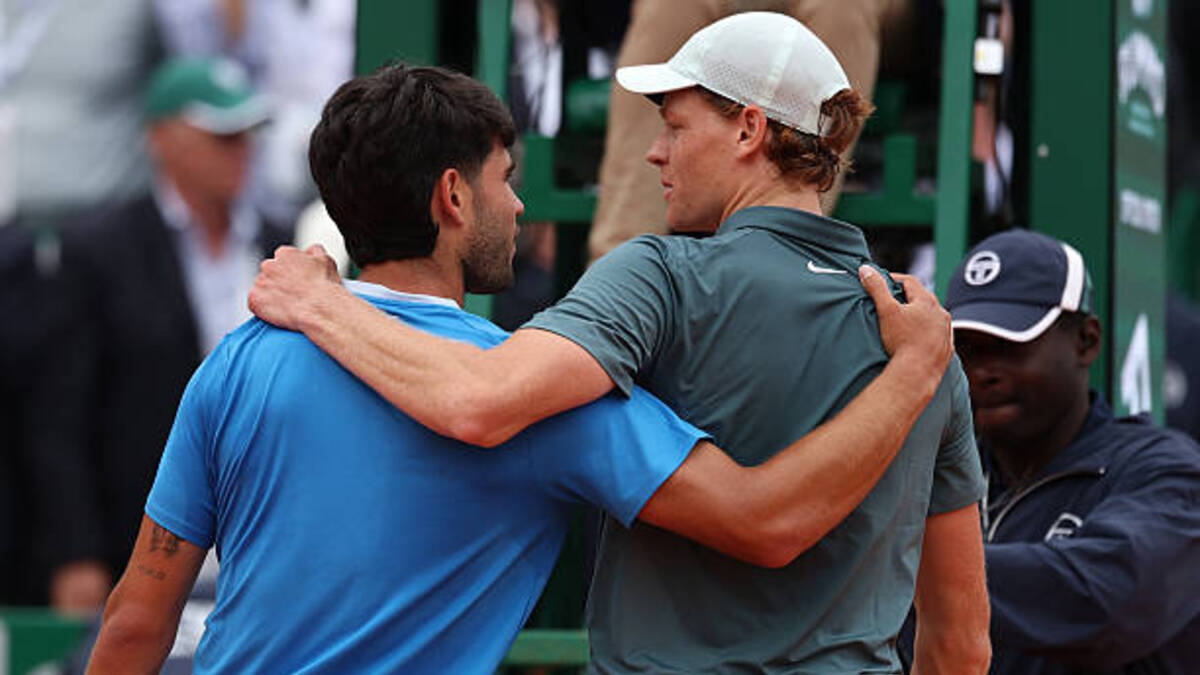


European men's tennis exerts an unprecedented dominance in the Grand Slam tournaments. Of the last 88 majors played, 87 have ended up in the hands of European players, with Juan Martín del Potro and his historic US Open 2009 as the only exception. A trend that highlights the impact of the Big 3 and the subsequent emergence of Sinner and Alcaraz, but also raises an inevitable question: who can end such hegemony?
The globalization of tennis is unquestionable. Professional tournaments are scattered across the globe, academies are thriving in countries with little tradition, and more nationalities are appearing in prominent ranking positions. However, when it comes to winning the four most important tournaments in the world, Europe barely offers alternatives. The contrast with what happened for much of the Open Era is spectacular.
87 of the last 88 Grand Slam tournaments have had a European champion
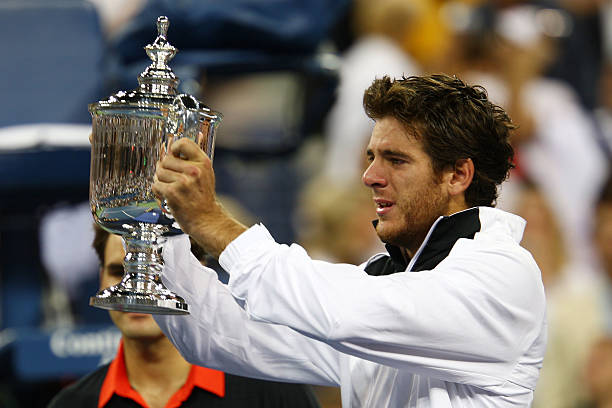
The actual significance of the statistic is evident when looking at where the only exception lies. One must go back to the US Open 2009, when Juan Martín del Potro staged one of the great feats of this century. The Argentine defeated Rafael Nadal in the semifinals and Roger Federer in a memorable five-set final, also preventing the Swiss from claiming his sixth consecutive title in New York.
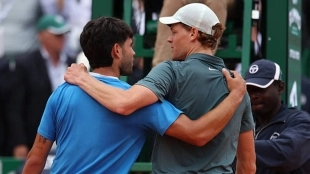
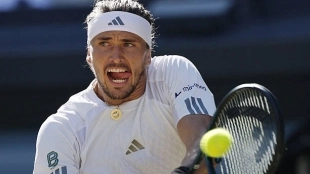
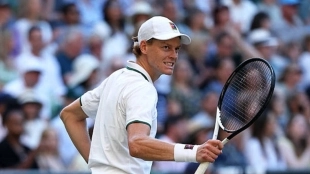
Since then, no man born outside Europe has lifted a Grand Slam trophy. The Australian Open, Roland Garros, Wimbledon, and the US Open have been monopolized by Europeans, a streak that has also continued into 2026. Alexander Zverev maintained the sequence with his title at Roland Garros, and Jannik Sinner did the same later at Wimbledon.
Historical comparisons further highlight the phenomenon. In 2004, for example, Gastón Gaudio conquered Roland Garros. In 2003, Andre Agassi won the Australian Open, Andy Roddick the US Open, while in 2002 Lleyton Hewitt prevailed at Wimbledon, and Pete Sampras closed his career triumphing in New York. Such results now seem to belong to a different sport.
Especially revealing is 2001. Three out of the four Grand Slam titles were won by non-European players from three different nationalities: Andre Agassi in Australia, Gustavo Kuerten in Roland Garros, and Lleyton Hewitt in the US Open. The only European champion was Goran Ivanisevic at Wimbledon. Currently, it seems almost impossible to imagine a season with such geographical diversity.
From World Equilibrium to European Monopoly
For much of the 20th century, the United States and Australia were true superpowers in tennis. Players like Rod Laver, Ken Rosewall, John Newcombe, Jimmy Connors, John McEnroe, Pete Sampras, Andre Agassi, and many others created eras where being European was not a structural advantage in dominating the circuit. South America also produced champions, and Africa had representatives capable of reaching great heights.
The shift became evident during the 2000s and ended up becoming an avalanche. Europe developed an extraordinarily deep tennis structure, with a high density of clubs, coaches, academies, and tournaments. The opportunity to compete from a very young age on different surfaces and against players of varied styles creates an extremely favorable environment for development.
To this, an unrepeatable circumstance is added: Europe simultaneously produced Roger Federer, Rafael Nadal, and Novak Djokovic. The Big 3 not only dominated an era but blocked access to major titles for multiple generations for nearly two decades. Andy Murray and Stan Wawrinka, precisely two other Europeans, were the ones who best managed to break into that monopoly.
The extraordinary thing is that the retirement or decline of that generation has not caused the expected power vacuum. Carlos Alcaraz and Jannik Sinner have immediately taken up the baton, while Alexander Zverev has added his name to the list of Grand Slam champions. The European succession has occurred almost seamlessly.
The United States desperately seeks Roddick's successor
If there is one country for which this European dominance is particularly painful, it is the United States. What was once one of the great powers in world tennis for decades has not had a male Grand Slam champion since Andy Roddick at the US Open in 2003. The paradox is that American tennis continues to produce a huge volume of competitive players, but has been unable for over two decades to find that great generational star to turn quantity into Grand Slam titles.
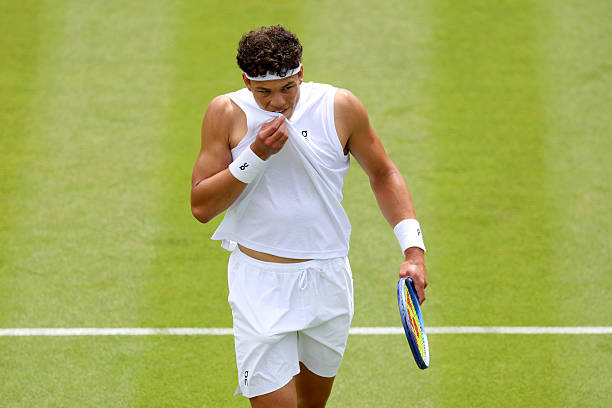
The strongest hope for the future is Ben Shelton. Due to his age, athletic ability, power in his service, and room for growth, he appears to be the best-positioned American to contend for major titles in the coming years. Shelton possesses weapons capable of harming anyone and has shown that big stages do not intimidate him. The question remains whether he can achieve the consistency and tennis richness needed to surpass a generation led by Sinner and Alcaraz over a two-week period. Should the United States end its drought soon, Shelton emerges as the most natural candidate.
A different case is that of Taylor Fritz. He has been one of the Americans who has come closest to returning his country to glory and has demonstrated belonging to the elite for years, but time is starting to work against him. His best opportunities may have passed without necessarily ruling him out entirely. Fritz has enough tennis to take advantage of a favorable draw and once again position himself close to the title, although it is increasingly difficult to imagine him building a dominance or becoming the figure the United States has been searching for since Roddick.
It seems more difficult currently to consider Frances Tiafoe or Tommy Paul as solutions to that drought. Both have shown great performances and have the level to trouble practically anyone on a good day, especially on hard courts, but they seem to be far from the consistency needed to string together seven victories in a Grand Slam while having to surpass several of the best players on the planet.
That's why it's particularly interesting to look at those coming after. Learner Tien represents an important reason to dream in the medium term. His precocity and competitive ability suggest that he still has a lot of room to evolve and offers a different profile from other Americans. Before demanding Grand Slam titles from him, he will need to fully establish himself among the best, but he belongs to a generation that still has time to change the current world order.
And much further ahead are two names that spark great excitement: Michael Antonius and Jordan Lee. They are still projects that need to cover virtually the entire path to the elite, so any comparison with the great champions would be premature, but both represent that American quest for exceptional talent. Antonius is surprising for how quickly he has brought his tennis to the professional circuit, while Lee emerges as another of the most promising youngsters of his generation.

Therefore, the United States has several bullets scattered across different time horizons. Fritz represents the present and perhaps one of his last opportunities; Shelton, the most convincing candidacy for the coming years; Tien, a medium-term hope; and Antonius and Lee, much more distant but tremendously intriguing bets. After waiting for more than two decades for Roddick's heir, the question is whether any of them will finally become something that American tennis produced with astonishing naturalness in the 20th century: a Grand Slam champion.
Joao Fonseca, the major non-European threat in the short term
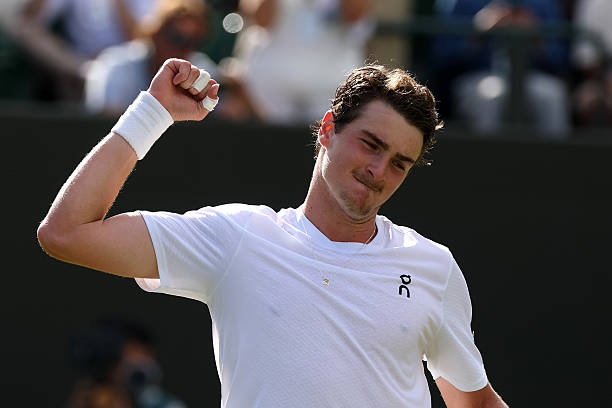
However, if a non-European player with the potential to end the streak had to be chosen currently, all eyes would turn to Joao Fonseca. Brazil has an important tennis tradition, and Gustavo Kuerten continues to be its great modern reference, but Fonseca's emergence has raised expectations of a dimension far superior to those generated by any South American player in recent years.
His combination of power, aggression, and precocity allows us to imagine him competing for the top titles if he continues to develop correctly. It's not just about reaching the top 10 or making it to the final rounds of major tournaments: for Fonseca, the challenge will be to acquire the necessary physical, tactical, and mental consistency to defeat several elite players consecutively over two weeks.
That's precisely where the huge challenge lies for anyone aiming to end the continental dominance. It's not enough for a great player to emerge from outside Europe. Someone must arise who can defeat Sinner, Alcaraz, Zverev, and the rest of the European elite when it matters most. Del Potro achieved this in 2009 by defeating Nadal and Federer consecutively. No one has done it again since then to become champion.
Why Is It So Difficult to Break the Hegemony?
The record of 87 European titles in 88 Grand Slams could simply be interpreted as a statistical consequence of the Big 3, but its subsequent continuation forces to look beyond. Europe has a gigantic competitive pyramid. A young talent can compete in tournaments of great demand without constant intercontinental travel, alternate between clay and hard courts, and regularly face rivals from numerous tennis schools.
Clay courts also play an interesting role. Although modern tennis is mostly played on hard courts, growing up competing on clay requires building points, defending, sliding, developing tactical patience, and learning to cope with long rallies. It doesn't guarantee producing champions, but it helps create players with a very complete technical background.
The United States, Australia, South America, and Asia have sufficient resources and talent to compete, but no region has managed to generate a succession of superstars comparable to Europe in this century. Even when an exceptional player emerges, they must face an elite whose depth remains predominantly European.
An historical anomaly that threatens to persist
What is truly extraordinary is that there is no immediate end in sight. Sinner and Alcaraz are still in a stage of their careers where they may spend many years battling for all Grand Slam titles. Zverev has firmly joined the ranks of champions, with a vast amount of European talent emerging behind them.
Fonseca possibly represents the most evident international alternative, Shelton has the credentials to compete for major titles, and the United States is hopeful about the progress of Tien, Antonius, and Lee. However, there is a huge gap between having potential and winning seven matches in a Grand Slam.
Del Potro was the last one to overcome it. His victory in New York then seemed like another chapter in a natural rivalry between continents. Seventeen years later, that US Open 2009 has become a historic boundary. Since then, Europe has won 87 of the last 88 Grand Slams contested. A monopoly difficult to explain solely by an unrepeatable generation, posing one of the major questions in today's tennis: who will be the next non-European player to win a Grand Slam and when will that moment arrive.
This news is an automatic translation. You can read the original news, El dominio insultante de Europa en el tenis masculino amenaza con prolongarse sine die
-
 25 Jul 2026 | 11:00The calendar puts the Masters 1000 in Canada in check
 -
 25 Jul 2026 | 12:00Auger-Aliassime and the opportunity of his life at the Masters 1000 in Canada
 -
 26 Jul 2026 | 14:00Roland Garros's Idea to Stop the Tennis Players' Boycott
 -
 25 Jul 2026 | 21:00The 5 top favorites for the title at the Masters 1000 in Canada
 -
 26 Jul 2026 | 15:00Eala completely changes the vision of tennis in the Philippines
 -
 26 Jul 2026 | 13:00Halys, after winning his first ATP title: "I had no pressure on my shoulders"
 -
 25 Jul 2026 | 16:00Sinner, on his legacy: "I want to be remembered for the type of person I am"