|
24 Jul 2026 | 19.30
|
24 Jul 2026 | 19.30





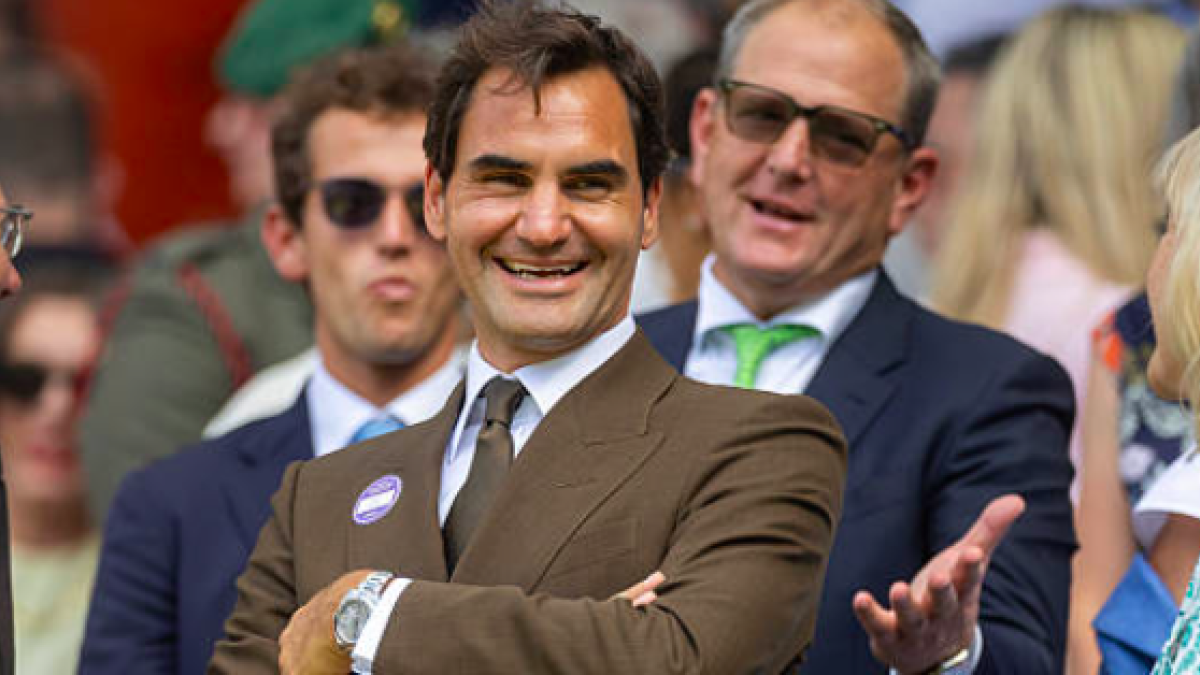


Roger Federer is back in the spotlight thanks to a conversation between two of the most recognizable voices in American tennis. Mary Carillo recalled her relationship with the Swiss during a chat with Andy Roddick on the official Served podcast.
The journalist, who will share an entry with Federer in the International Tennis Hall of Fame, revisited some of her experiences covering what she considers one of the most difficult players to describe in history. The conversation revolved around his talent, personality, and the ability to turn every match into something much larger than just a tennis encounter.
“Trying to describe who he is and what he can do on a court... you are left speechless. Not only because of what he does and how he does it, but how he makes you feel,” Carillo explained when Roddick asked about the difficulty of narrating Federer's tennis. A sentiment shared by the American himself, who for years struggled against the Swiss from the other side of the net and now will have the opportunity to enter the Hall of Fame alongside him.
The journalist then recalled one of her first individual interviews with Federer. The Swiss was still very young, although, according to Carillo, he already displayed a perfectly recognizable personality. During that conversation, she decided to directly ask him if he was aware of the beauty of his tennis.
“I said to him: ‘Do you know how beautiful your game is?’. And he replied: ‘Yes’. And he chuckled a little,” she recounted. But the conversation didn't end there. Carillo wanted to know if that beauty was intentionally sought by the Swiss. “So I asked him: ‘Are you trying to make it beautiful?’. And he said: ‘Yes’”.
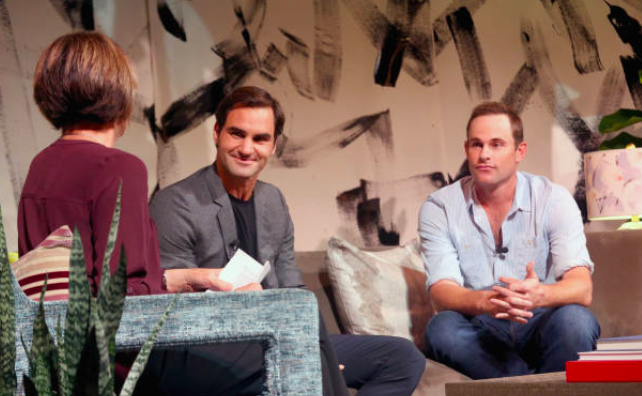
The response elicited laughs from Roddick but also summed up, in Carillo's opinion, the essence of Federer. The Swiss didn't need to pretend he wasn't aware of his talent or take refuge in false modesty. He knew perfectly well who he was and what he had achieved. “He knew exactly what he was, how important he was for tennis, but he wasn’t a jerk about it,” the journalist explained.
Roger Federer was always aware of his class
Carillo insisted that Federer never needed to deny his own greatness to appear humble. “There's no false modesty. If you say to him: ‘You were very good’, he answers you: ‘Yes, I was very good’. He won’t deny it just for the sake of denying it,” she added.
Roddick also highlighted the extraordinary coherence between the Swiss's personality and his style of play. “I have never seen an athlete whose playing style reflects his personality so much,” he pointed out. For the American, Federer maintained a practically unchanged identity throughout his career, from his early years to his retirement. “Roger was very approachable, but his tennis was not relatable,” Roddick explained. Unlike other role models, like Jim Courier, whose game could be analyzed and imitated from a more down-to-earth perspective, Federer seemed beyond the reach of any normal player.
Perhaps that's why, when Carillo tried to describe him, she preferred to let the Swiss speak with his racket. “More often than not, I just let him play,” she acknowledged. Because in the case of Roger Federer, sometimes words fell short of what was happening on a tennis court.
This news is an automatic translation. You can read the original news, “Federer sabía que era muy bueno y no lo negaba”
-
 24 Jul 2026 | 19:00"Federer knew he was very good and didn't deny it"
 -
 24 Jul 2026 | 20:00Lethal blow to the Masters 1000 in Canada: Sinner and Djokovic withdraw
 -
 23 Jul 2026 | 20:00Paul's coach reveals the only viable option to put Sinner and Alcaraz in trouble
 -
 23 Jul 2026 | 17:00Rafa Jódar will be a protagonist in a talent-filled Washington tournament
 -
 24 Jul 2026 | 08:00The 3 historical records Djokovic can break at the US Open 2026
 -
 24 Jul 2026 | 13:00The most unexpected Grand Slam champions and finalists in tennis history