|
28 Jun 2026 | 12.32
|
28 Jun 2026 | 12.32





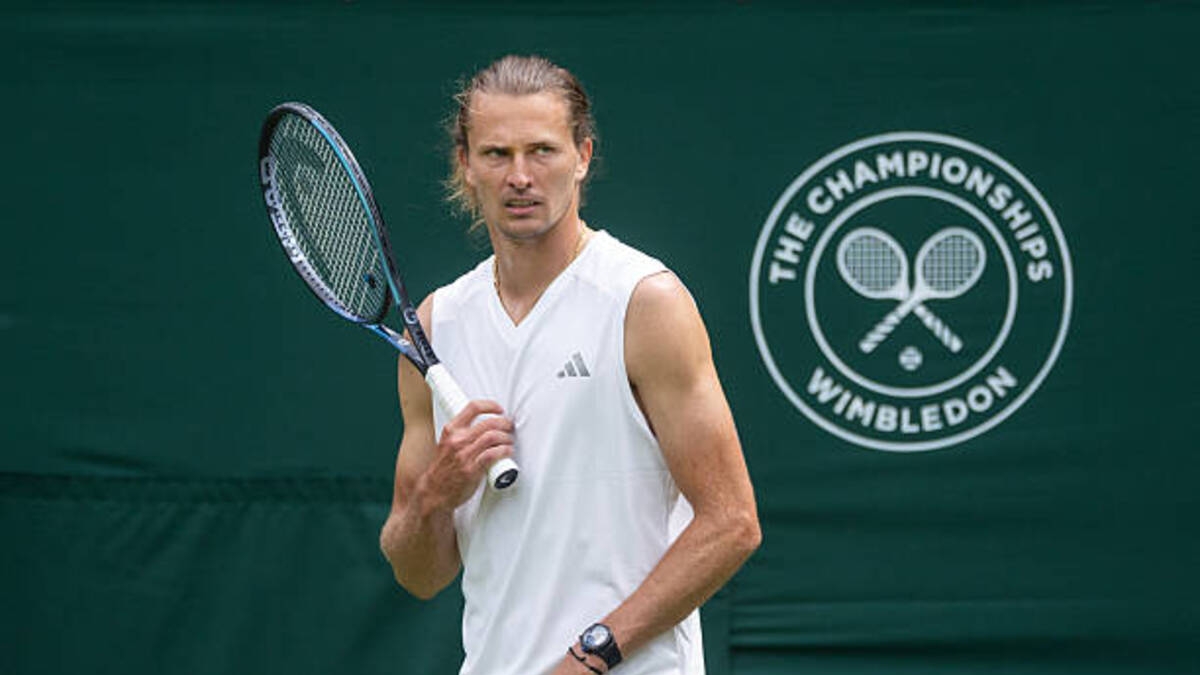


Alexander Zverev begins Wimbledon 2026 with a completely different feeling than in previous years. After securing the first Grand Slam of his career at Roland Garros, the German faces the London tournament freed from the pressure that had accompanied him for over a decade, albeit with a curious setback that has caught attention during his early trainings at the All England Club.
In statements reported by Bild and in an extensive interview given to RTL+, Alexander Zverev revealed that he suffers from a grass allergy, recalled the enormous emotional burden of winning Roland Garros, spoke candidly about the mental health issues he faced after losing the Australian Open final, and explained how therapy and his environment helped him regain the enthusiasm to compete.
Alexander Zverev arrives at Wimbledon 2026 relieved of pressure and ready to change his grass court story
Zverev surprises by revealing he suffers from a grass allergy
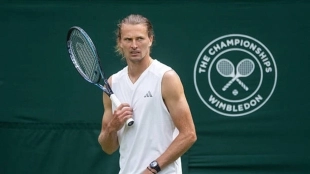
During one of his training sessions at Wimbledon, the German was seen sneezing and blowing his nose repeatedly. Far from being a cold, Zverev explained that he has been living for years with a problem he had never publicly discussed. "I'm fine. Grass allergy is nothing new to me. I suffer from it every year."
Paradoxically, grass has always been the most challenging surface of his career. None of his titles has come on grass, and he has never advanced beyond the Wimbledon round of 16. However, the Roland Garros champion approaches this edition with optimism, convinced that he can take a step forward.
The Roland Garros champion acknowledges playing with a new freedom
After lifting the trophy in Paris, Zverev feels that the enormous weight of constantly pursuing his first Grand Slam has disappeared. "I have to be honest with myself: it feels different with the title under my belt. There is more joy and, in a way, more freedom. But when I'm on the court, I want to do my job and play my best tennis."
Alexander Zverev recalls the enormous pressure he felt before winning his first Grand Slam
In the interview with RTL+, the German explained that the day before the Roland Garros final was one of the most difficult days of his entire career. "The day before the final was not a good day for me. I couldn't enjoy anything until the match was over. I had already lost three Grand Slam finals, and this was a final I felt I had to win.
This time I didn't have Carlos Alcaraz or Jannik Sinner in front of me, and that increased the pressure even more. I was very nervous and tense. That's why I had cramps at the end of the match. They weren't physical cramps; they were a consequence of all that tension. Only when the match was over did all that pressure disappear. That's when I finally felt that I had made it and could enjoy it."
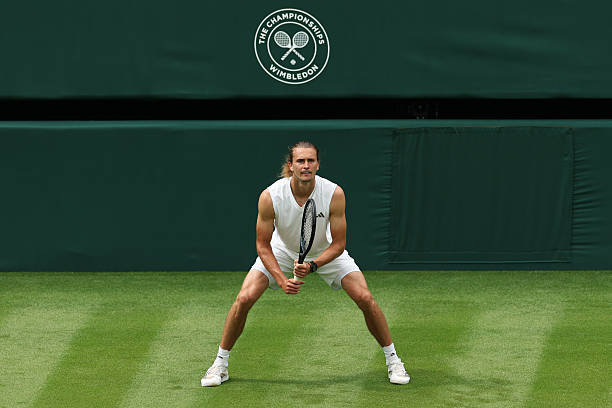
The German explains how pressure feels in major moments
Zverev also described what happens physically and mentally when an athlete competes under extreme pressure. "You feel like you lose control of your body. Your arm doesn't feel right, your legs get heavy, everything is harder, and you can't sleep well either.
I've spoken with many retired athletes, and they all tell me that sensation is what they miss the most. It's almost like a drug. You want to feel it again and again because it only exists in top-level sports. You have to learn to enjoy it. You have to learn to live with that pressure because it only shows up in truly important moments."
Zverev's mother defied doctors so he could become a professional tennis player
Diagnosed with diabetes as a child, Zverev recalled that many specialists completely discouraged him from pursuing high-level sports. "My mother was the only one who believed from the beginning.
Doctors said that practicing professional sports with diabetes was not only impossible but also dangerous. But my mother is a very stubborn person. She always replied that if her son wanted to achieve something, he would. Many times she left consultations saying that we would prove them wrong. And we did.
Furthermore, the diabetes from twenty years ago has nothing to do with the current one. Technology has completely changed. Before, you had to prick your finger and administer all the medication manually. Now you can control almost everything from your mobile phone."
Therapy changed his way of understanding life outside of tennis
Zverev confirmed that he sought professional help, although not specifically focused on sports performance. "I did go to therapy, but not related to sports. Every time I worked with a sports psychologist, I felt like I ended up creating problems that didn't really exist.
I needed to understand that tennis is not everything in life. That there are other concerns and also other ways to be happy. In the end, I have a wonderful life and much more than I need. Many people will think I'm crazy for complaining, and they're probably right. I had to learn to appreciate all of that."
Sascha Zverev and the importance of not suppressing emotions
The German also explained that he suppressed all his emotions for months and encouraged anyone going through a similar situation to seek help.
"It all started after the Australian Open, and I talked about it publicly after Wimbledon. It was over six months. My family and team noticed it long before. They constantly asked me what was wrong because I had lost my joy. I was always in a bad mood and not a pleasant person.
To anyone going through something similar, I would say to talk. Speaking is the first step to start feeling better. Men also have the right to cry, to feel sad, and to say it. I cried less than I should have. I bottled up all the emotions for months and distanced myself from the people who could help me. When I finally opened up, four or five months later, I started playing better tennis again and, above all, I became much happier."
After years of pursuing the greatest goal of his career, Alexander Zverev approaches Wimbledon 2026 with a completely different mindset. The Roland Garros title has removed an enormous emotional burden, while the work done off the courts has allowed him to regain the personal balance he had lost. Now, despite living with a curious grass allergy and on a surface that has never been his best ally, the German feels he arrives in London more prepared than ever to try to break another major barrier in his career.
This news is an automatic translation. You can read the original news, Zverev sorprende antes de Wimbledon: "Tengo alergia al césped"
-
 27 Jun 2026 | 16:00Davidovich breaks free from the chains in Mallorca: finally champion!
 -
 27 Jun 2026 | 19:00Fils maintains mystery about his injury before Wimbledon: "I can't say it"
 -
 28 Jun 2026 | 07:00Gauff: "Grass and I do not have the best possible relationship"
 -
 27 Jun 2026 | 19:00Zverev reveals what he felt when facing Nadal for the last time at Roland Garros
 -
 27 Jun 2026 | 21:00Swiatek analyzes the 'curse' of Wimbledon: "It's hard to say why"
 -
 28 Jun 2026 | 13:00These are all the players arriving at Wimbledon injured or with some discomfort
 -
 28 Jun 2026 | 11:00Ruud admits that Sinner and Alcaraz made him change his mind: "I was wrong"
 -
 27 Jun 2026 | 21:00Andreeva, fascinated by Serena's comeback: "I wouldn't want to face her"
 -
 28 Jun 2026 | 12:00Zverev surprises before Wimbledon: "I have a grass allergy"