


 |
18 Jun 2026 | 13.18
|
18 Jun 2026 | 13.18





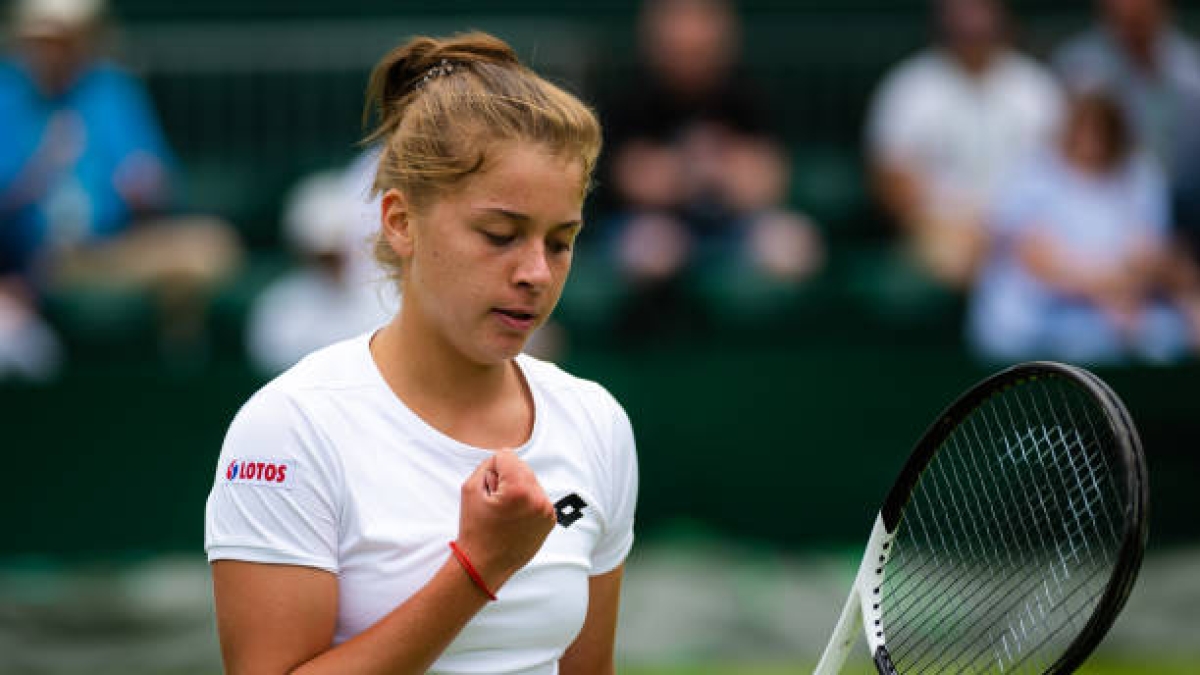


Maja Chwalinska is on everyone's lips. The Polish player surprised the tennis world at Roland Garros, where she reached the final after going through the qualifying rounds and being ranked 114th in the world. Although she didn't clinch the title and fell to Mirra Andreeva, her vintage style of play, characterized by tactical precision and slicing most balls with her backhand, along with her backstory, have captivated fans.
Her strong performance in Paris is expected to be a trend in her career. At just 24 years old, her surge in the WTA rankings, climbing 90 positions to become the world number 21, places her in the spotlight for upcoming tournaments. Her next challenge will be Wimbledon, the most prestigious and traditional event on the circuit.
Why will Maja Chwalinska be seeded in Wimbledon after receiving a wildcard?
However, she was close to missing out on a spot in the Wimbledon main draw and potentially facing another three-match qualifying round when she was ranked as high as the 21st player in the world. The reason behind this unusual situation is that Wimbledon finalizes its main draw list—comprising the top 100 players in both men's and women's categories—six weeks ahead of the tournament, on May 18, a week earlier than the beginning of Roland Garros.
By that date, Chwalinska was about to play her first qualifying match and held the 114th spot in the rankings. However, her remarkable performance at Roland Garros garnered attention, and at the beginning of the week, Wimbledon granted her a wildcard entry to the main draw, thus bypassing another arduous qualifying round.
Following Wimbledon's decision, an interesting scenario unfolded, a rarity that had only occurred twice in the Open era. Chwalinska becomes the third player to compete in a Grand Slam after receiving a wildcard and being seeded.
Similar Cases to Maja Chwalinska's Situation
This situation has a rationale. While the main draw list is fixed six weeks prior, the order of the 32 seeded players is determined a week before the tournament starts, which will be on June 22. By then, Chwalinska will likely hold the 21st position in the world ranking. Consequently, she will be seeded as the 21st player after receiving a wildcard for the tournament.
The two previous instances date back to the early 2000s. In 2002, Martina Hingis received a wildcard for the US Open and competed as the ninth seed. However, there wasn't a significant rise in her ranking; she had consistently been within the top ten in the months prior.
A similar scenario unfolded for Patty Schnyder. In 2004, she received a wildcard for Wimbledon and entered as the 15th seed. Her ranking remained within the top 20 in the preceding months.
Both players saw modest performances, with Hingis exiting in the round of 16 and Schnyder in the second round. Thus, they are not the best benchmarks for Maja Chwalinska, who will aim to, why not, cause another stir at another Grand Slam. After Roland Garros, it's now time for Wimbledon.
This news is an automatic translation. You can read the original news, La paradoja de Chwalinska en Wimbledon: invitada y cabeza de serie
-
 17 Jun 2026 | 10:00Musetti chooses Alcaraz over Sinner: "His tennis is the most beautiful"
 -
 17 Jun 2026 | 09:00Serena fuels Wimbledon dream
 -
 18 Jun 2026 | 10:00Mouratoglou chooses his three favorites for Wimbledon 2026
 -
 17 Jun 2026 | 20:00"On clay we made a decision with Sabalenka and it didn't go as we wanted"
 -
 17 Jun 2026 | 19:00Badosa, thank you for this life lesson
 -
 17 Jun 2026 | 16:00Musetti's injury ordeal has no end: confirmed withdrawal for Wimbledon
 -
 17 Jun 2026 | 23:00Badosa confronts Tsitsipas: "I had to overcome many toxic things"
 -
 17 Jun 2026 | 14:00What is the device that Sinner uses on his arm while training for Wimbledon?
 -
 18 Jun 2026 | 09:00Swiatek opens the door to a second coach ahead of a pressure-filled Wimbledon


