|
31 May 2026 | 15.35
|
31 May 2026 | 15.35






Sorana Cirstea continues to extend one of the most unexpected chapters of her career at Roland Garros 2026. At 36 years old, the veteran player has reached the quarterfinals of the Parisian tournament, a stage she had not reached in 17 years, confirming the extraordinary moment she is going through in a season she had planned as her last in her professional career.
Far from thinking about an imminent retirement, Sorana Cirstea acknowledged that she is enjoying tennis more than ever. The Romanian reflected on her evolution as a player and as a person, explained how a surgery changed the course of her recent years in her career, and admitted that the success of this season is far exceeding the expectations she had at the beginning of the year.
Sorana Cirstea’s Reflections after Reaching the Roland Garros 2026 Quarterfinals
The Most Special Quarterfinals of Her Career
"Seventeen years ago, I was a girl. I had just entered the circuit, and I didn't really understand everything that was happening. I was just playing and starting my career."
"Now I have many years of experience behind me. I have matured as a player and as a person. I feel completely different. It's a very different situation, but also very beautiful. I'm very grateful for everything happening and very happy to see how I have evolved all these years."
The Surgery that Changed Many Things
"Everyone who knows me knows that my daily routine hasn't changed. I keep working the same, I maintain the same discipline, and I am still as demanding with myself as before."
"Two years ago, I underwent surgery, and after recovering, I gradually started to find my level. I think I began to play really well since after last year's Wimbledon. What makes me happiest is that I have managed to maintain that level week after week."
"This is probably the first time in my career that I am able to access my best level almost every match. I have always been a dangerous player. I have always had the tennis to compete with the best and achieve great results, but many times I was too inconsistent."
"I didn’t know exactly which version of myself would show up on the court each day. Now I feel that my baseline level has improved tremendously. Every time I step onto a court, I know that at the very least, I will offer a seven out of ten."
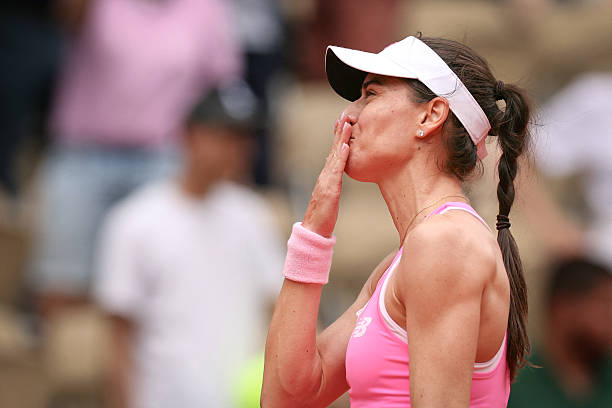
A Retirement that No Longer Seems So Clear
"This year is going much better than I expected. I arrived thinking it would be my last season. I wanted to say goodbye on a high note, compete well, and enjoy tennis, but honestly, I didn't imagine things would go so well."
"I am also enjoying it immensely. I think over the past years, I realized how much I love this sport. I am still working very hard, but I am also having more fun. I think that shows."
"Of course, I am still a competitor. I want to win every match I play, but I don't put as much pressure on myself or am as tough on myself as before."
"So far, the decision has not changed. I haven't thought much about it. I take it week by week and don't want to add unnecessary pressure. We will see what happens later, but right now, the plan remains the same."
The Mental Peace that Took Years to Find
"When I was young, every match was a life or death matter. If I won, I was the happiest person in the world, and if I lost, I could spend two days crying."
"I still have a huge passion for this sport and still greatly enjoy competing, but I also understand that it's my job. The important thing is to ask myself if I have given my hundred percent and if I have done everything possible to win."
"Obviously, losing hurts, but the next day, I go back to training or head to the next tournament. Over the years, you gain a different perspective."
"I think the biggest change in my career has been mental. Each season I improved a bit more in that aspect until I found peace with myself. Some athletes find that winning mindset very early. Others like me have more irregular paths, with ups and downs and difficult moments."
"I have made peace with my past. I have no regrets. I know that throughout my career, I gave my hundred percent. I am here because I worked very hard and because I deserve to be here."
Why Tennis is Harder Now than Fifteen Years Ago
"The first major change is the physical aspect. When I entered the circuit, hardly anyone traveled with a physical trainer. Now, we all have much more complete teams, and the physical level is much higher."
"Before, you could win many points with one or two aggressive shots. Now, you need three, four, or five shots to end a point because all players defend much better."
"The second change is recovery. I'm 36, and curiously, I have fewer injuries than when I was 19. Today, we spend as much time recovering as we do training. We all travel with physiotherapists and have access to much more information about rest, hydration, supplements, and recovery methods."
"And the third major difference is that tennis has become much more complete. Before, there were very defensive players and others very offensive. Now, if you want to be at the top, you have to be able to do everything. You must attack, defend, move well, serve well, and return well. Modern tennis demands being a much more complete player."
At 36 years old, Sorana Cirstea is proving that she still has a lot to offer at the highest level. Just when the end of her career seemed near, the Romanian has found a consistency she had never had, made peace with her past, and is enjoying tennis without the pressure that accompanied her for much of her career. A combination that has led her to the quarterfinals of Roland Garros, which, 17 years later, hold a very different significance.
This news is an automatic translation. You can read the original news, Cirstea: "Cuando anuncié mi retirada no esperaba jugar a este nivel..."
-
 16 Jul 2026 | 11:00Noskova's father's harsh account: "We had nothing to eat or a place to live"
 -
 15 Jul 2026 | 17:00Fery Sets New Goals After His Historic Wimbledon
 -
 16 Jul 2026 | 14:00"Sinner's tennis, with or without Alcaraz, remains the best"
 -
 15 Jul 2026 | 21:00Losing to Make History: Zverev Is Now Part of an Exclusive Group
 -
 16 Jul 2026 | 20:00"I see Sinner as an evolved version of Djokovic"
 -
 16 Jul 2026 | 09:00The Bryan Brothers Criticize the ATP: "They are destroying doubles"
 -
 15 Jul 2026 | 15:00The historic statistic where Sinner and Alcaraz threaten the Big 3
 -
 15 Jul 2026 | 22:00Alcaraz aims for Cincinnati: appears on the tournament's entry list
 -
 16 Jul 2026 | 22:00"Alcaraz and Sinner are not among the top 10 best tennis players in history"
 -
 16 Jul 2026 | 16:00Why has Sinner never played in the Laver Cup?