

留下的温网2026的11个重要结论
我们对2026年温网发生的一切进行了彻底回顾,并探讨了这对未来重要比赛可能产生的影响。

2026年的温布尔登已经成为历史的一部分。本赛季的第三项大满贯赛事再次留下了难以忘怀的画面,伟大的冠军,意想不到的新星以及在下半年面临的众多问号,再次证实了其作为赛历中最特殊的赛事的地位。
除了 贾尼克·辛纳 斩获新冠军以及在全英俱乐部草地上展现出的非凡竞技水平之外,这项英国赛事带来了许多深刻的启示。新人物的巩固,围绕一些巨星名字的疑虑,以及亚瑟·费雷的崛起描绘出了一个极其有趣的景象,展望未来几个月。以下是温网2026留下的 前五大重要结论。
温布尔登2026带来了哪些结论?
1. 辛纳不知疲倦地赢球
对于一个似乎已经将卓越变得平凡的选手,要找到新的赞美变得复杂起来。在罗兰·加洛斯遭受沉重打击后,他在一个非常敏感的身心状态下结束了胜利的连胜。许多人想知道他将作何回应。温网提供了最佳答案。冠军不是因为如何赢得比赛,而是在失利时如何反应,这位意大利选手再次证明了他属于一个特别的范畴。
除了冠军头衔外,他展现出的竞技进步令人印象深刻。他不再需要从头到尾掌控每场比赛,也不需要展现出绝对出色的网球来最终举起奖杯。他知道如何承受,解读关键时刻,并接受大满贯也需要通过度过像面对米奥米尔·凯克马诺维奇的首轮这样尴尬的比赛才能够夺得。他的发球持续进步,他管理精力的能力越来越强,他的心理强度似乎又迈上了新台阶。
他的荣誉橱窗中已经有四座大满贯奖杯,而他越来越牢固的权威感使人难以找到理由认为他的统治会在短期内停止。辛纳已经不再是将来之人,而是当下的伟大楷模。
2. 泽维尔和不灭的野心与信心引擎
多年来,他一直被认为是世界上最好的球员,却没有赢得大满贯。这个包袱影响了太多重要比赛,太多决赛和太多被浪费的机会。然而,终于赢得一项重大赛事似乎深刻改变了亚历山大·兹韦列夫。
许多人可能认为,实现了这一生命目标后,会有一定的竞技放松。但事实恰恰相反。兹韦列夫现在打球更加自由,展现出更为积极的身体语言,在关键时刻做出进攻性决策,并流露出一种信心,之前似乎缺乏的在场景大得可怕时。
他在温网证实了一个感觉,这个感觉在他赢得第一个大满贯后就开始出现:这位德国选手已经击破了自己整个职业生涯中最大的障碍。从现在开始,他不会再为证明自己可以赢得大满贯而竞技;他会知道自己已经做到了。这种心理上的不同可以让他在未来几年内成为一个永久的候选者。
3. 诺瓦克·德约科维奇,如此近又如此遥远
每场大满贯似乎都引发了同样的争论:Novak Djokovic 的衰落终将到来了吗?温网再次给出了类似于最近时期的答复。不,塞尔维亚人仍然完全具有竞争力,继续进入决赛并保持着非凡水平。然而,他也让人感觉自己距离过去常常生活的地方只有一小步之遥。
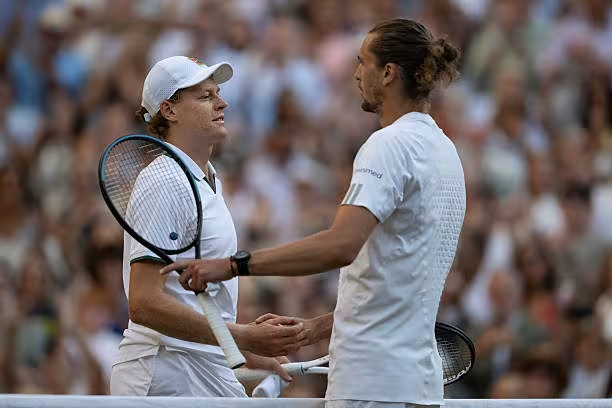
对阵 Sinner 的失败再次凸显了这一现实。在许多时刻,他能够与意大利人争夺主导权,但已不再像几年前那样频繁地在五盘比赛中与世界最佳选手保持相同水平。身体的冗余度更小,恢复需要更多时间,每场比赛都需要付出巨大的代价。
这并不意味着第 25 次大满贯的梦想已经结束。恰恰相反。如果有人配得上在任何一项大型比赛中继续被视为竞争者,则正是 Djokovic。但似乎也很明显,他需要很多因素同时配合才能再次捧起四大赛冠军奖杯。他离成功仍然很近……尽管,具有讽刺意味的是,他也似乎比以往任何时候都更遥远。
4. Arthur Fery的革命,對網球界來說是個偉大的消息
在這屆溫布頓網球賽中,少有故事能像Arthur Fery的演出一樣豐富多彩。這位英國球員從NCAA出身,遠離排名頂尖位置,提醒了世人網球仍然有空間容納意外故事。 他的崛起不應被視為異常,而是體育發展的必然結果。
在比賽中,排名低於前100位的球員能夠與精英級成員一較高下愈來愈常見。挑戰者巡迴賽的專業化、美國大學網球的增長、體能訓練的改善以及之前只有最頂尖球員才能取得的資源,大大縮小了競爭差距。
也許Fery最終會站穩腳跟,或者這場溫布頓可能是他一生中最好的比賽。無論哪種情況,他的故事對網球界是個偉大的消息。這證明驚喜、希望和發掘新面孔的空間依然存在,能在兩個令人難忘的星期內改變既定秩序。
5. 快速消逝的前十名球員
温网再次凸显的一点是目前大统领者与排名前十其他选手之间的巨大鸿沟。辛纳、兹韦列夫和德约科维奇似乎在一个不同的维度竞争,而其他被视为引领巡回赛的名字仍在寻找连贯性。
丹尼尔·梅德韦杰夫仍远离让他成为大满贯冠军的状态。本·谢尔顿仍在辉煌表现和难以解释的失调间摇摆。亚历克斯·德米诺尔保持其一贯的稳定,但在关键时刻仍受限制。如果进一步扩大视野,情况同样引人注目:安德烈·鲁布列夫、斯特凡诺斯·西西帕斯或卡斯珀·鲁德几乎消失在大赛的决赛轮次。
所有这些都有助于勾画一个独特的场景。在大领袖背后存在巨大的竞争真空,而下一代仍在成长。方塞卡、孟西克、拉斐尔·乔达和其他年轻才俊的前景看好,但他们还需要时间获得必要的一贯性。在此之前,巡回赛将继续经历一个有趣的过渡阶段,在这一阶段,一小群统治者与目前无法真正威胁其地位的追随者群体共存。
6. Linda Noskova, a new star in the sky
Linda Noskova may not yet awaken the media interest that other young figures in the circuit generate, but Wimbledon has served to confirm a reality that has been simmering for some time: the Czech belongs fully to the elite. Reaching her first Grand Slam semifinals does not seem to be the ceiling of a player who has been quietly establishing herself among the best for years.

Her development is particularly interesting because it is not solely due to natural talent. Noskova has been incorporating resources into a tennis that was initially very linear. Today, she combines an excellent serve with increasingly complete tactical variations: she uses the slice intelligently, approaches the net judiciously, executes drop shots naturally, and understands perfectly when to accelerate and when to build the point. On grass, all these virtues acquire even more value.
At just 21 years old, she exudes a competitive maturity uncharacteristic of her age. She does not need grand gestures or flashy statements to stand out. Her tennis speaks for itself, and everything suggests that these semifinals will not be an isolated exception but the first significant step towards a regular presence in the decisive rounds of Grand Slam tournaments.
7. Karolina Muchova continues knocking on heaven's door
There are few players on the circuit capable of generating as much consensus as Karolina Muchova. Every time her physique gives her a break, she proves once again that she possesses one of the most complete, imaginative, and difficult-to-decipher games on the women's circuit. Wimbledon only reinforced that perception.
The Czech once again showed flashes of immense quality, mixing up the pace, drop shots, volleys, and privileged tactical intelligence. Her ability to adapt to any surface remains extraordinary, to the point that it is challenging to find a rival who can feel comfortable against her when she reaches a high level.
Muchova's greatest enemy remains the same as always: her body. Injuries have conditioned much of her career and prevented her from enjoying the necessary continuity to establish herself among the great dominators of the circuit. However, every significant tournament is a reminder that her competitive peak still resembles that of a Grand Slam champion. If she manages to string together several months without physical issues, few would doubt seeing her lift one of the major titles she has been so close to for a long time.
8. Sabalenka and Rybakina lose momentum
Just a few months ago, it seemed evident that Aryna Sabalenka and Elena Rybakina were going to monopolize a good part of the season. However, Wimbledon has left a very different impression. Both have lost some of the authority with which they started the year and leave London with more questions than answers.
Sabalenka still occupies the top of the rankings and remains the reference in the women's circuit, but she no longer conveys that invulnerability that accompanied her during the initial part of the season. Rybakina, on her part, missed a magnificent opportunity to narrow the gap in the rankings and once again demonstrated that worrying inability to compete at the highest level consistently over several months.
The most striking aspect is not so much that they have lost, but how they did so. Neither managed to impose their identity when the matches began to get complicated. The dominance in women’s tennis is once again up for grabs, something that seemed unlikely just a few weeks ago and turns the American tour into a much more unpredictable scenario.
9. Structural issues in Gauff, Pegula, and Swiatek
Each defeat may have multiple explanations, but when the same problems recur tournament after tournament, they cease to be mere accidents. Wimbledon once again highlighted that three of the major references in the women's circuit continue to live with limitations that their teams have not yet managed to solve.
Regarding Coco Gauff, her forehand and serve continue to be sources of insecurity in decisive moments, especially on fast surfaces. Jessica Pegula maintains her tactical intelligence intact but struggles again when she needs to take the initiative against rivals who constantly accelerate the game. As for Iga Swiatek, the story repeats itself every summer: she continues to search for the formula to transfer her dominance on clay to a grass that still resists her much more than expected.
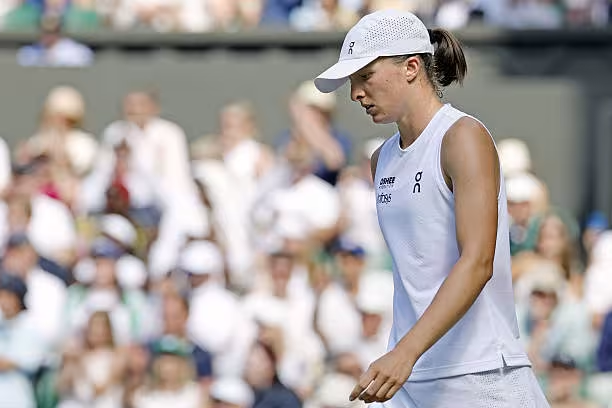
None of the three have ceased to belong to the elite, far from it. But their shortcomings are starting to become structural rather than merely circumstantial. Addressing them will be essential if they want to regain the lost prominence during the second half of the season.
10. Marta Kostyuk keeps progressing
In a Wimbledon full of notable names, perhaps one of the most consistent developments has been that of Marta Kostyuk. The Ukrainian continues to advance almost silently, but every major tournament confirms that her progress is no longer solely due to talent but also to an evident competitive maturity.
Her game has gained stability from the baseline, she makes better decisions under pressure, and she is beginning to handle critical moments with much more ease. No longer relying solely on inspiration, she has built a much more solid identity capable of competing regularly against the best players in the world.
It may still be too early to place her among the top favorites to win a Grand Slam, but Wimbledon reinforces a very clear impression: Kostyuk already belongs to the group of contenders who can make a breakthrough in any major tournament if they have a good week. And considering the evolution she is undergoing, no one should be surprised if that definitive leap comes sooner rather than later.
Bonus Track: Serena Williams and a look at the US Open
Wimbledon 2026 leaves numerous questions open for the North American hard court tour, with the main focus once again being the US Open. Much attention will be paid to verifying if Sinner can prolong his extraordinary dominance, if Zverev definitively confirms his status as a perennial contender for major titles, and if Djokovic finds a last opportunity to capture the coveted 25th Grand Slam.
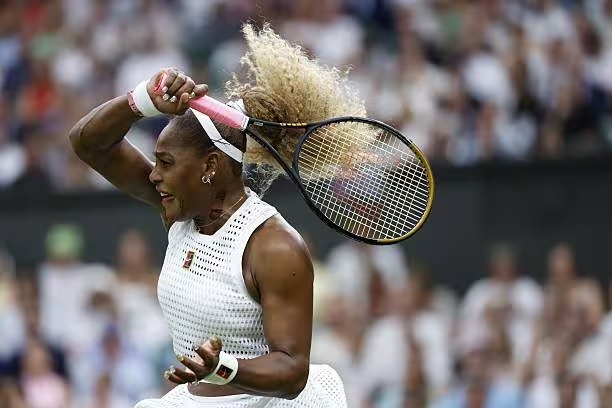
But if there is a name that will continue to monopolize attention, it will be that of Serena Williams. Her return elicited profoundly mixed feelings. On the one hand, she demonstrated that she can still compete at a surprisingly high level and challenge some of the best players in the world.
On the other hand, the injury suffered during the tournament and an occasionally baffling attitude once again raised doubts about the course of this new adventure. The US Open looms on the horizon as the grand stage where the American will try to provide answers. Given her historical stature, it is impossible not to think that she will once again become one of the major focal points of the tennis world.