|
24 Jul 2026 | 13.01
|
24 Jul 2026 | 13.01






Winning or reaching a Grand Slam final is often the result of years spent at the elite level, but history also presents fascinating exceptions. Since the beginning of the Open Era in 1968, some tennis players have had two weeks that were absolutely inexplicable considering the rest of their careers, becoming true "flashes in the pan" on the biggest stage possible.
It is important to clarify the concept before applying it. No player wins six or seven matches in a Grand Slam by chance, and some of the protagonists on this list had very respectable careers. However, there is a huge difference between being a good professional and reaching a final or becoming the champion of a major tournament.
Mark Edmondson, Thomas Johansson, and Gastón Gaudio managed to lift a trophy that hardly anyone foresaw, while MaliVai Washington, Martin Verkerk, and Mariano Puerta reached a final they never came close to repeating. Six stories that remind us that even in top-level tennis, there remains a small space for the inexplicable.
Most Unexpected Grand Slam Champions in Tennis History
Mark Edmondson - 1976 Australian Open
There is no male Grand Slam champion in the Open Era who better illustrates this phenomenon than Mark Edmondson. The Australian was ranked world number 212 when he appeared in Melbourne and still remains, half a century later, the player with the lowest ranking to have won a major since the creation of the ATP rankings. He had only played in two Grand Slam main draws and had never even reached a professional final.
It is essential to contextualize that edition. The Australian Open was still far from the prestige and draw it would later acquire. Its place on the calendar, the distance, and the cost of travel meant that many of the top European and American players regularly chose not to make the trip. Winning Melbourne in 1976 did not involve navigating the same minefield as decades later.
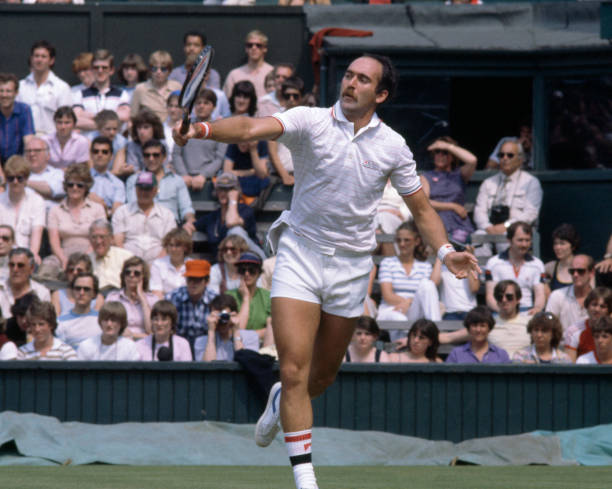
But to use that argument to belittle Edmondson would be profoundly unfair. If the field provided opportunities, he seized his in an extraordinary way: he defeated five consecutive top seeds and eventually overcame the world number two Ken Rosewall in the semifinals and the defending champion John Newcombe in the final by 6-7, 6-3, 7-6, and 6-1. At that time, he combined his tennis dream with a job as a cleaner in a hospital to finance himself.
Edmondson never again came close to such glory, though it would be wrong to portray him as a mediocre player. He won six individual titles, reached world number 15, and made it to the Wimbledon semifinals in 1982. He was even better in doubles, reaching number three and conquering five Grand Slam titles. Simply put, during those two weeks in 1976, his tennis reached a level that his individual career would never replicate.
Thomas Johansson - Australian Open 2002
If there is a Grand Slam that symbolizes a true interwar period, it is the Australian Open 2002. Sampras and Agassi were approaching the end of their dominance, Federer had not yet fully emerged, and a generation led by Hewitt, Safin, Ferrero, and Roddick was trying to establish a new hierarchy. Amidst this backdrop emerged Thomas Johansson.
The Swede was a magnificent professional and had even won the 1999 Canada Masters 1000, but nothing suggested he was destined to be a Grand Slam champion. He arrived in Melbourne as world number 18 and encountered an edition full of surprises: none of the top six seeds made it past the quarterfinals.
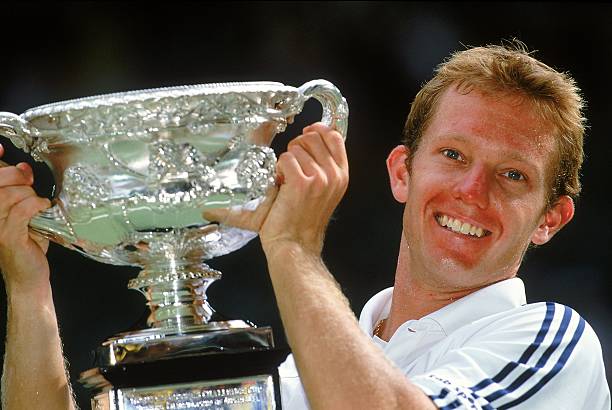
Johansson did exactly what often defines an unexpected Grand Slam victory: survived while the draw crumbled around him. He successively defeated Jacobo Díaz, Markus Hipfl, Younes El Aynaoui, Adrian Voinea, Jonas Björkman, and Jiri Novak before meeting Marat Safin in the final. None of his first six opponents were top-10 players.
Safin was indeed a top player and the clear favorite, but Johansson staged a comeback to win 3-6, 6-4, 6-4, and 7-6. The merit in his victory lies precisely in not just benefiting from the draw: when faced with a superior opponent, he also emerged triumphant.
He would reach number seven in the world and still star in some surprising Wimbledon semifinals in 2005. However, he never again surpassed the quarterfinals of another Grand Slam. Paris never saw him go beyond the second round, and at the US Open, he also failed to make it past the quarters. Melbourne 2002 remained as an extraordinary highlight in a good career, but not in the career of a recurring Grand Slam champion.
Gastón Gaudio - Roland Garros 2004
The case of Gastón Gaudio is different. If there had been a Grand Slam designed specifically for his qualities, it was Roland Garros. He had an exquisite one-handed backhand, great sensitivity to play on clay courts, and enough talent to later reach number five in the world and accumulate eight ATP titles. But even considering all of that, being the champion of Roland Garros seemed highly improbable.
Gaudio arrived in Paris in 2004 as number 44 in the world, the Roland Garros champion with the lowest ranking since Gustavo Kuerten in 1997 up to that moment. His tennis had always coexisted with a volcanic personality, enormous doubts, and a competitive fragility that could turn a great match into an exercise of self-destruction.
And precisely that is why it is so fascinating that his moment of glory came against Guillermo Coria, probably the best clay court player of the moment and an opponent whose superiority seemed evident when he won the first two sets of the final by 6-0 and 6-3.
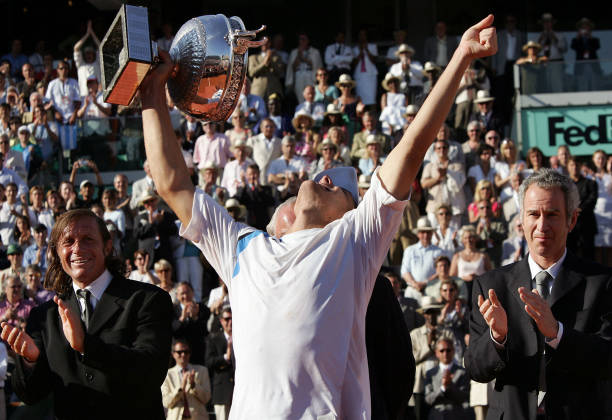
What happened next is part of the mythology of Roland Garros. Coria suffered cramps, the final turned into a psychological battle, and Gaudio ended up saving two championship points before prevailing 8-6 in the fifth set. The man seemingly less mentally prepared to win a Grand Slam ended up surviving one of the most traumatic finals in history.
There was an extension of that state of grace. In 2005, he won five titles, finished within the top 10 for the second consecutive year, and competed in the ATP Finals. But soon the collapse began. His performance in the other majors is revealing: he never went beyond the third round in the Australian Open, Wimbledon, and the US Open. Roland Garros 2004 was the unrepeatable masterpiece of a player capable of producing sublime tennis and, at the same time, living permanently with his own demons.
Most surprising Grand Slam finalists in tennis history
MaliVai Washington - Wimbledon 1996
There are surprising finals, and then there is the Wimbledon 1996 final between Richard Krajicek and MaliVai Washington. Pete Sampras and Boris Becker had started as the top two seeds, yet the tournament ended with the title match between the 13th and 20th ranked players in the world. Neither had previously contested a Grand Slam final.
Washington had been ranked as high as 11th in the world and held four ATP titles, so he was not unknown. However, his best expectations seemed to have faded when he arrived in London at the age of 27. His victory over Thomas Enqvist in the second round opened unexpected possibilities, and he managed to survive a chaotic draw to reach an unforgettable semifinal against Todd Martin.
He won that encounter 10-8 in the fifth set after four hours of battle and appeared in the final against a Krajicek who had eliminated the all-powerful Sampras. The Dutchman did not give any chances and clinched victory 6-3, 6-4, 6-3.
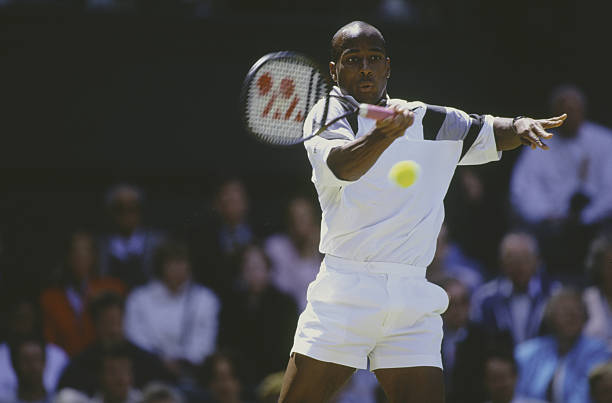
And that final still left one of the most surreal images in Wimbledon's history. Just before the start, a streaker dashed onto Centre Court, dressed only in a small apron. She was a catering staff worker of the tournament; contemporary reports describe her as a streaker, but provide no solid basis to attribute her actions to a specific protest. Washington would later admit that the scene distracted him.
He would never reach another Grand Slam quarterfinal. In fact, that final was his last significant breakthrough in the elite, and injuries ultimately hastened the end of his career.
Martin Verkerk - Roland Garros 2003
If one had to choose the most "random" Grand Slam finalist of the Open Era, Martin Verkerk would have some hardly disputable arguments. The Dutchman was 24 years old and had virtually no relevant experience on the big stages when he arrived at Roland Garros in 2003. He had clinched his first ATP title months earlier in Milan, but nothing hinted at what was about to unfold in Paris.
During two weeks, he entered a sort of competitive trance. His huge serve and devastating forehand started dismantling opponents while he seemed to grow with each round. And when the level of the draw increased, Verkerk did something that eliminates any possibility of considering his feat a coincidence: he successively defeated Rainer Schuettler, Carlos Moyà, and Guillermo Coria. Three players of huge stature, two of them particularly dangerous on clay. Only Juan Carlos Ferrero, who had been chasing Roland Garros for years and was fully established among the circuit's aristocracy, managed to awaken him from the dream in a final resolved by 6-1, 6-3, and 6-2. The extraordinary thing is to see what was left after. Verkerk never again came close to a similar round in a major. Injuries, especially his subsequent physical problems, destroyed any chance of knowing what his true potential could have been. From 2005 on, he never won another ATP match and eventually retired years later after several comeback attempts.His name remains frozen in those two weeks. A player who appeared practically out of nowhere, defeated three opponents of enormous level, and was one match away from becoming the champion of Roland Garros.
Mariano Puerta - Roland Garros 2005
A year after Gaudio, Roland Garros produced another completely unpredictable Argentine story. Mariano Puerta arrived in Paris as the world number 37 after rebuilding a career that had been severely damaged by a nine-month suspension due to a positive test for clenbuterol in 2003.
He had never gone beyond the second round of any Grand Slam. And suddenly, he won six matches in Roland Garros and became the opponent of a teenager named Rafael Nadal in his first Parisian final.
Puerta was not a mere extra. He competed head to head with Nadal, won the first set, and even served to force a fifth set before succumbing to the resistance of the Mallorcan. That afternoon should have marked the pinnacle of his career. It ended up being exactly the opposite.
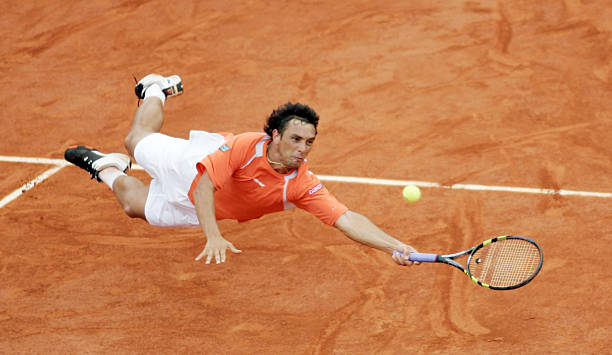
After the final, he tested positive for ethylphenidate, marking his second doping offense. Initially, he received an eight-year suspension; the tribunal determined that the violation was unintentional and that there was no significant fault or negligence, although the offense was confirmed. His Roland Garros results were disqualified, and he lost points and prize money.
All of that turned one of the great sports stories of 2005 into an inevitably controversial episode. Puerta never reached that level again and played his last professional matches a few years later. His only journey beyond the second round of a Grand Slam was a final, a statistical anomaly as extreme as it was challenging to separate from everything that followed.
Thiem and Gómez: champions of only one Grand Slam, but never "one-hit wonders"
There is a fundamental distinction to be made. Winning just one Grand Slam does not automatically make anyone a "one-hit wonder". Dominic Thiem and Andrés Gómez are splendid examples.
Thiem only conquered the US Open 2020, but he had done more than enough to be a champion long before. He played in three other Grand Slam finals, two at Roland Garros and one in Australia; reached world number three, won Indian Wells, and was one of the very few players capable of consistently challenging the Big Three for major titles. His subsequent decline was not due to an inability to maintain that level: a serious wrist injury suffered in 2021 triggered a decline from which he never fully recovered.
Something similar, though for different reasons, happened with Andrés Gómez. His Roland Garros 1990 was his only Grand Slam final, but the Ecuadorian had been consistently finishing among the top 20 for almost a decade, accumulating 21 individual titles, reaching world number four, and also being number one in doubles. In that edition, he defeated Thomas Muster in the semifinals and Andre Agassi in the final. At 30 years old, his success came simply at the natural end of a magnificent career.
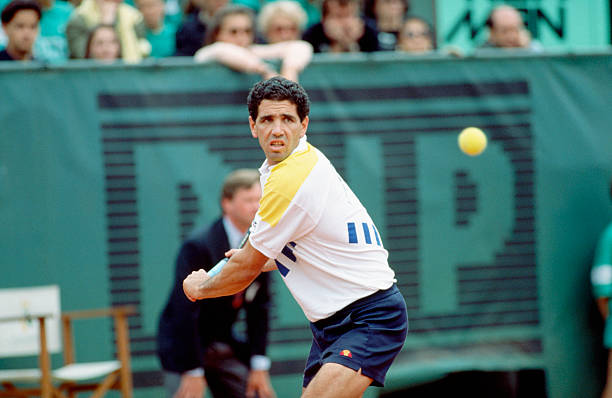
Putting them in the same category as Edmondson, Verkerk, or Puerta would be to confuse a Grand Slam champion with an unexpected winner. Gomez and Thiem had been knocking on that door for years; simply, after crossing it, due to age in one case and a devastating injury in the other, they had much less time than expected to stay there.
The wonderful anomaly that makes the impossible possible
These six cases have completely different origins. Edmondson took advantage of an Australian Open still unable to regularly gather the entire elite; Johansson survived the chaos of a tournament and a transition period; Gaudio found the balance that often eluded him for two weeks; Washington went through an unpredictable Wimbledon; Verkerk played at a level for fifteen days that he could never reproduce, and Puerta starred in an achievement later overshadowed by doping.
But they all share something. For a few weeks, they ceased to be the players they had been throughout the rest of their careers. The context opened a crack, and they had the level, courage, and opportunity necessary to cross it.
That is precisely one of the great beauties of the Grand Slam tournaments. Logic dictates that the best players will eventually prevail because winning seven matches in a best-of-five sets format requires an excellence that is not easily improvised. History, however, demonstrates that there are moments when a good player discovers a version of themselves that they didn't even know they possessed. Sometimes it lasts for fifteen days. And fifteen days can be enough to forever alter a career and inscribe an unexpected name in the history of tennis.
This news is an automatic translation. You can read the original news, Los campeones y finalistas de Grand Slam más inesperados en la historia del tenis
-
 23 Jul 2026 | 17:00Rafa Jódar will be a protagonist in a talent-filled Washington tournament
 -
 23 Jul 2026 | 15:00Sinner's calculations to beat Djokovic's most impressive historical record
 -
 24 Jul 2026 | 08:00The 3 historical records Djokovic can break at the US Open 2026
 -
 23 Jul 2026 | 09:00Roddick Launches a Theory About Alcaraz's Wrist That Reduces Fear
 -
 24 Jul 2026 | 13:00The most unexpected Grand Slam champions and finalists in tennis history
 -
 23 Jul 2026 | 20:00Paul's coach reveals the only viable option to put Sinner and Alcaraz in trouble